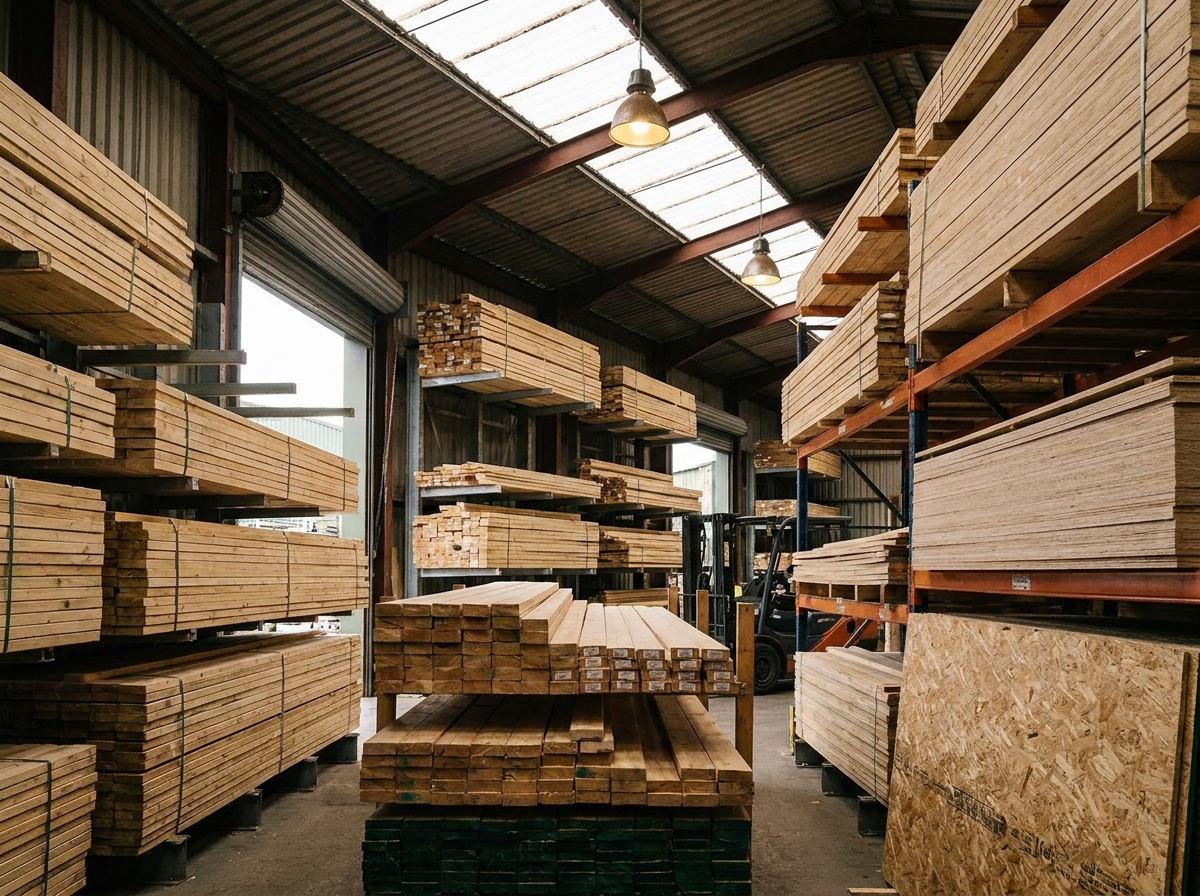
Timber is the one material almost every job needs and the one that most often turns out to be the wrong length, the wrong grade or bowed like a banana when it arrives from a shed on a retail park. A timber yard with racks you can see into, staff who know the difference between C16 and C24, and a saw that will take a sheet down to the sizes on your list solves most of that. This page covers what we hold on Nuthall Road, the standard sizes to ask for, how cutting works and how to get long lengths to site. For the deeper product knowledge, the timber and sheet materials guide sits alongside it.
On this page
- 1.What the timber store holds
- 2.Carcassing and CLS: sizes and lengths to ask for
- 3.Treated timber for fencing, decking and gardens
- 4.Sheet materials: OSB, plywood, MDF and flooring
- 5.Cutting to size at the yard
- 6.Doors, flooring, skirting and decking
- 7.Collecting timber or having it delivered
- 8.Getting the right timber for the job
- 9.Frequently asked questions
What the timber store holds
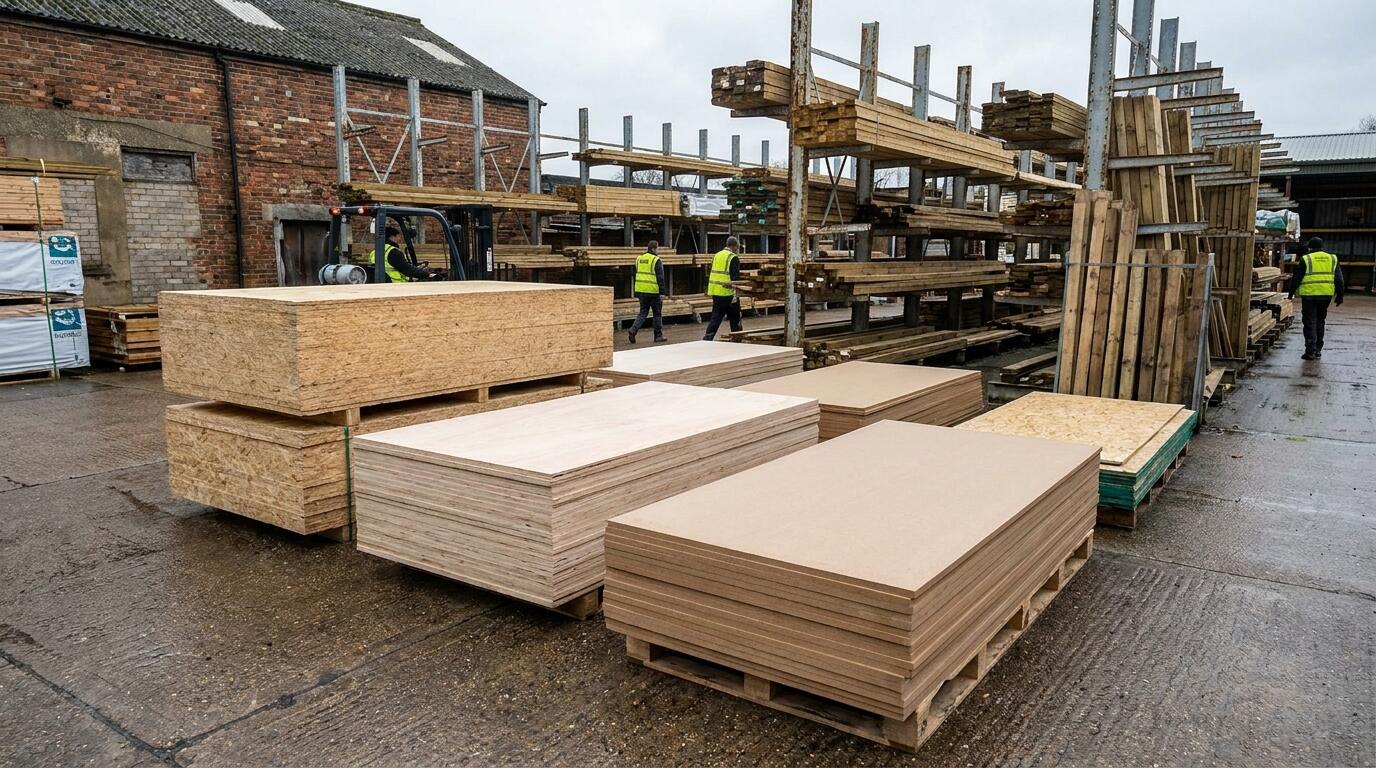
The store is set up around the jobs we see across Nottingham: loft conversions in the Victorian terraces of Sherwood and Carrington, extensions on the 1930s semis of Wollaton and Aspley, fencing and decking in every back garden from Bulwell to West Bridgford, and the endless run of studwork, boxing-in and floor repairs that keep joiners busy.
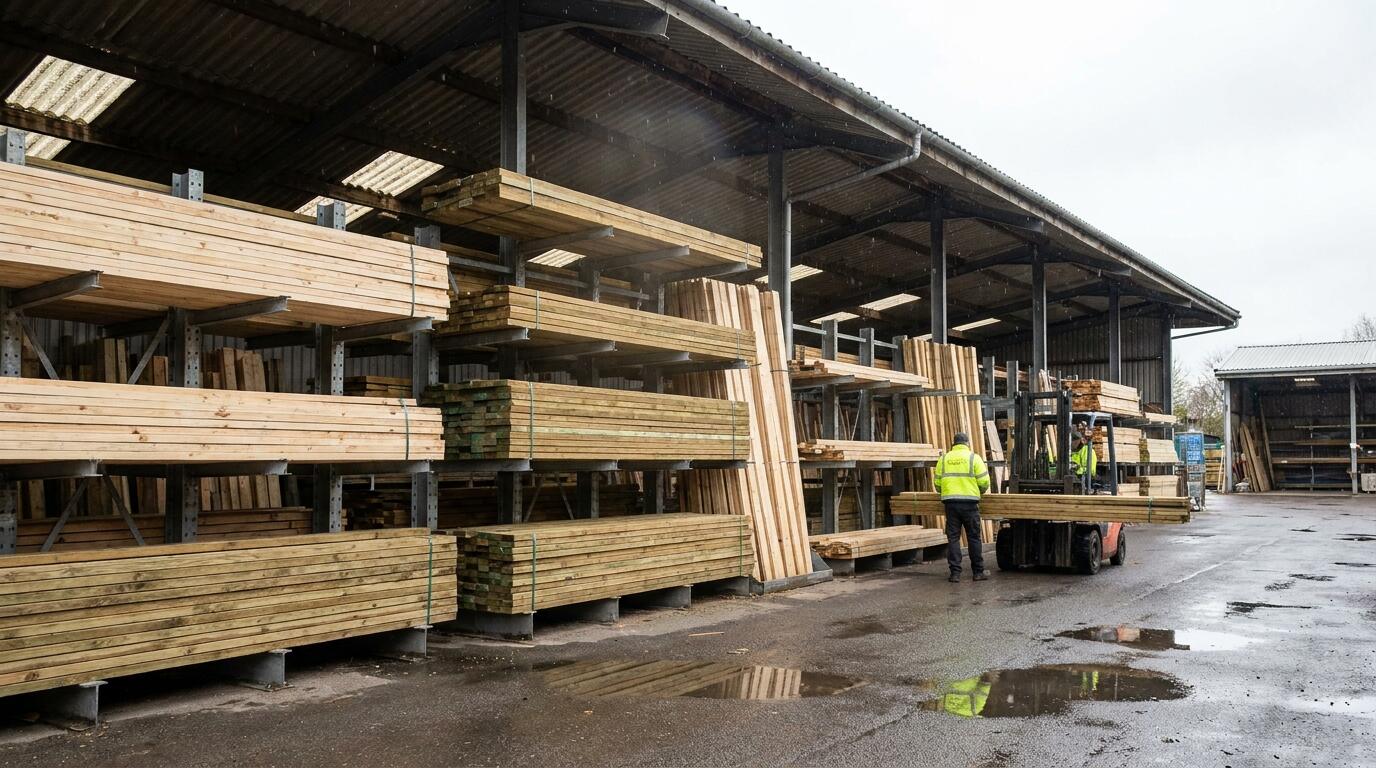
- Regularised carcassing in C16 and C24, kiln-dried and eased-edge, in the section sizes used for joists, rafters, wall plates and studs.
- CLS for partition walls and timber frame, in the two standard sections.
- Pressure-treated timber for fence posts, rails, gravel boards, decking joists and anything else that lives outdoors.
- Sheet materials: OSB3, plywood in structural and hardwood-faced grades, standard and moisture-resistant MDF, and tongue-and-groove chipboard flooring.
- Joinery: internal and external doors, skirting and architrave in the common profiles, engineered flooring and composite decking.
- The bits that go with it: joist hangers, straps and truss clips, screws, nails and structural fixings, adhesives and preservatives.
We do not pretend to hold every section in every length at every moment; stock moves quickly in a busy yard. What we can do is tell you honestly what is on the rack today, get the rest in for a date, and steer you to an alternative that will do the job if you need it now. Ring 0115 929 2350 and ask before you set off, or browse the products section for an overview.
Carcassing and CLS: sizes and lengths to ask for
Structural softwood in the UK is sold in nominal sawn sizes, and regularised timber is planed slightly smaller so every piece is the same depth. That is why a "4x2" measures nearer 95mm by 45mm. Below are the sections you will find at most merchants and what they are usually used for.
| Nominal section | Typical use |
|---|---|
| 47 x 75mm (3x2) | Battens, noggins, light framing |
| 47 x 100mm (4x2) | Studwork, wall plates, decking joists at short spans |
| 47 x 150mm (6x2) | Floor joists at modest spans, rafters, decking joists |
| 47 x 175mm (7x2) | Floor joists, rafters |
| 47 x 200mm (8x2) | Floor joists, flat roof joists, loft floors |
| 47 x 225mm (9x2) | Long-span floor joists, ridge boards |
| CLS 38 x 63mm and 38 x 89mm | Partition studs and plates, timber frame |
Lengths run from 2.4 metres up to 6 metres in 0.6 metre steps, with 3 metres common for CLS. Buying the right length matters more than people think: a 4.8 metre joist cut from a 5.4 length leaves 600mm of waste on every one, while a 4.2 span from a 4.2 length leaves no room for a wall plate bearing. Measure the span, add the bearings, then pick the next length up.
C16 or C24? Both are strength classes under BS EN 338. C24 carries more load over a given span, or the same load over a longer span, and has fewer knots and defects. For studwork, noggins and most rafters, C16 is fine. For floor joists at longer spans, flat roofs and anything the building inspector has specified, C24 is the safer buy and the difference in price is small next to the cost of a bouncy floor. If a structural engineer or Building Control has given you a section and grade, bring the drawing; we will match it exactly.
Treated timber for fencing, decking and gardens
Anything that lives outside needs to be pressure treated, and a lot of what comes through the yard on a Saturday morning is exactly that: a run of fence panels blown down in Bilborough, a deck for a garden in Beeston, a sleeper wall in Nuthall. The green tint you see on treated timber is the preservative, forced into the wood under pressure so it lasts in the wet.
Treated timber is graded by use class. UC3 is for timber above ground that gets wet, such as fence rails, decking boards and cladding. UC4 is for timber in contact with the ground or standing water, which means fence posts, sleepers in a retaining wall and the bearers of a deck sitting on the soil. Ask for the right class rather than just "treated"; a UC3 post concreted into the ground will not last as long as it should.
Common outdoor sections:
- Fence posts in 75 x 75mm and 100 x 100mm, in lengths from 2.4 to 3 metres. A 1.8 metre fence needs a 2.4 metre post with 600mm in the ground.
- Arris rails and gravel boards for closeboard fencing; gravel boards keep the featheredge out of the wet and are the first thing to replace on an old fence.
- Decking boards in grooved and smooth profiles, with 47 x 100mm or 47 x 150mm treated joists underneath depending on span.
- Sleepers for raised beds, steps and low retaining walls.
Two things people forget. Every cut end exposes untreated wood, so brush cut ends with an end-grain preservative before they go in. And use fixings that suit treated timber: stainless or properly coated screws, because the preservative is hard on plain steel. The paving and landscaping guide covers sleeper walls and decking bases in more detail, and the timber guide explains use classes further.
Sheet materials: OSB, plywood, MDF and flooring
Sheet materials come in a standard 2440 x 1220mm sheet (the old 8 by 4), with chipboard flooring in a 2400 x 600mm tongue-and-groove board that a person can carry up a loft ladder. The right board depends on where it is going and whether it will get wet.
| Board | Common thicknesses | Use it for |
|---|---|---|
| OSB3 | 9, 11, 18mm | Roof and wall sheathing, flat roof decks, site hoarding, loft boarding; rated for humid conditions |
| Structural plywood | 9, 12, 18mm | Flat roof decks, subfloors, formwork, anywhere you want more strength than OSB |
| Hardwood-faced plywood | 6, 12, 18mm | Furniture, boxing-in, panels with a visible face |
| MDF | 6, 9, 12, 18, 25mm | Skirting, panelling, shelves, painted joinery; moisture-resistant grade for kitchens and bathrooms |
| Chipboard flooring P5 | 18, 22mm | Domestic floors and loft boarding; moisture-resistant, tongue-and-groove on all four edges |
A few practical points. OSB has a smooth side and a rough side; the rough side goes up on a roof for grip. Plywood grades matter: "WBP" is an old term and what you actually want for anything outdoors is a board rated for exterior use with an exterior glue. MDF is heavy, dusty and swells if it gets wet, so keep it flat and dry on site and wear a mask when cutting. Chipboard flooring should be glued along the tongues and screwed to joists, never just nailed, or it will creak within a year.
Full sheets are awkward to get into a car and into a house, which is why so many customers have them cut here rather than at home; the next section covers that. For a fuller comparison of the boards, including which to use for a flat roof deck and loft boarding over insulation, see the timber and sheet materials guide.
Cutting to size at the yard
We cut timber and sheet materials to your sizes on site, and it is one of the services people travel across Nottingham for. Sheet material is cut on a panel saw, which gives a straight, square cut that a circular saw on a pair of trestles in the garden rarely matches. Lengths of timber are cut to length so they go in a car, or so you are not paying to deliver 600mm of offcut on every joist.
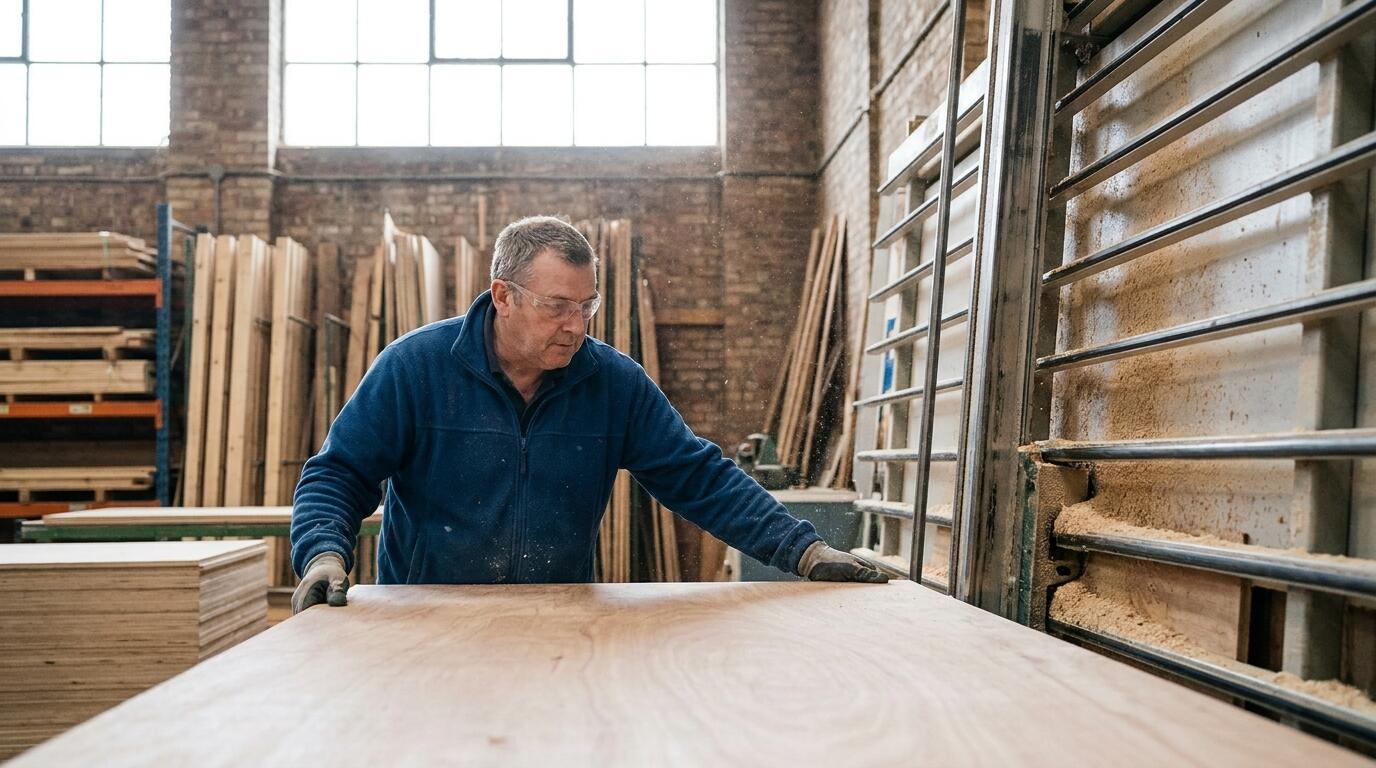
How to get the most from it:
- Bring a cutting list, not a sketch. Write down each piece with its length and width in millimetres and how many you need. If you want a sheet split into shelves, say the exact widths; if you want it ripped roughly in half to fit the car, say that too.
- Allow for the saw. Every cut removes about 3mm. Six 200mm strips do not come out of a 1220mm sheet; five do with a bit to spare.
- Think about the grain and the face. For hardwood-faced ply and anything visible, tell us which way the grain should run and which face matters.
- Ring ahead for long lists. Most cutting is done while you wait. A big list of shelves and panels may be ready later the same day, so phone it through and collect when it is done.
Cutting is priced with the material; ask at the counter. It is worth it even for a job you could do yourself: a squarely cut sheet makes fitting faster, and a loft floor made of accurately cut boards goes down in half the time. If you would rather buy full sheets and cut on site, that is fine too, and we will still cut a sheet in two so it fits in the van.
Cutting and the other yard services, including tool hire for a decent saw if you need one, are listed under services.
Doors, flooring, skirting and decking
Beyond the structural timber, the store carries the finishing joinery that a renovation needs once the plasterboard is on.
Doors. Internal doors in the standard imperial sizes that fit Nottingham's older housing (a 1981 x 762mm "two-six" is the most common, with narrower and wider sizes for cupboards and modern openings), and external doors for front, back and garage. Fire doors are available for loft conversions and flats, where Building Regulations require them; ask about the FD30 rating and the intumescent strips and closers that go with it.
Skirting and architrave. The common profiles, in MDF and softwood, in the heights that suit both Victorian rooms with high ceilings and modern extensions. If you are matching an existing profile in a period house, bring a short offcut and we will find the closest match or point you to a joiner who can run a length to pattern.
Engineered flooring. Real timber wear layer on a stable ply base, which copes with underfloor heating and the moisture swings of a British house better than solid boards. Ask about underlay, expansion gaps and whether the boards can be floated or need to be fixed.
Composite decking. For customers who want the look without the annual staining. It runs on a treated timber or aluminium subframe, so the joists from the treated timber section still apply.
Quantities for these are easy to get wrong. Skirting is sold by the length, so measure the room perimeter and add ten per cent for mitres and waste. Flooring is sold by the pack in square metres; measure the room, add the same margin, and round up to whole packs. Bring the measurements and we will work it out at the counter, or use the enquiry form and we will price it for you.
Collecting timber or having it delivered
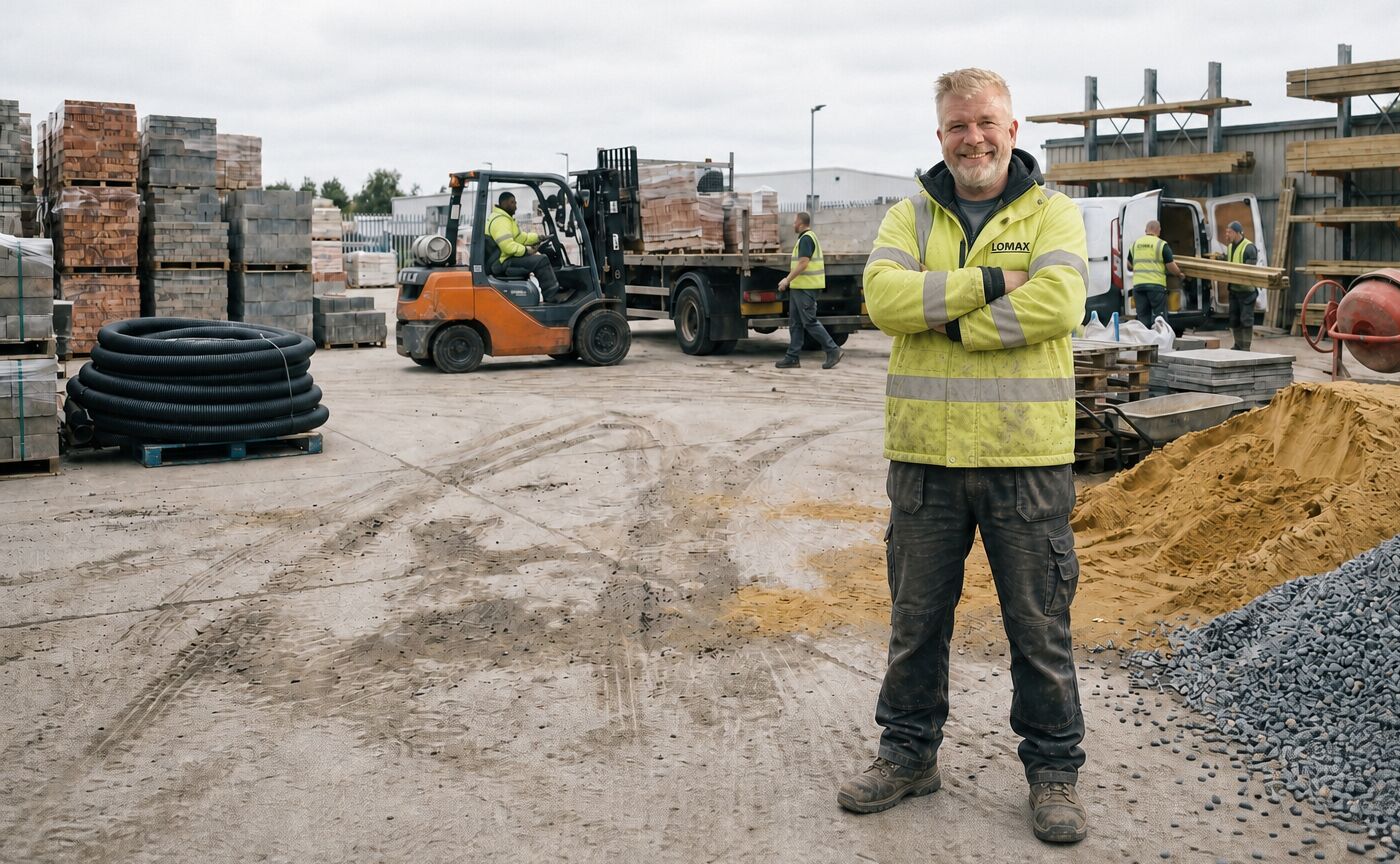
The yard is at Whitemoor Lodge, 2 Nuthall Road, Bobbers Mill, NG8 5AF, on the A610 heading out of the city towards the M1. Vans and small flatbeds can come into the yard and we will help load. Opening hours are 8:00am to 5:00pm Monday to Friday and 7:30am to 12:30pm on Saturday; if you need to be on site for eight, ring the day before and the order will be ready when the gate opens. Directions are on the builders merchant page.
What fits in what is worth knowing before you set off:
- A standard-length panel van takes 2.4 metre lengths and sheets flat on the floor. 3 metres usually goes in at an angle.
- Anything 4.2 metres and over wants a roof rack with the load properly tied and flagged, a flatbed, or a delivery. Overhanging loads have legal limits on length and marking, and a 5.4 metre joist on a car roof is neither safe nor legal.
- A full pack of chipboard flooring or a dozen sheets of 18mm ply is heavy enough to matter on a small van's payload.
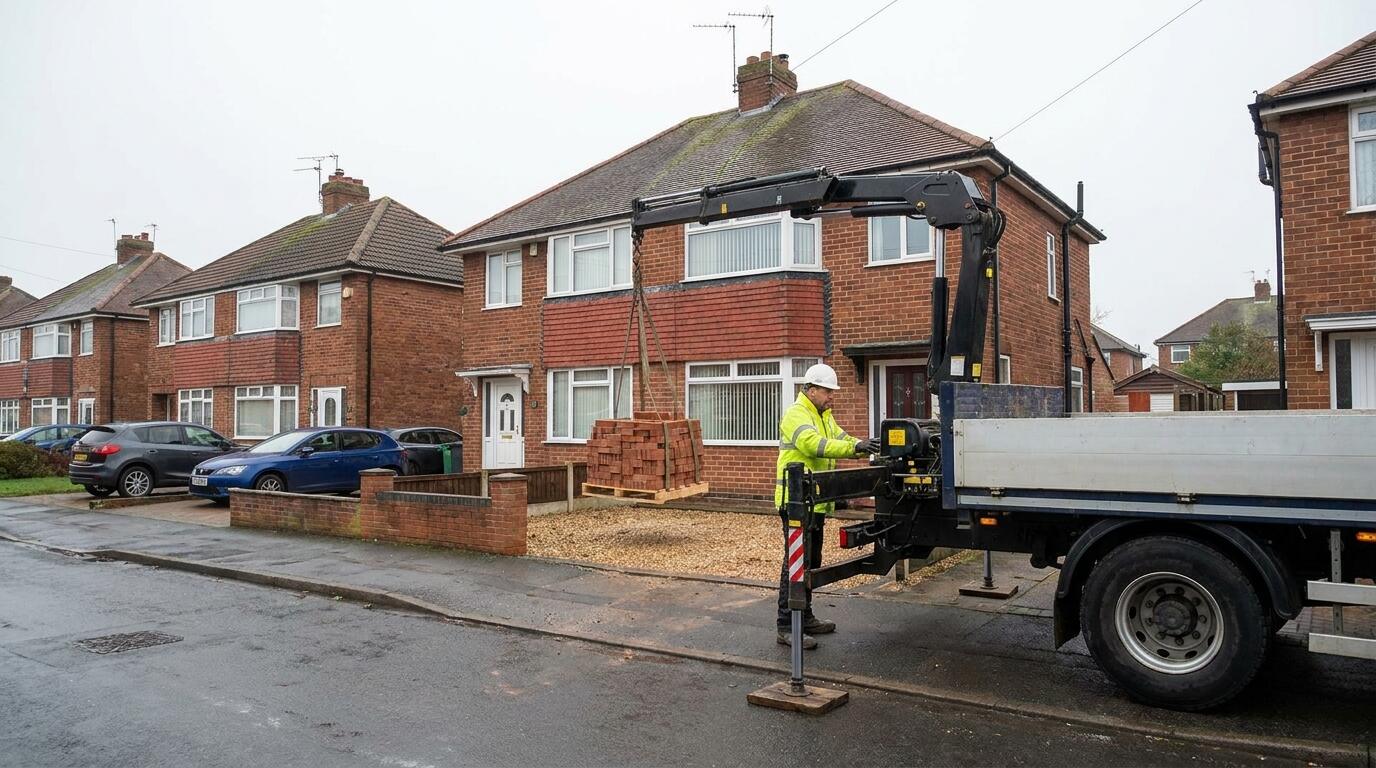
Delivery solves all of this. We deliver timber and sheet materials fast across Nottingham and the surrounding area, from Basford and Bulwell out to Hucknall, Arnold, Beeston and West Bridgford and along the A610 to Kimberley. Long lengths come on a flatbed and are offloaded by hand, so the driver needs somewhere clear to slide them off and stack them. Delivery is quoted with the timber, so you know the total before you order; the building supplies delivery page explains vehicles, access and what to have ready on site.
Once it arrives, stack timber flat on bearers off the ground, keep it out of the rain and let it sit in the house for a few days before fixing anything visible. Wet timber shrinks as it dries, and the gap it leaves will always be in the one place you can see.
Getting the right timber for the job
Most timber questions at the counter come down to a handful of choices, and a short conversation usually settles them. Some of the ones we hear most:
- "Do I need C24 for this floor?" Bring the span and the joist centres. Span tables give the answer, and if Building Control is involved they will have told you. When in doubt, C24 costs little more and removes the doubt.
- "Can I use OSB outside?" OSB3 tolerates damp but is not for permanent exposure. For a shed roof or a flat roof deck it works under a proper covering; as cladding, no.
- "Treated or untreated for a stud wall?" Untreated CLS is fine indoors. Use treated for the sole plate if it sits on a concrete floor that might be damp, and put a DPC under it.
- "What size posts for a 6 foot fence?" 100 x 100mm at 2.4 metres, UC4, set in postcrete or concrete with a fall away from the post. 75 x 75mm is fine for lower panels or trellis.
- "Why is my timber twisted?" Usually because it dried unevenly after leaving the merchant. Buy kiln-dried, keep it stacked flat and bound until you use it, and pick through the rack; we will not mind.
There is a lot more of this in the timber and sheet materials guide, which goes into grades, treatment, moisture content and standard sizes properly. This page is the practical end: what is on the rack at Bobbers Mill, what to ask for and how to get it home.
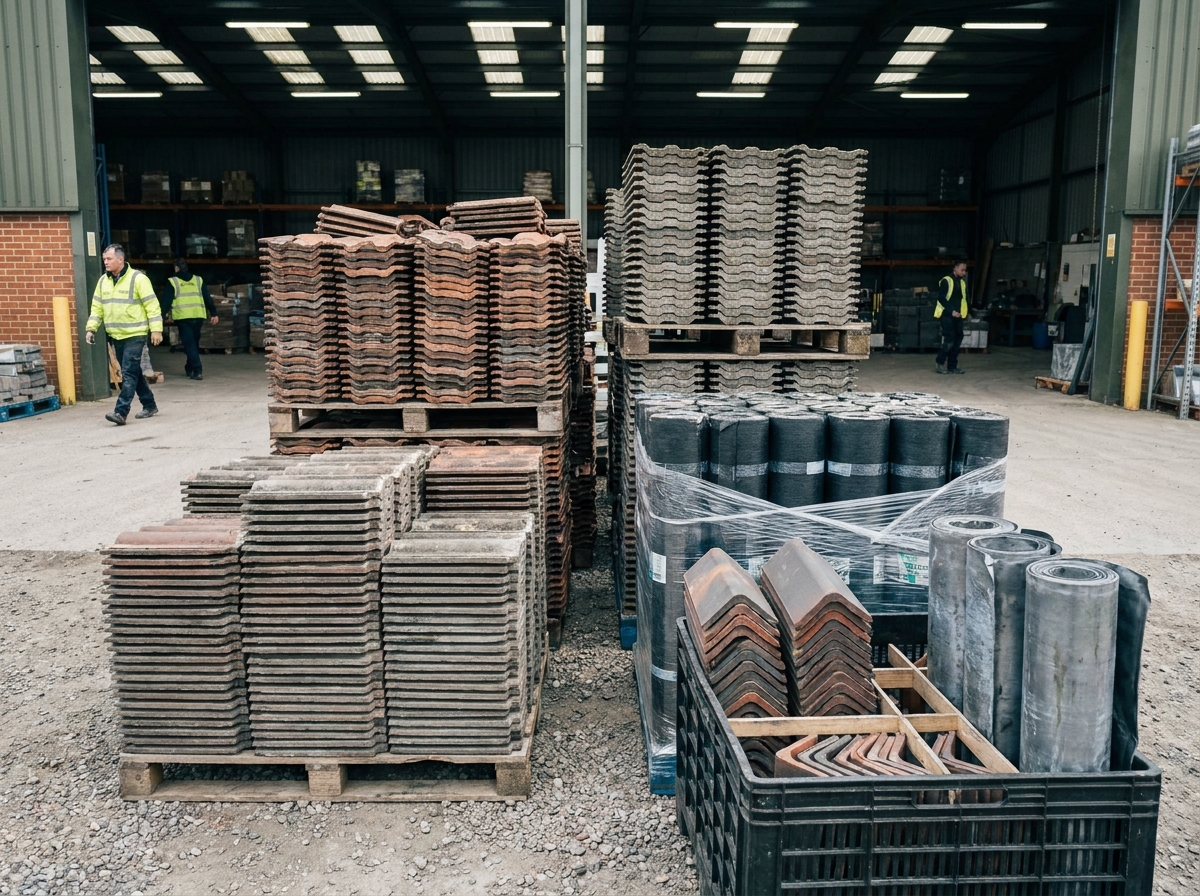
If you are pricing a whole job, send us the list. Joists, sheathing, studwork, plasterboard, fixings and the roofing materials to go on top can all be quoted together and delivered in the order the build needs them. Ring 0115 929 2350 or send an enquiry and we will come back to you within 24 hours.
Last updated 2026-08-29. Stock, sizes and availability change; call 0115 929 2350 to check before you set off.