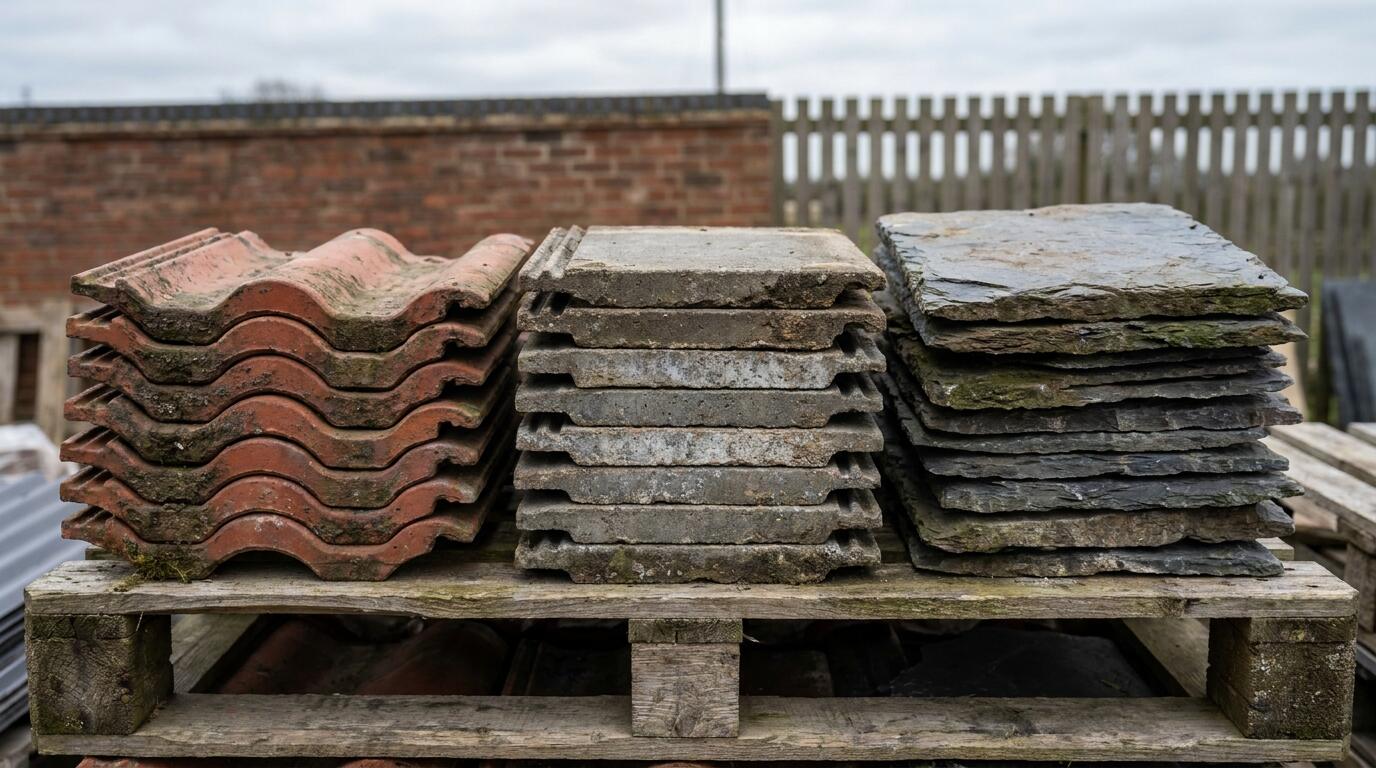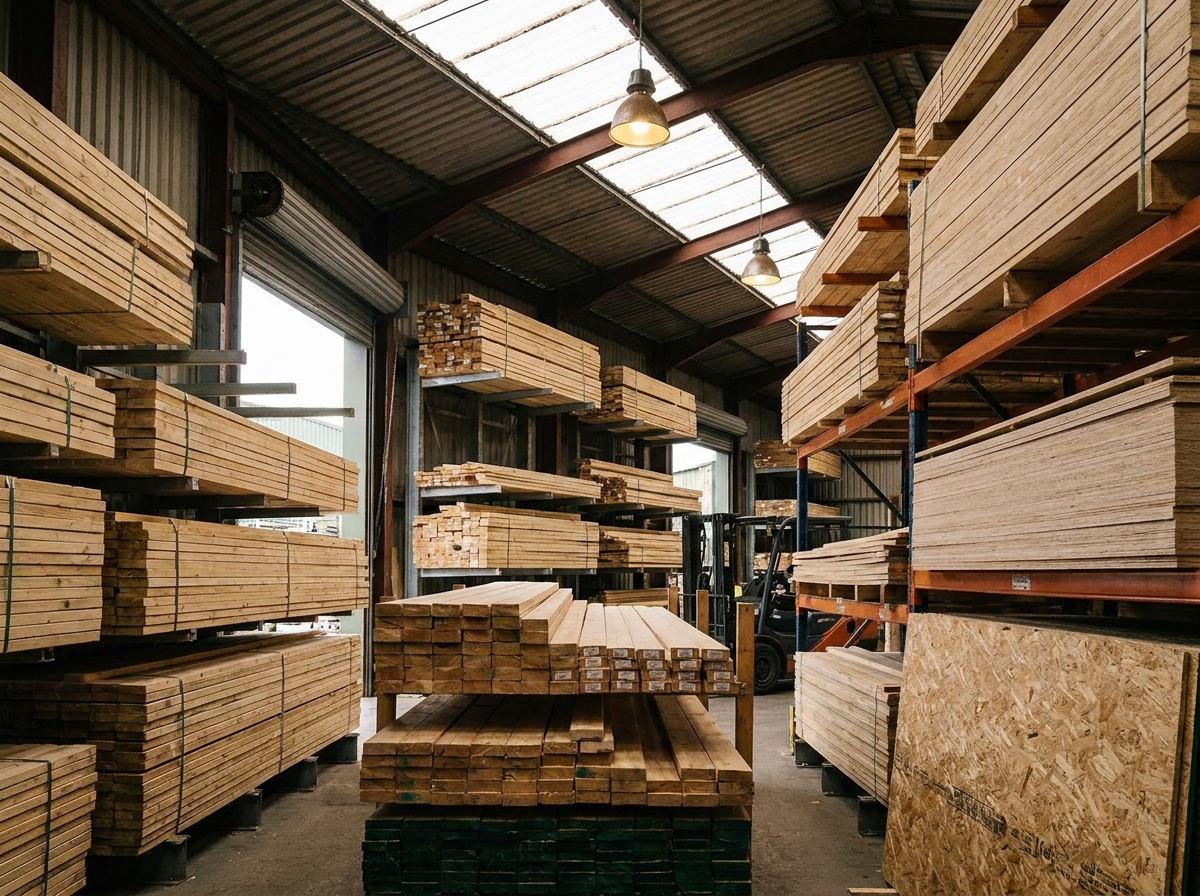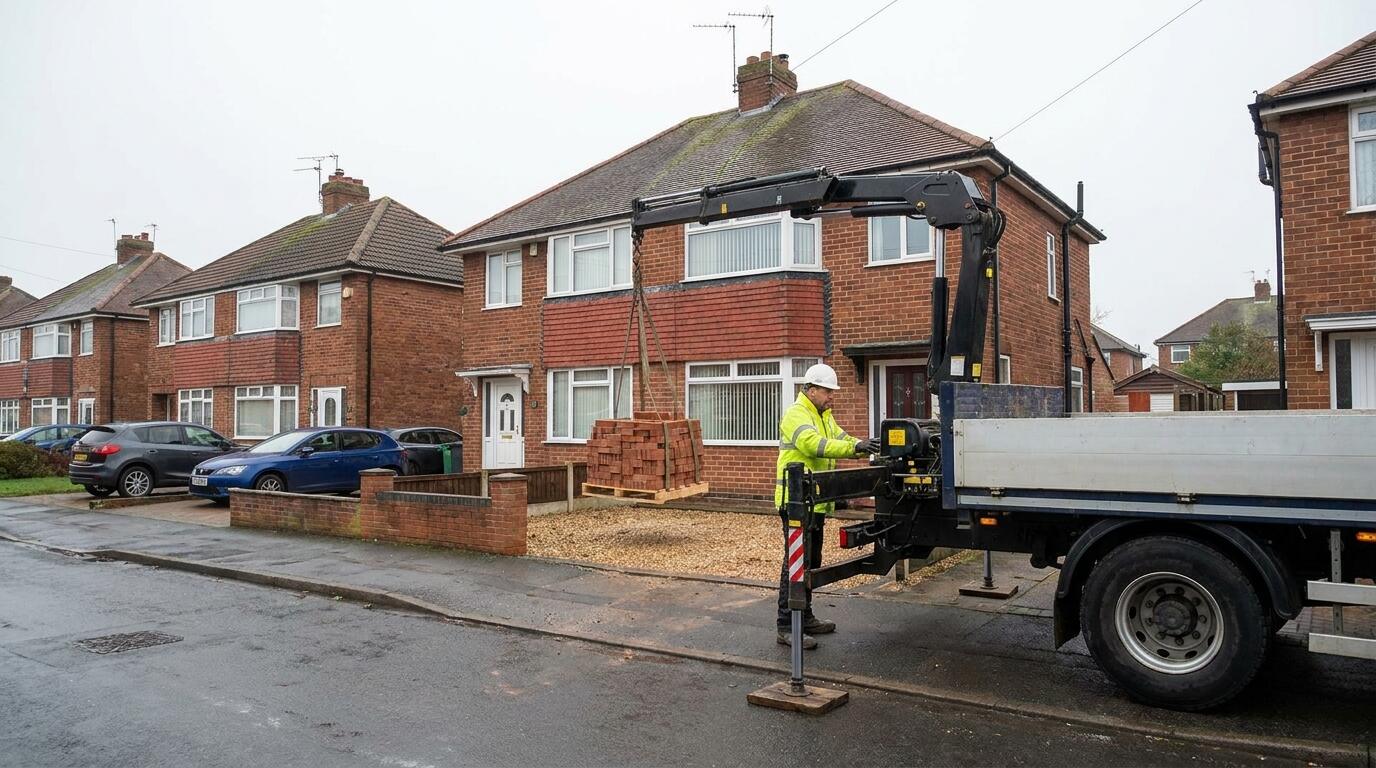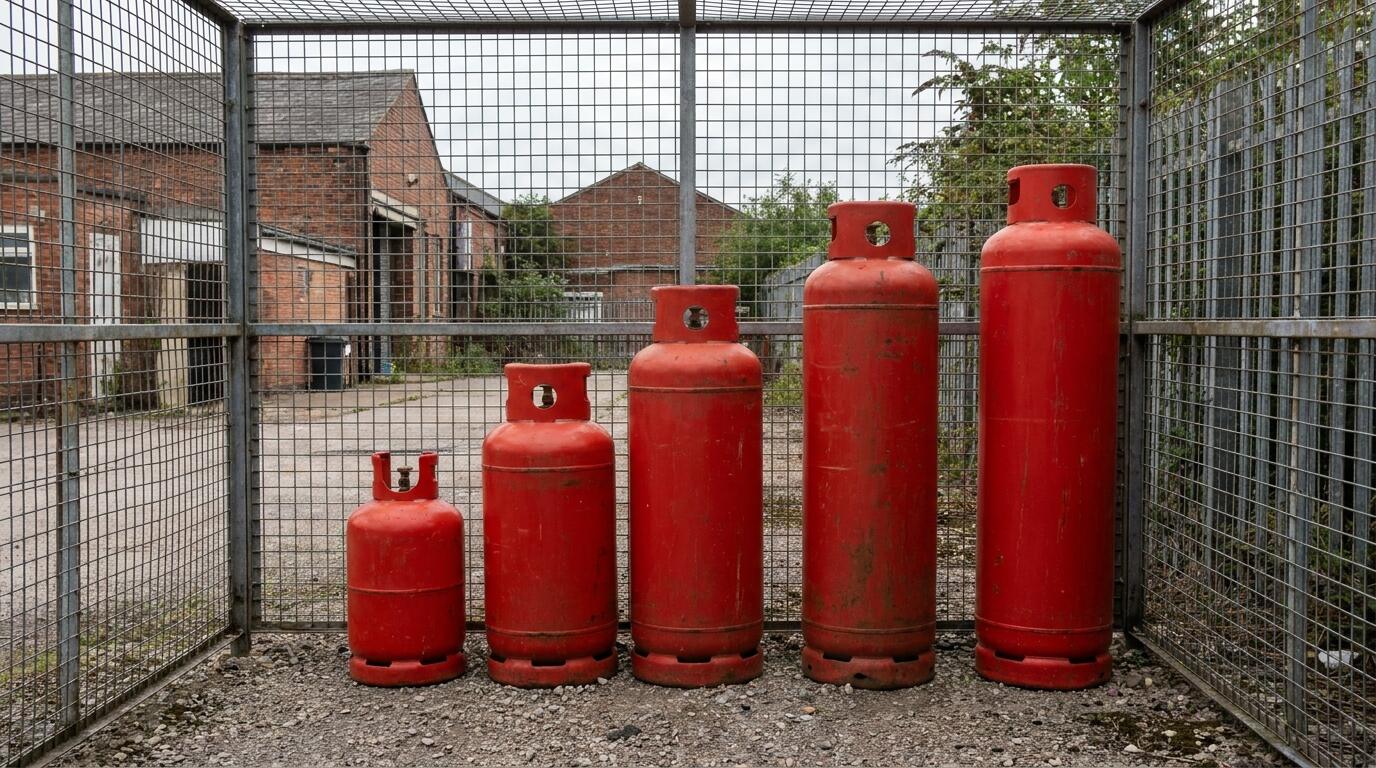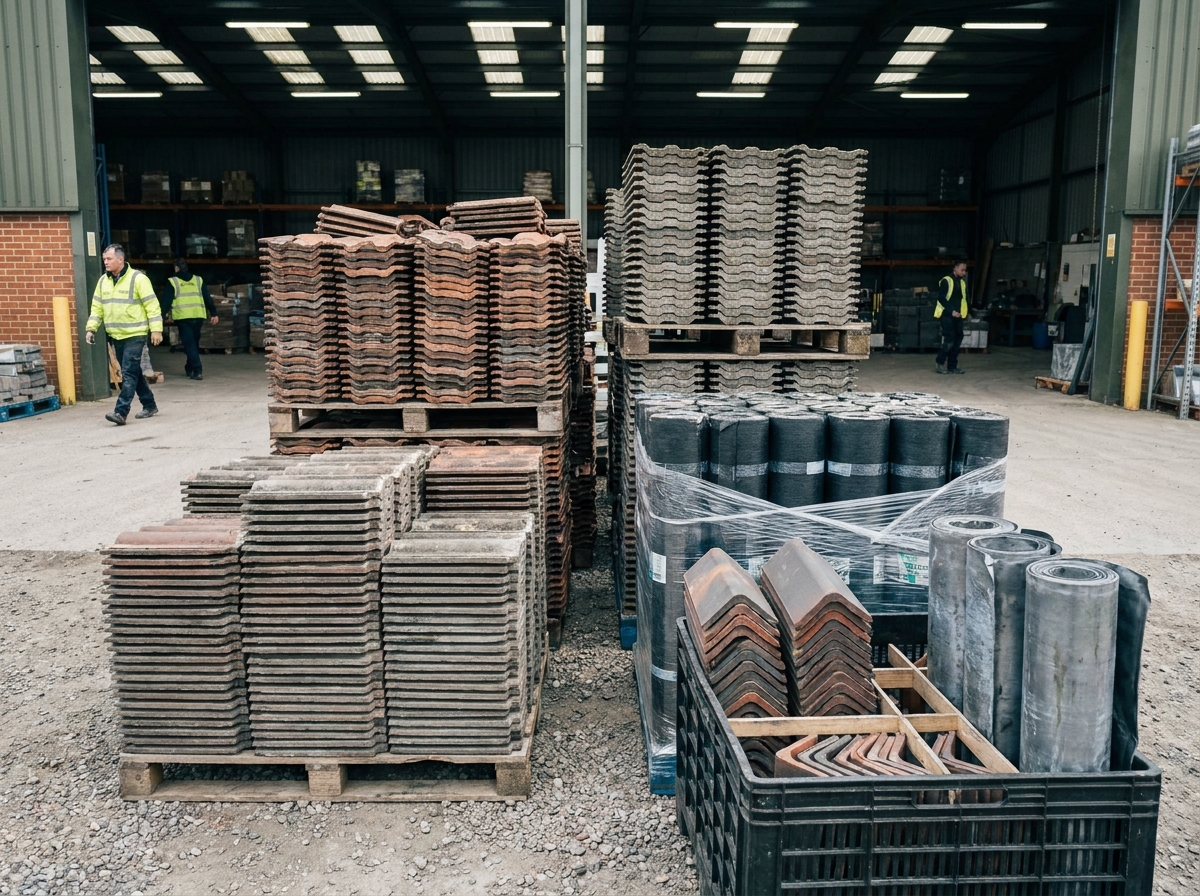
Nottingham has roofs of every age: Welsh slate on the Victorian terraces of Radford and Sherwood, clay plain tiles and pantiles on the 1930s semis of Wollaton and Aspley, concrete interlocking tiles on everything built since the war. Each needs its own materials, and a repair that does not match stands out from the street. This page covers what we stock for roofers, what each type of roof needs, how our tile matching works, how to work out quantities and how to get a pallet of tiles delivered to the scaffold. For the product comparison in depth, see the roofing materials guide.
On this page
- 1.What we stock for roofers
- 2.Nottingham's roofs and what they need
- 3.Tiles, slates and battens for a pitched roof
- 4.Membranes, flashings, ridge and verge
- 5.Flat roof coverings: felt, EPDM and GRP
- 6.Matching tiles and slates on older roofs
- 7.Working out quantities for a re-roof or repair
- 8.Ordering, collection and delivery to the scaffold
- 9.Frequently asked questions
What we stock for roofers
Roofing is one of the lines we hold in depth, because a roofer who has stripped a roof on Monday cannot wait until Thursday for battens. The range is built around pitched roofs first and flat roofs second, with the fixings and accessories that make the difference between a roof that passes and one that does not.
- Tiles and slates. Concrete interlocking tiles in the common profiles, clay plain tiles, clay pantiles, natural slate and fibre-cement slate. Plus the matching ridge, hip, verge, eaves and valley tiles for each.
- Battens and counter-battens. 25 x 50mm treated roofing batten graded to BS 5534, which is the one Building Control and warranty providers expect.
- Underlay. Breathable (vapour-permeable) membranes for cold and warm roofs, and traditional non-breathable felt where a job calls for it.
- Flashings. Rolled lead in the common codes and widths, lead-free flashing for where lead is not wanted, lead sealant, hall clips and fixings.
- Dry fix. Dry ridge and dry verge systems, eaves ventilation, over-fascia vents, bird combs and soffit vents.
- Flat roofing. Torch-on felt systems, EPDM rubber membrane and GRP fibreglass, with the primers, adhesives, trims and decking boards to go with them.
- Rainwater goods and fascia. Gutters, downpipes and fittings, uPVC fascia and soffit boards.
- Fixings and sundries. Clout nails, tile clips, slate hooks, copper nails, screws, roof sealants and mortar for where it is still used.
Not every profile of every tile is on the yard at once, and some are ordered for the job; we will tell you what is here and what needs a few days. The overview is under products on the homepage, but the quickest answer is to ring 0115 929 2350 with the tile name or a photograph.
Nottingham's roofs and what they need
Knowing what is likely to be on a roof before you go up a ladder saves a wasted trip, and after 130 years of supplying the city we have a fair idea of what sits on each street.
Victorian and Edwardian terraces in Radford, Hyson Green, Sherwood, Carrington, Basford and Beeston were mostly slated, usually with Welsh slate on a steep pitch with lead valleys and clay ridge. Many have been re-covered over the years with concrete interlocking tiles, sometimes without the rafters being upgraded for the extra weight. Repairs on an original slate roof want natural slate of a similar size and thickness; a partial re-cover in fibre-cement slate is a common compromise on a rear slope.
1930s semis and inter-war estates across Wollaton, Aspley, Bilborough, Sherwood and West Bridgford were often roofed in clay plain tiles or clay pantiles, and pantiles are a Nottinghamshire tradition you will still see across the county. Plain tiles are small and laid at a double lap, so a re-roof uses a lot of them; pantiles are single lap and lighter. Both have clay ridge and hip tiles that are worth saving and re-bedding.
Post-war and later housing in Bulwell, Strelley, Clifton and the newer estates towards Hucknall and Arnold is almost all concrete interlocking tile. These are cheap to replace and easy to match while the profile is still in production; the difficulty comes when a manufacturer discontinues one, which is where matching comes in.
Extensions and garages from every decade have flat roofs, and most of the flat roof work in Nottingham is replacing tired felt with EPDM or GRP, or re-felting properly with a torch-on system. If in doubt about what you are looking at, take a clear photograph of a tile from the roof and the roof from the ground and bring both in.
Tiles, slates and battens for a pitched roof
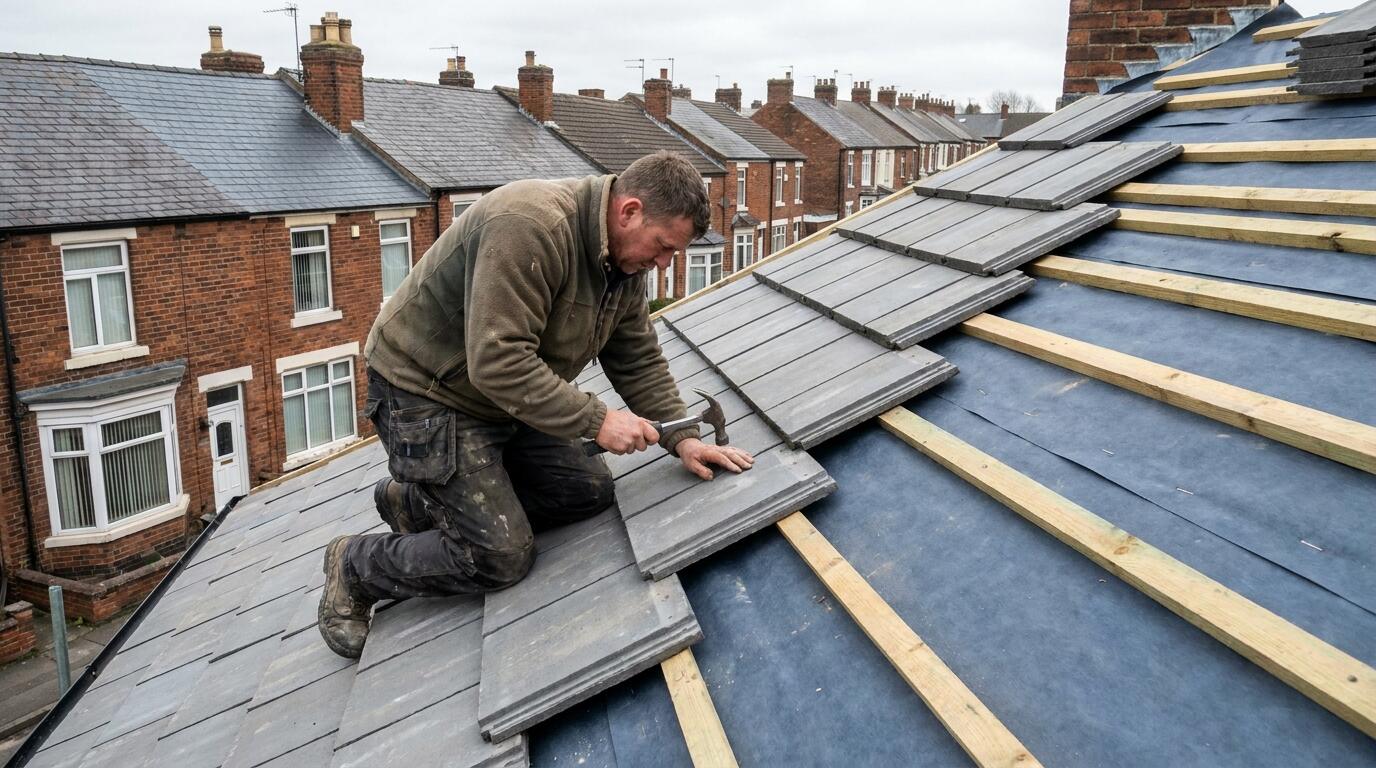
A pitched roof is built up in layers: underlay over the rafters, battens fixed through it at the gauge for the tile, then the tiles or slates hung and fixed to the battens. Each layer has a right and a wrong product, and the tile sets the rules for the rest.
| Covering | Typical coverage | Minimum pitch (as a guide) | Notes |
|---|---|---|---|
| Concrete interlocking (large format) | About 10 per m² | Roughly 15° to 22.5°, depending on profile | Quickest to lay; heavy, so check the rafters on an old roof |
| Clay plain tile (265 x 165mm) | About 60 per m² at 100mm gauge | 35° | Double lap; every tile in exposed positions nailed |
| Clay pantile | Around 14 to 16 per m² | Roughly 30°, varies by tile | Single lap; traditional across Nottinghamshire |
| Natural slate (500 x 250mm) | About 20 to 21 per m² at 75mm headlap | Around 20° to 25° depending on exposure and lap | Lap increases as pitch falls; two nails or a hook per slate |
| Fibre-cement slate | Similar to natural slate | As above | Lighter, uniform, cheaper; needs the maker's rivets or hooks |
Those figures are for planning, and manufacturers publish exact numbers for each product; we will use theirs when we price a roof. Two things worth knowing about current practice. Since the 2014 revision of BS 5534, every single-lap tile is expected to be mechanically fixed with a nail or clip, not just every third course, and all perimeter tiles at eaves, verges and ridges must be fixed. And ridge and hip tiles are now normally fitted with a dry ridge system rather than mortar alone; mortar bedding is still allowed where a dry system is not used, but it must be supplemented with a mechanical fixing.
Battens should be 25 x 50mm, treated and graded to BS 5534 with the grade stamped on them. Ungraded batten is cheaper and not acceptable to most inspectors or warranty providers. Fix with the length of nail the tile manufacturer specifies, and use stainless or silicon-bronze nails in exposed positions.
Membranes, flashings, ridge and verge
The tiles keep most of the rain off; the underlay and flashings deal with the rest, and it is these details that fail first on a poorly done roof.
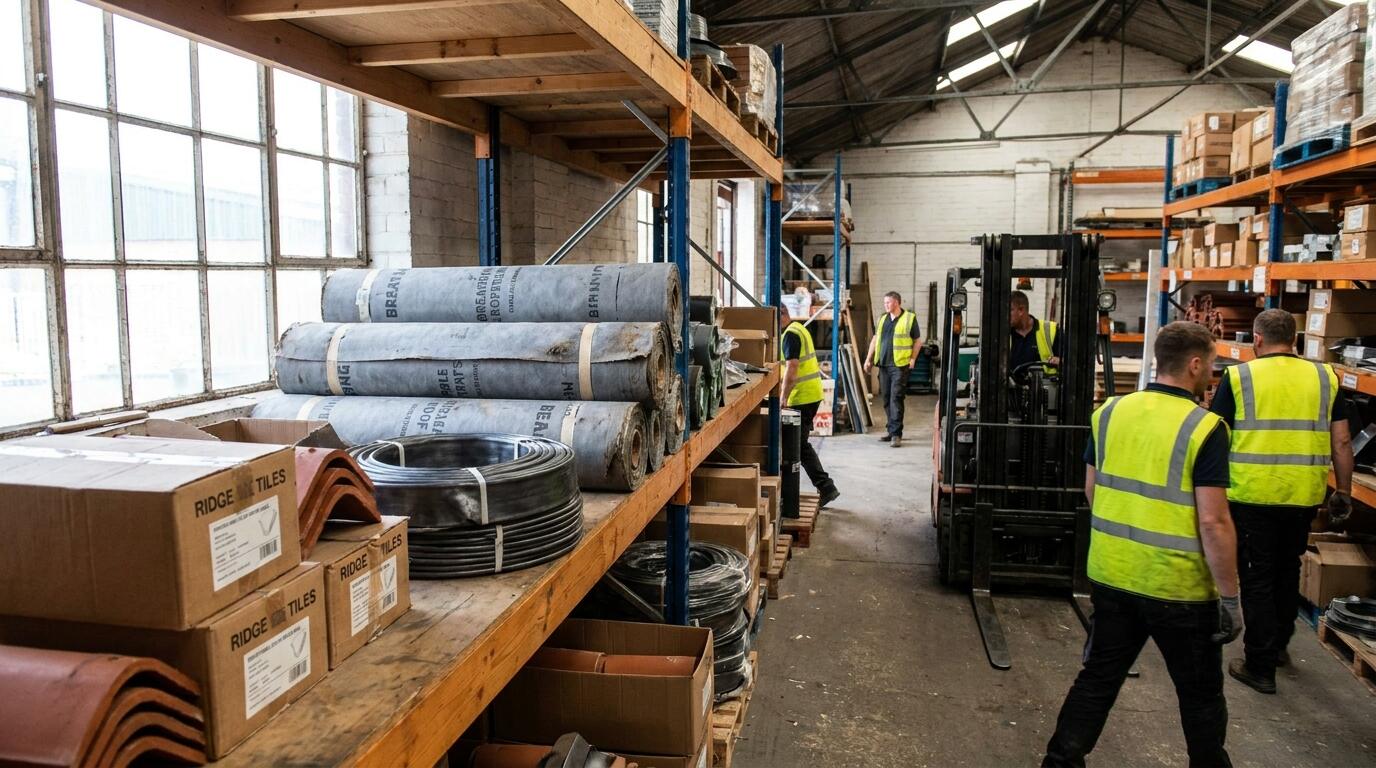
Underlay. Modern breathable membranes let water vapour out of the roof space while keeping wind-driven rain out, which reduces condensation in a cold loft. Rolls are typically 50 metres by 1 metre or 1.5 metres; lay with the laps the manufacturer states and do not pull it drum-tight between rafters, because a slight drape lets any water that gets past the tiles run down to the eaves. At the eaves, use a UV-stable eaves carrier or an eaves protection strip, because ordinary membrane degrades in sunlight where it shows behind the gutter.
Lead. Rolled lead is sold by code, which is its thickness. Code 3 is for soakers; Code 4 for cover flashings, aprons and step flashings against a wall or chimney; Code 5 for valleys, gutters and anywhere lead will be walked on or carry water. Individual pieces should be kept to lengths that let the lead move with temperature, generally no more than 1.5 metres, and fixed with clips rather than relying on the mortar joint alone. Apply patination oil after fitting to stop the white staining on tiles below.
Lead-free flashing. Self-adhesive and mouldable alternatives suit jobs where theft is a worry, on a low garage roof for example, or where the client prefers not to use lead. They are not a like-for-like substitute in every detail; ask which the job suits.
Dry ridge and dry verge. Dry systems fix ridge and verge tiles mechanically with a ventilated roll or a clip-on trim, so nothing depends on a mortar joint that will crack in a few winters. They also give the roof its ventilation at the ridge, which matters with breathable underlay on a warm roof. Verge systems come as continuous trims or individual units and are matched to the tile thickness, so we need to know the tile before we can sell you the right one.
All of these are covered product by product in the roofing materials guide.
Flat roof coverings: felt, EPDM and GRP
Every extension and garage in Nottingham has a flat roof, and most of them have been re-covered at least once. There are three mainstream ways to do it, and we stock all three along with the decking and insulation underneath.
Torch-on felt. The traditional built-up system, applied in layers with a propane torch: a vapour control layer, an underlay and a mineral-faced cap sheet. It is well understood, tolerant of complicated shapes and details, and repairable. It needs a roofer competent with a torch and hot works, and it needs propane; we are an official Calor stockist and the propane gas bottles page covers the cylinder sizes roofers use.
EPDM rubber. A single sheet of synthetic rubber, cut to the size of the roof and bonded to the deck with adhesive, with no joins on most domestic roofs. No flames, quick to lay, and a long life if the deck is sound and the edges are trimmed properly. The membrane needs a clean, dry, smooth deck, so an old felt roof is usually overlaid with new OSB3 or plywood first.
GRP fibreglass. Resin and glass mat laid wet onto a new OSB3 deck and finished with a coloured topcoat, giving a hard, jointless surface that suits balconies and roofs people will walk on. It is the fussiest about weather during application, wanting a dry day above about 5°C, and it needs a new deck every time.
Whichever system you choose, the deck matters more than the covering. Use 18mm OSB3 or exterior plywood, with firrings to give a fall of at least 1 in 80 so water actually leaves the roof, and get the insulation right if it is a warm roof over a habitable room. Timber and boards for the deck are on the timber merchant page. If you are choosing between the three systems, the roofing materials guide compares them properly; if you already know what you want, ring with the roof size and we will price the whole kit.
Matching tiles and slates on older roofs
Brick and tile matching is a service we have offered for a long time and one that older Nottingham properties need constantly. A storm takes a dozen tiles off a 1930s roof in Wollaton; an extension in Sherwood has to tie into an existing slate slope; a conservation officer in a village outside the ring road wants the pantiles on the new porch to look like the ones on the house. In each case the answer is not "the nearest grey tile", it is the one that is closest in profile, size, colour and weathering.
How it works:
- Bring a sample. One whole tile or slate, taken from the roof if you can, tells us the profile, the size and the maker's marks on the back. A clear photograph of the roof from the ground helps with colour and weathering. If you cannot get a tile down safely, photographs of the front and back of a loose one will do to start.
- We identify it. Many older concrete and clay tiles are still made in the same profile, or in one that is interchangeable. Where a profile has been discontinued, there are reclaimed sources and modern tiles designed to blend with specific old ones.
- We get you a sample of the match to hold up against the roof before you commit to a pallet. Weathered roofs are darker than new tiles, and it is worth deciding whether a slightly different colour on a rear slope is acceptable or whether the repair needs to disappear.
Some honest limits. Natural slate varies by quarry, and a Welsh slate from the 1890s will not be matched exactly by a new Spanish one, though a good roofer can blend them. Clay plain tiles come in a range of colours and a handmade tile has a texture a machine-made one lacks. And if an old concrete tile is no longer made, the choice is reclaimed stock, a blend-in tile, or re-covering a whole slope so the join is at a hip or valley. We will tell you which applies rather than sell you a pallet that looks wrong.
The matching service is listed under services; to start, ring or send photographs through the enquiry form.
Working out quantities for a re-roof or repair
Roofing quantities are easier than they look once you have the roof area, and getting them right avoids the two classic problems: a pallet of tiles left over, or a scaffold sitting idle while you wait for twenty more.
Measure the roof area. For a simple gable roof, measure the length of the roof along the eaves and the distance from eaves to ridge up the slope (not the horizontal span), multiply them, and double it for both slopes. For hips and valleys, break the roof into triangles and rectangles. Add ten per cent for cuts and breakages on interlocking tiles, more on plain tiles and slates where there are a lot of cuts at hips and valleys.
Then work down the list:
- Tiles or slates: area multiplied by the coverage figure for the product (see the table above), plus waste.
- Ridge and hip tiles: measure the ridge and hip lengths in metres; for 450mm ridge tiles allow just over two per metre, for 300mm clay ridge just over three.
- Battens: roof area divided by the gauge in metres gives the total length. At a 345mm gauge, 100m² of roof needs roughly 290 linear metres of batten; at a 100mm plain-tile gauge, closer to 1,000 metres.
- Underlay: roof area divided by the effective coverage of a roll after laps; a 50 x 1 metre roll covers around 45m² with standard laps.
- Eaves and verge: eaves length for eaves tiles, carriers and comb fillers; verge length for dry verge units or undercloak.
- Fixings: nails or clips for every tile if single lap, two per slate, plus batten nails at every rafter.
- Lead: length of each abutment, chimney and valley, with the code and width for each.
Bring the measurements to the counter and we will go through the list with you and price it. For a repair, count the damaged tiles and add a handful; for anything bigger, a sketch with dimensions is worth a lot. The roofing materials guide has the coverage figures and lap tables if you want to check before you come in.
Ordering, collection and delivery to the scaffold
Tiles are heavy, and a re-roof is measured in pallets rather than boxes, so most roofing orders are delivered. Smaller repairs, a roll of membrane and a pack of battens, or a few ridge tiles, are easy to collect from the yard at Whitemoor Lodge, 2 Nuthall Road, Bobbers Mill, NG8 5AF. We open at 8:00am Monday to Friday and 7:30am on Saturday, which suits a roofer who wants to be on the scaffold before the traffic builds on the ring road.
For deliveries, the practical points:
- Tell us where the scaffold is. A crane lorry can set a pallet of tiles down close to the base of the scaffold if the vehicle can get there, which saves hours of carrying. It cannot lift over a parked car or a neighbour's fence, so keep the frontage clear.
- Order the whole roof. Tiles, battens, underlay, fixings, ridge, verge and lead on one delivery means the roofer is not waiting. Phase it if the job is big; underlay and battens first, tiles the day after the strip.
- Think about weight on the drive. A pallet of concrete tiles can weigh over a tonne. On a block-paved drive with a poor base it will leave a mark; a couple of scaffold boards under the pallet spreads the load.
- Keep stock covered. Tiles do not mind rain, but battens, lead rolls and adhesive for a flat roof should be stacked under cover.
We deliver across Nottingham and the surrounding area, from the terraces of Radford and Basford to the estates of Bilborough, Bulwell and Clifton, out to Beeston, Wollaton, Arnold, Hucknall and West Bridgford, and along the A610 to Nuthall and Kimberley. Delivery is quoted with the materials, so you have one figure for the job. For vehicles, access and what to have ready on site, see the building supplies delivery page. If the job also needs a skip for the old tiles, we can arrange that on the same call; the skip hire page explains sizes and permits.
To get a roof priced, ring 0115 929 2350 or send the measurements and a photo and we will come back within 24 hours.
Last updated 2026-08-29. Stock, sizes and availability change; call 0115 929 2350 to check before you set off.