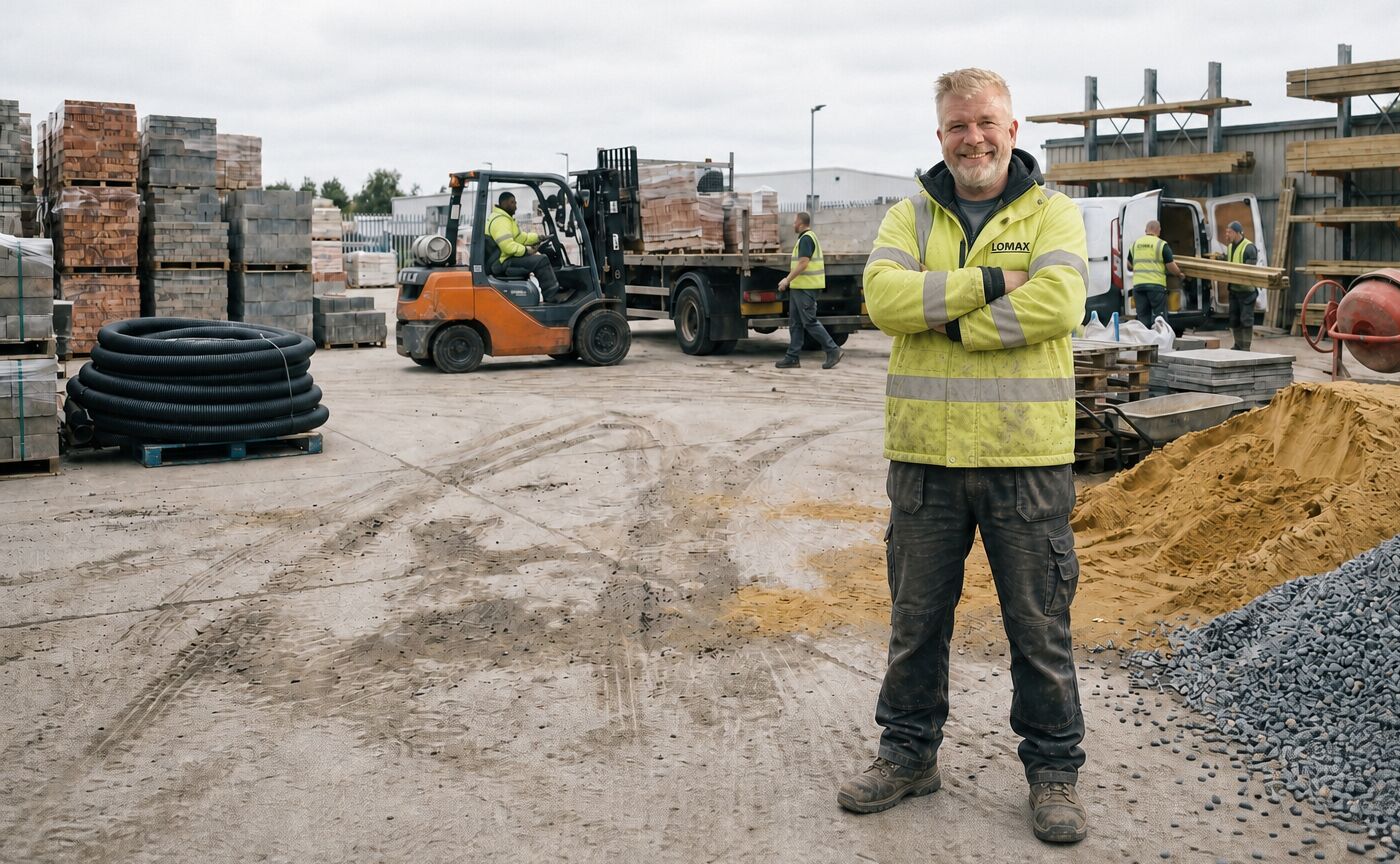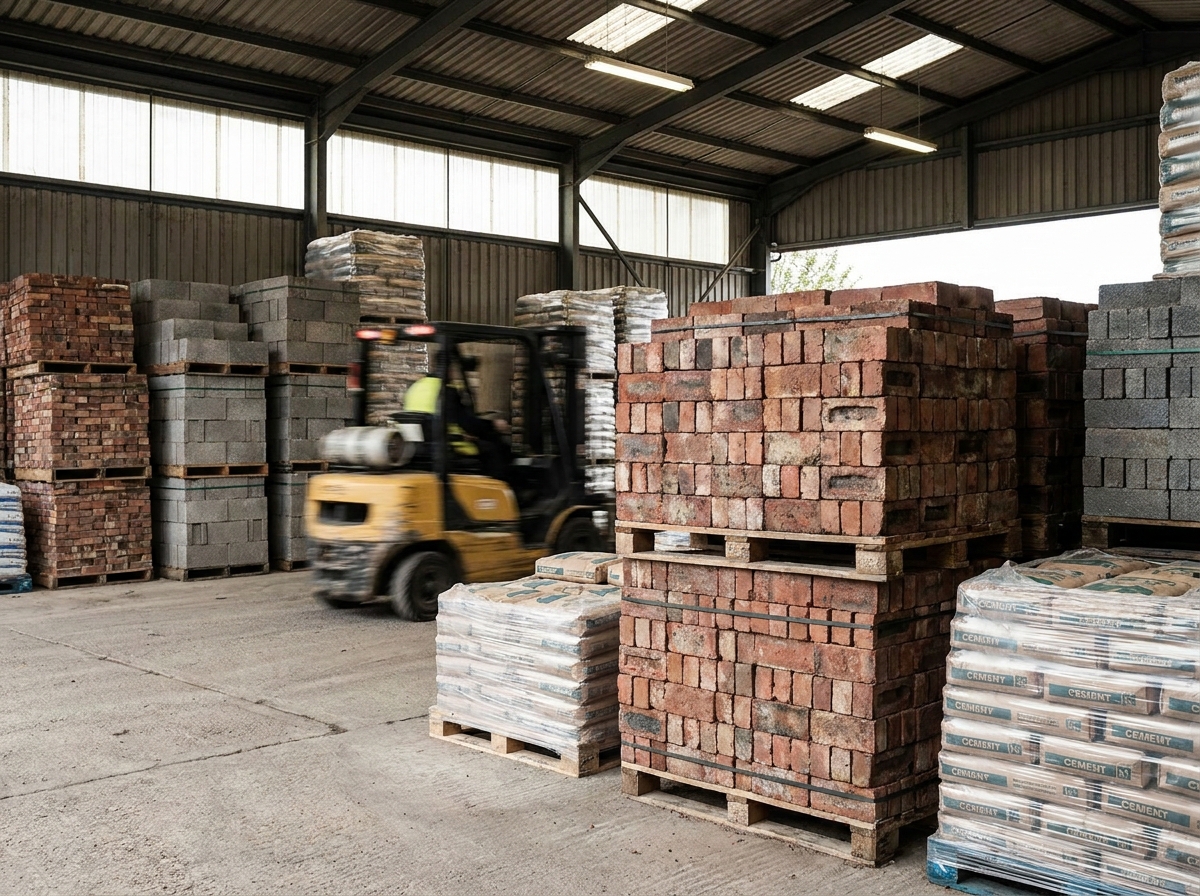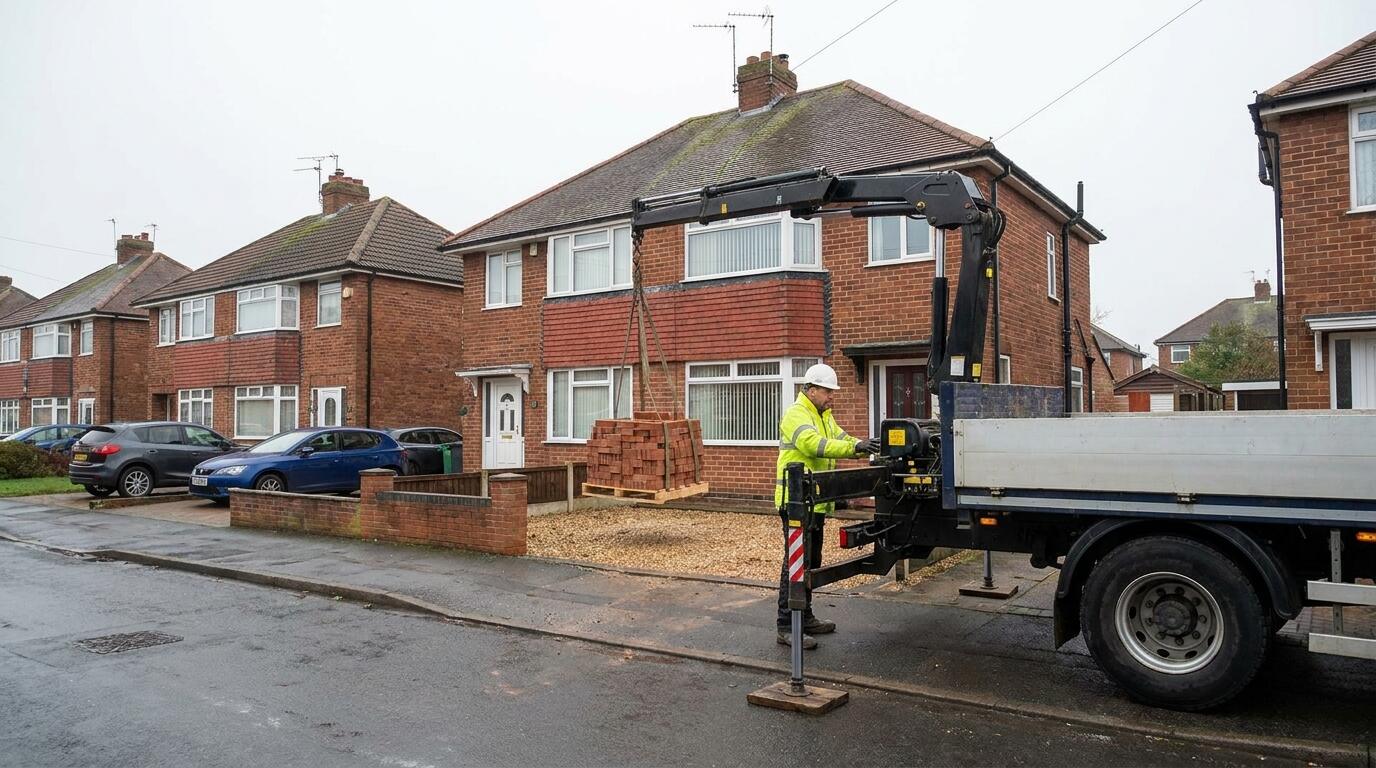
Most of what leaves our yard leaves on a lorry. A pack of bricks weighs about a tonne, a bulk bag of ballast the best part of one, and a bundle of 4.8 metre joists will not go in anything with a roof. Getting those to a house in Sherwood or a plot in Hucknall is the everyday business of a builders merchant, and we have been doing it for Nottingham builders since 1890. Below is what we deliver, where, how to order it, what kind of vehicle turns up and what you can do on site to make the drop quick. If you would rather just ask, ring 0115 929 2350.
On this page
- 1.What we deliver from Bobbers Mill
- 2.Where we deliver in Nottingham
- 3.How to order a delivery
- 4.Vehicles, offloading and access
- 5.Working out quantities so one drop covers the job
- 6.On the day: what to have ready on site
- 7.Phasing deliveries for extensions and bigger jobs
- 8.Concrete, skips and gas on the same phone call
- 9.Frequently asked questions
What we deliver from Bobbers Mill
Anything we sell can go on a delivery, but some things almost always do. The list below is roughly in order of how often they leave the yard on a lorry rather than in the customer's own vehicle.
- Aggregates and cement. Bulk bags of building sand, sharp sand, ballast, 10mm and 20mm gravel and MOT Type 1, plus cement, lime and plasters by the pallet or the bag. Loose loads are possible for larger groundworks; ask.
- Bricks and blocks. Facing and engineering bricks by the pack, dense and lightweight concrete blocks, thermal blocks, and the lintels, wall ties and damp-proof course that go with them. The bricks, blocks and aggregates guide covers how many you need.
- Timber and sheet materials. Full-length carcassing, CLS, treated fencing timber, decking, OSB, plywood, MDF and chipboard flooring. Long lengths and full sheets are exactly what a van cannot carry safely.
- Roofing. Tiles and slates by the pallet, battens, membranes, ridge and flashings. We can usually drop close to the scaffold if there is room for the vehicle.
- Plasterboard and insulation. Boards are light but big and easily damaged; a proper delivery beats bending them over a tailgate.
- Drainage and landscaping. 110mm pipe and chambers, paving by the pack, sleepers and decorative aggregates.
Fixings, sealants, tools and the other small items go on the same lorry when you order them with the heavy goods, so it makes sense to send the whole list at once. The full range is in the products section, and if something is not there, ask; a lot of what we deliver is ordered in for a specific job.
Where we deliver in Nottingham
The yard sits on Nuthall Road, the A610, which is the main road out of Nottingham towards junction 26 of the M1. That puts us a few minutes from most of west and north Nottingham without having to cross the city centre, and it is why so many of our regular drops are close to home: Bobbers Mill itself, Basford and Old Basford, Bulwell, Hyson Green, Radford, Aspley, Bilborough and Strelley, and across to Wollaton and Beeston.
North of the ring road we are regularly out to Sherwood, Carrington, Arnold and Hucknall. Along the A610 corridor we deliver to Nuthall, Kimberley and beyond towards the motorway. South of the river, West Bridgford and the surrounding suburbs are a straightforward run down the ring road. In short, if your job is in Nottingham or the towns and villages around it, we deliver to it; that is the "fast local delivery across Nottingham and the surrounding area" you will see on our homepage.
We do not publish a fixed radius or a price list for delivery, because the honest answer depends on the load, the vehicle it needs and where it is going. A bulk bag to Basford and three packs of blocks to a new-build plot past Eastwood are different jobs. What we will always do is tell you the delivery cost as part of the quote, before you commit, so there are no surprises on the invoice. If your address is further out than the areas above, ask; we will say straight away whether we cover it and what it will cost.
If you are collecting instead, the builders merchant page has directions to the yard and how loading works.
How to order a delivery
There are three ways to book, and they all end up with the same person at the counter putting the order together.
- Ring the yard on 0115 929 2350 during opening hours (8:00am to 5:00pm Monday to Friday, 7:30am to 12:30pm Saturday). This is the quickest way if you want a price and a day there and then.
- Send an enquiry through the contact form with your materials list, the delivery address and when you need it. We respond within 24 hours, usually much sooner during the working day.
- Come to the counter and go through the list with us. This suits bigger jobs where it helps to look at a drawing together and check quantities before anything is ordered.
Whichever route you take, we will ask the same handful of questions, so it saves time to have the answers ready:
- What you need and how much of it. If you are not sure on quantities, give us measurements and we will work them out with you.
- The full delivery address and postcode, and a mobile number for whoever will be on site.
- When you need it. A day is fine; if you need a morning drop so a bricklayer can start, say so.
- Access: on-street or drive, parked cars, width restrictions, overhead cables, soft ground, whether the vehicle can get close to where the materials are needed.
Regular customers and contractors can order against a trade account, which means a site manager or labourer can phone in additions during the week and everything is settled together. Ask at the counter and we will set one up.
Vehicles, offloading and access
Builders merchant deliveries in the UK arrive on one of a few kinds of vehicle, and which one comes to you depends on the load and the street. A flatbed with a crane arm lifts packs of bricks and blocks, bulk bags and pallets straight off the side of the vehicle and sets them down where the arm can reach, which is usually the drive or the front garden. A flatbed without a crane carries timber, sheet materials and boards, offloaded by hand with the driver. Loose aggregate for bigger groundworks comes on a tipper and is dropped in one heap. We match the vehicle to the load when we book, and we will tell you what to expect.
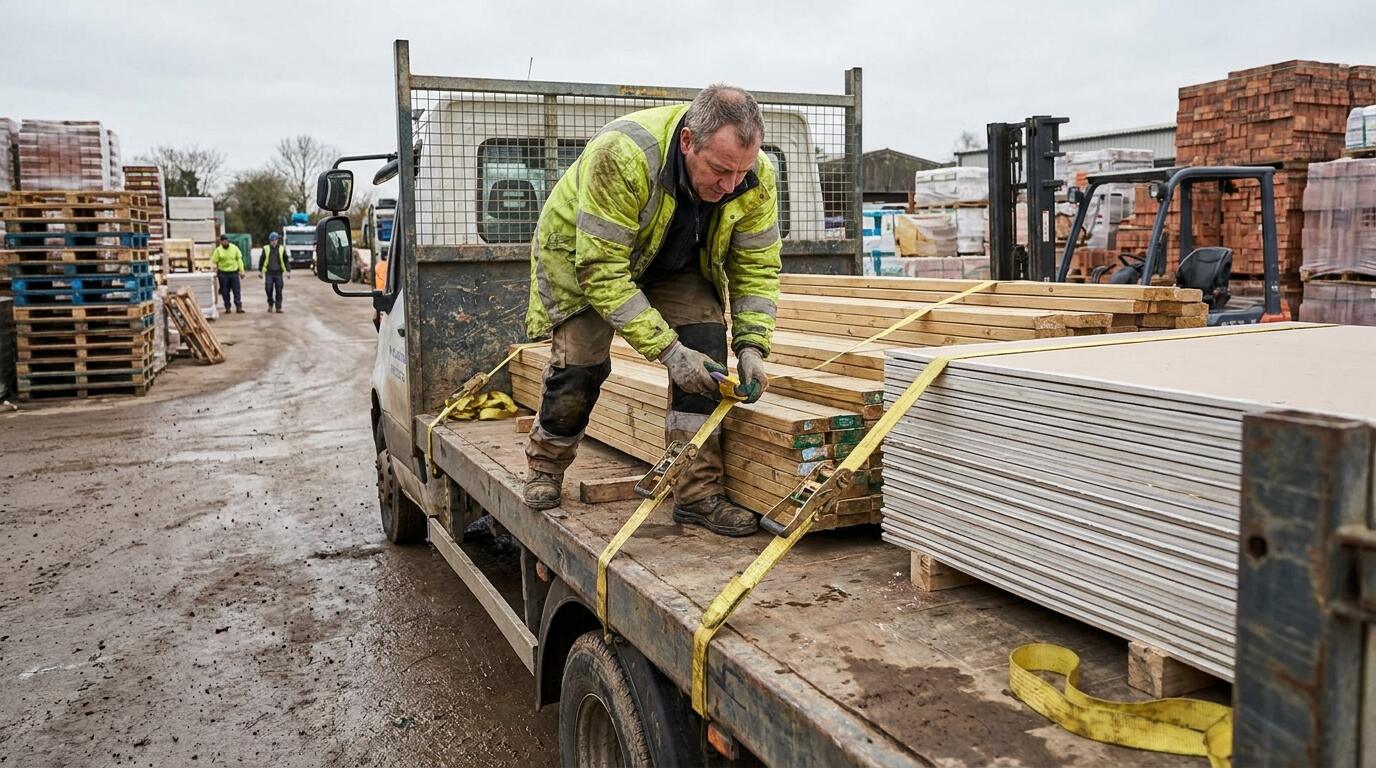
The single most useful thing you can tell us is what the access is actually like. A crane lorry needs room to stand and to swing its arm, so a narrow street with cars both sides, a low tree, or telephone wires across the frontage all change the plan. Long lengths of timber need space to slide off the back. A tipper cannot reverse up a soft lawn. None of these are problems if we know beforehand; all of them are problems on the doorstep.
Kerbside delivery is the standard: the driver puts the goods down as close to the work as the vehicle and the ground safely allow. Onto a drive is normal where there is one. Into a rear garden or through a house is a different matter and depends on what is being delivered and whether it can be carried; ask when you book rather than assuming. If materials will have to sit on the pavement or road, the council treats that like a skip and a licence is needed; see the skip hire page for how Nottingham handles highway permits.
Working out quantities so one drop covers the job
The most expensive delivery is the second one. Three bulk bags on Monday and a fourth on Thursday costs more than four on Monday and leaves the bricklayer standing around. So before you book, it is worth getting the quantities right, and it helps to know how materials are packed, because we deliver in the units they come in.
| Material | How it comes | Typical quantity |
|---|---|---|
| Facing bricks | Shrink-wrapped pack | Around 400 to 500 bricks per pack, depending on the manufacturer; about a tonne |
| Concrete blocks (100mm) | Pack | Pack sizes vary by block type; a pack of dense blocks is roughly a tonne and a half |
| Sand, ballast, gravel, Type 1 | Bulk bag | Nominally 800 to 850kg, roughly half a cubic metre |
| Cement, plaster | 25kg bags, palletised for larger orders | A pallet is typically 40 to 56 bags |
| Plasterboard | Sheets, often in bundles | 2400 x 1200mm standard; 1800 x 900mm for tight access |
| Roof tiles | Pallet | Varies by tile; ask, and we will work it out from your roof area |
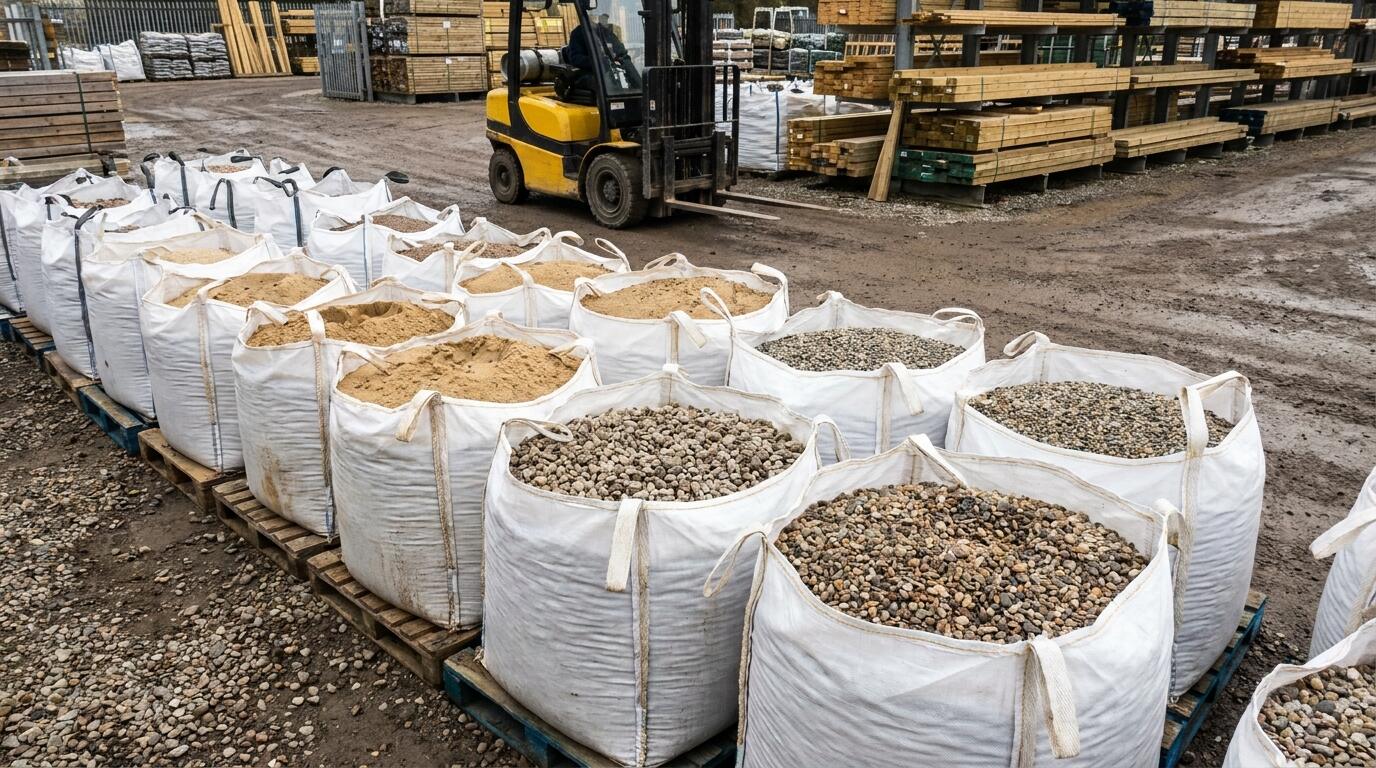
A few rules of thumb the counter uses every day: 60 bricks per square metre of half-brick wall, 10 blocks per square metre of blockwork, about a bulk bag of building sand and five bags of cement for roughly 1,000 bricks laid at a 4:1 mix, and a bulk bag of Type 1 spread at 100mm covers about five square metres compacted. They are starting points, not gospel, and every job has cuts and waste, so add a margin. The bricks, blocks and aggregates guide goes through the arithmetic properly, and if you bring measurements to the counter we will do it with you.
On the day: what to have ready on site
Deliveries go wrong for boring reasons: nobody answers the phone, the drive is full of skip, the gate is locked. A few minutes of preparation stops all of it.
- Have someone there. The driver needs to be told where to put things and someone should check the load against the note. If you cannot be there, tell us who will be and give us their number, or agree a safe place in advance.
- Clear the landing area. A pack of bricks needs a flat, firm patch roughly a metre and a half square. Move the car, shift the wheelbarrow, open the side gate. If the drop is onto a drive, think about whether you need to get a vehicle past it later.
- Think about the order of work. Put the sand where the mixer will be, the blocks near the footings and the plasterboard under cover. Materials stacked in the wrong place get moved twice.
- Protect what needs protecting. Plasterboard, cement and plaster must stay dry; timber should be stacked flat and off the ground; open bulk bags should be covered against rain. A roll of polythene and a couple of pallets cost nothing compared with a pallet of spoiled plaster.
- Check the load. Count packs and bags before the driver leaves and note anything damaged. It is far easier to sort out at the kerb than a week later.
The driver will do everything the vehicle and the site safely allow, and will not do things that are not safe: no craning over parked cars, no tipping onto a public footpath, no driving over a manhole cover or a soft verge. That is not awkwardness, it is what stops a good day becoming an insurance claim. If you expect access to be difficult, ring and talk it through; there is usually a way.
Phasing deliveries for extensions and bigger jobs
A single-storey extension in Wollaton or a loft conversion in Sherwood does not need every material on day one, and a small site buried under everything at once is a slow site. For anything beyond a garden wall we suggest phasing deliveries to match the build, and for account customers we will hold stock for your dates where we can.
A typical sequence for an extension looks like this:
- Groundworks. Drainage pipe and chambers, pea gravel, Type 1, damp-proof membrane and the blocks or bricks for the footings. Concrete for the trenches comes separately; see ready mix concrete in Nottingham.
- Superstructure. Facing bricks and blocks, sand and cement, wall ties, insulation for the cavity, lintels and cavity trays.
- Roof and first fix. Joists, wall plates, rafters or trusses, OSB, battens, membrane and the tiles or flat roof covering. Our roofing supplies page and timber merchant page cover the detail.
- Second fix and finishing. Plasterboard, insulation, plaster, skirting, doors, flooring and the fixings and sealants to go with them.
Phasing has two advantages beyond tidiness. Materials that arrive when they are needed are less likely to be damaged or walk off site, and the money goes out as the job progresses rather than all up front. For a trade customer running two or three jobs at once, a weekly call to the counter to line up the next round of drops is a perfectly normal way to work, and it lets us plan the lorry so your delivery is not squeezed in between two others.
Concrete, skips and gas on the same phone call
Materials are only part of what a job needs delivered. The same counter that books your bricks can arrange the rest, which means one phone call and one person who knows the whole picture.
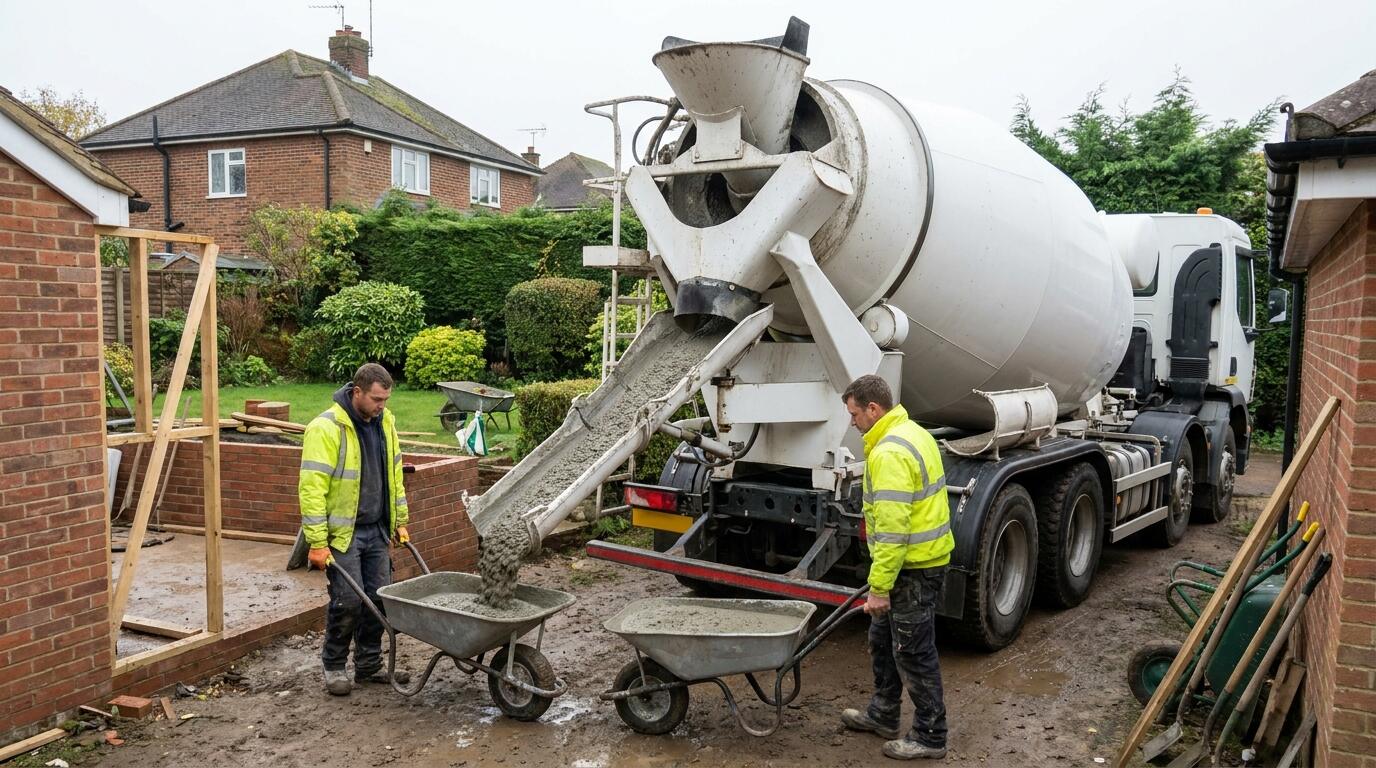
- Ready-mix concrete for footings, slabs and drives is delivered to site in the mix and volume you need. It comes on its own vehicle with its own timing, so tell us when the groundworker will be ready and we will line it up. The ready mix concrete page explains mixes and how to work out cubic metres.
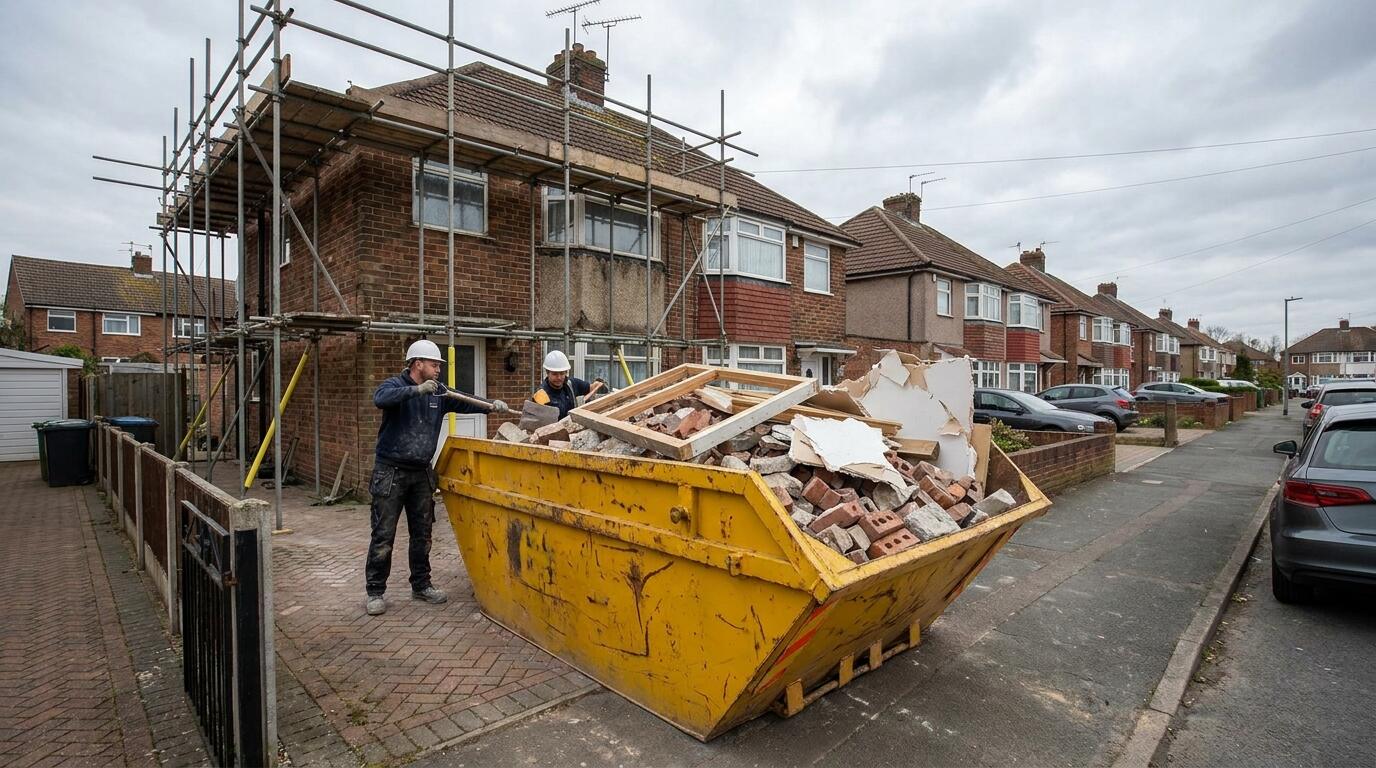
- Skip hire for the rubble, old plaster and packaging that a renovation produces. Booking the skip and the first materials delivery together means you can plan where each goes on the drive. Sizes and permits are on the skip hire page.
- Tool hire for the mixer, breaker or compactor plate you need for a few days rather than for good.
- Calor Gas. Propane for site heaters and torch-on roofing, and butane or Patio Gas for the rest of life. We are an official Calor stockist; the Calor Gas stockist page covers the cylinder range. Ask whether cylinders can go on the same drop as your materials.
The full list of what we can arrange is under services on the homepage. In practice the benefit is simple. If the concrete is booked for Tuesday, the skip needs to be there Monday and the blocks should not arrive until Wednesday, and the person taking your order knows all three. That is the kind of thing an independent yard can do that an online basket cannot.
To get a delivery booked, send us the list or ring 0115 929 2350 and we will price materials and delivery together and give you a day.
Last updated 2026-08-29. Stock, sizes and availability change; call 0115 929 2350 to check before you set off.