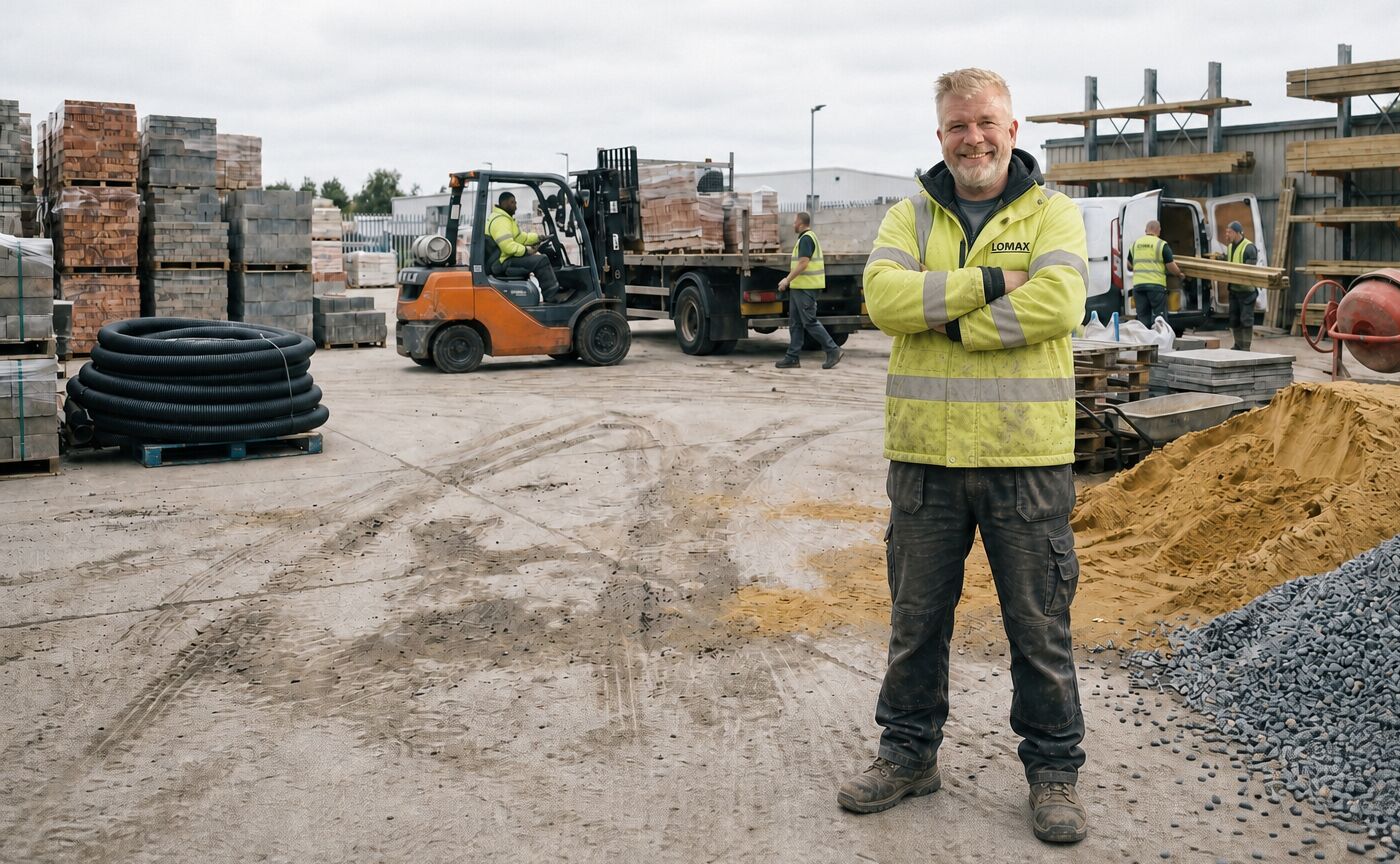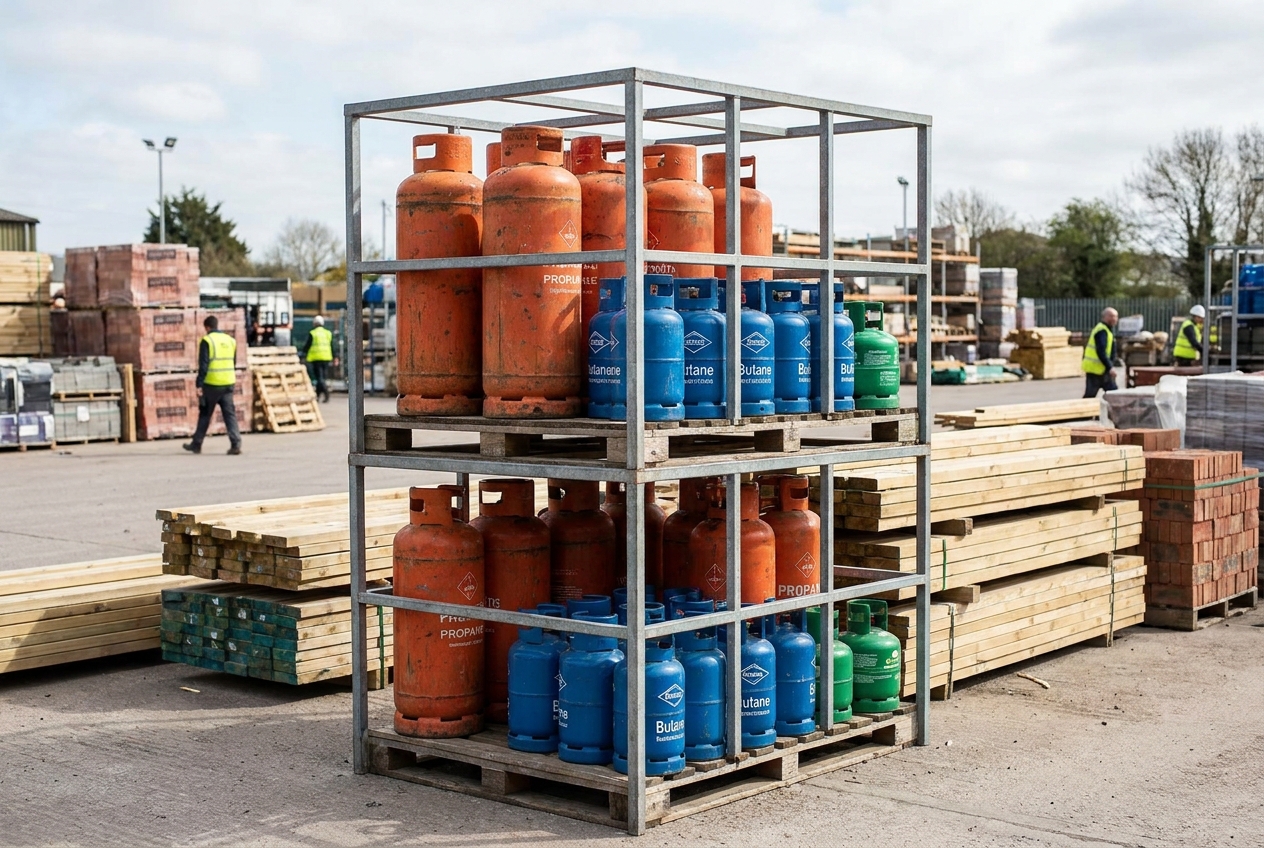
Most people looking for Calor Gas in Nottingham want three things: a stockist that is open when they need it, the right size bottle actually on the shelf, and someone who can tell them which regulator fits. We have been a builders merchant at Bobbers Mill since 1890 and an official Calor stockist for the trade and the public, so the gas sits alongside the bricks, timber and roofing rather than in a corner of a garage forecourt.
This page explains what we hold, how an exchange works at the counter, which gas suits which job, and how to get a cylinder home safely. If you already know what you need, the quickest route is to call 0115 929 2350 to check stock, then come and collect.
On this page
- 1.What Calor Gas we keep on the yard
- 2.How an exchange works at the counter
- 3.Propane, butane or Patio Gas: which do you need
- 4.Gas for site, trade and catering
- 5.Gas for home, caravan and garden
- 6.Regulators, hoses and fittings
- 7.Carrying cylinders home and storing them
- 8.Where we are and when we are open
- 9.Frequently asked questions
What Calor Gas we keep on the yard
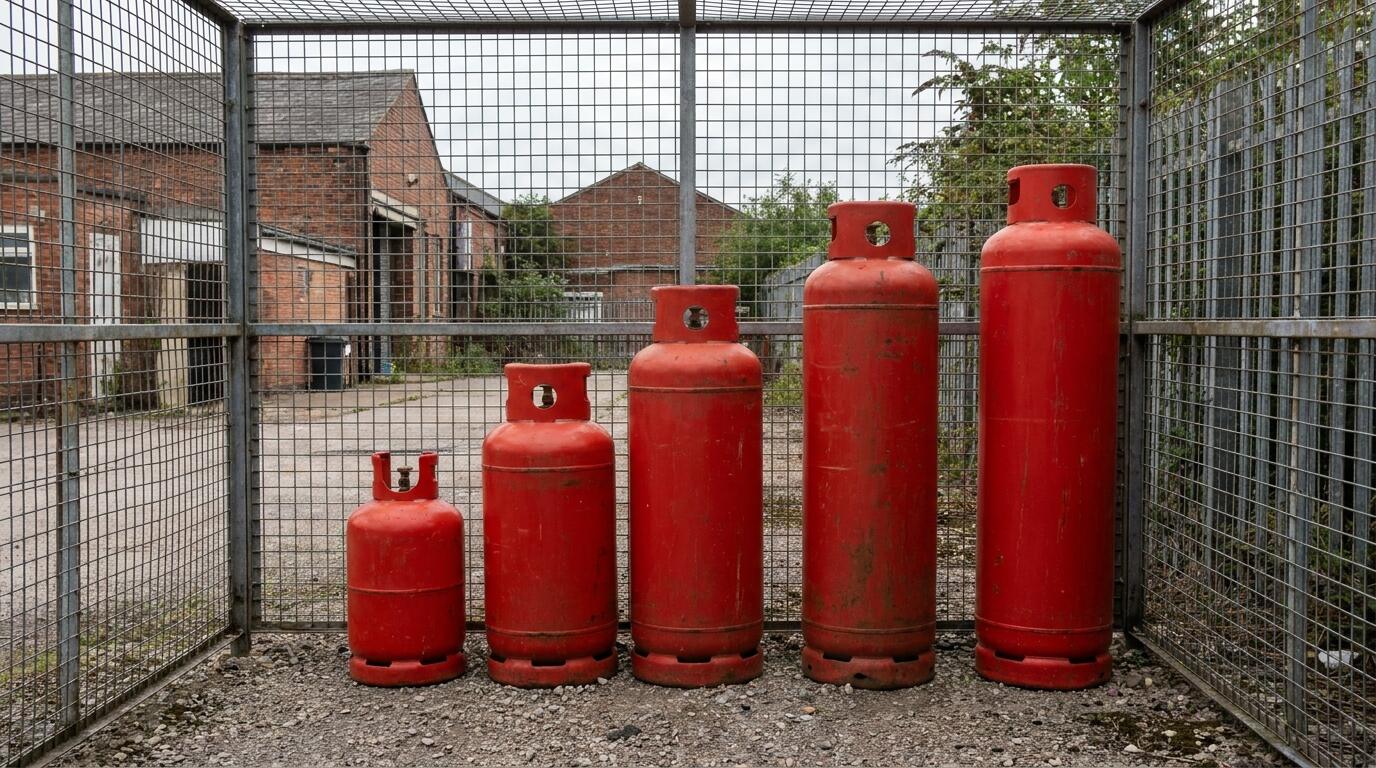
Calor supply three families of cylinder and we stock all three. Propane comes in red cylinders, butane in blue, and Patio Gas is propane in a green cylinder with a clip-on valve made for barbecues and patio heaters. The table shows the sizes Calor produce. Which sizes are on the shelf on a given morning depends on what has gone out that week, so if you need a particular one, call to check stock before you set off.
| Gas | Colour | Sizes | Typical use |
|---|---|---|---|
| Propane | Red | 3.9kg, 6kg, 13kg, 19kg, 47kg | Site heaters, torches, catering, caravans in winter, off-grid homes |
| Butane | Blue | 4.5kg, 7kg, 15kg | Cabinet heaters, cookers, caravans in summer, camping |
| Patio Gas (propane) | Green | 5kg, 13kg | Gas barbecues, patio heaters, pizza ovens |
Alongside the cylinders we stock the parts that make them useful: 37mbar propane regulators with the screw-on POL fitting, 28mbar clip-on butane regulators, 27mm clip-on regulators for Patio Gas, adjustable high-pressure regulators for roofing torches and burners, orange LPG hose, hose clips, caravan pigtails and the spanners for POL connections. If a job needs something we do not keep, we can usually order it.
The Calor range is described in more detail on the pages for propane bottles, butane bottles and Patio Gas. The homepage Calor section has the short version. Prices are quoted at the counter rather than published online, and the same price applies to trade and public customers on a straight exchange.
How an exchange works at the counter
Calor cylinders are not sold outright. They stay the property of Calor, and you use them under a cylinder refill agreement. The first time you take a bottle away you pay a one-off cylinder charge for that size, and from then on you only pay for the gas each time you swap an empty for a full one. That is why an exchange is quicker than a first purchase: you hand the empty over, we hand a full one back and you pay for the gas.
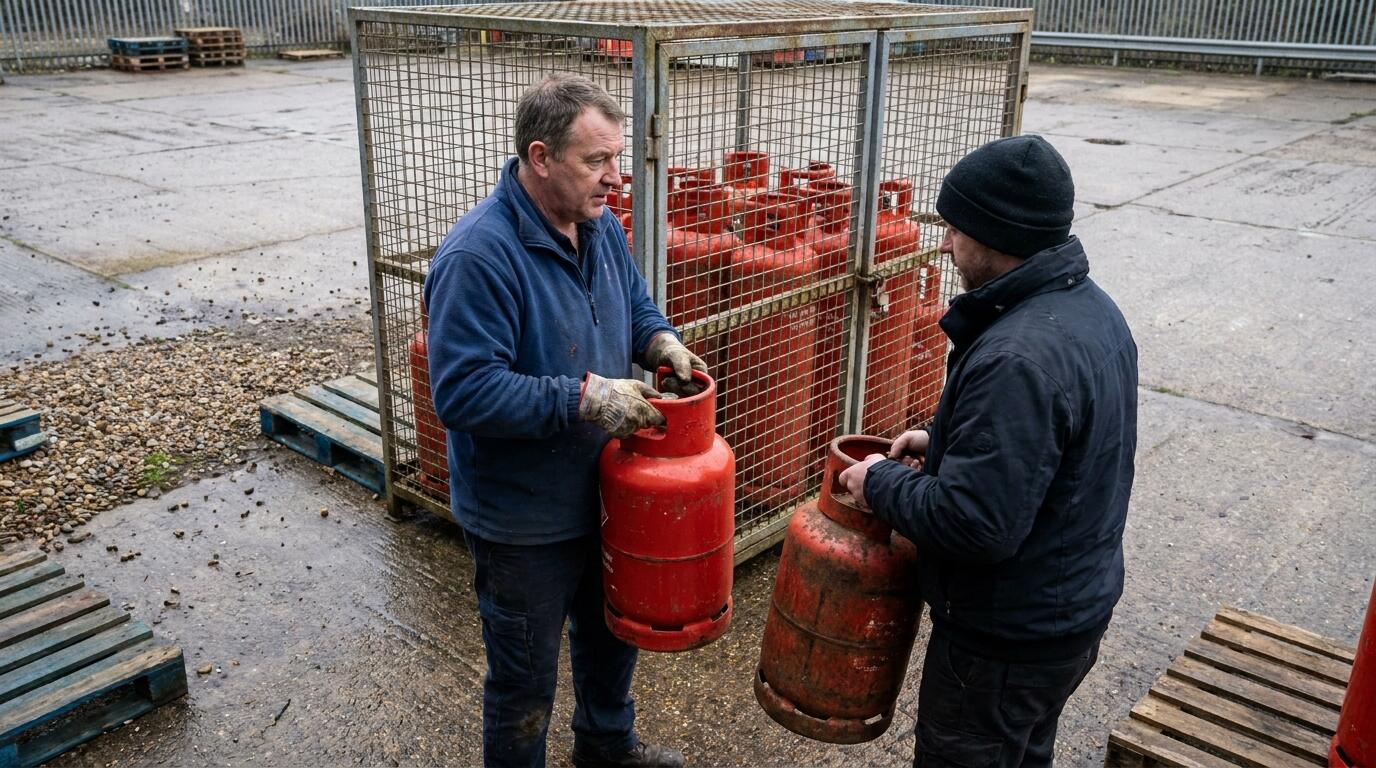
In practice it goes like this. Bring the empty cylinder to the counter, or leave it in the car and tell us which size it is. We check the cylinder is a Calor bottle in exchangeable condition, take it off you, and bring a full one of the same size from the cage. If you want to move up or down a size, say so; the cylinder agreement can be changed at the counter. Pay for the gas by card or cash, and we will help you load the full bottle if it is one of the heavier sizes.
If you do not have a Calor cylinder yet, the counter will set you up with an agreement on your first visit. It takes a few minutes and we need nothing more than your name and address. The full detail, including what happens if your cylinder is damaged or belongs to another supplier, is on the bottle exchange and refills page.
One thing worth being clear about: we exchange cylinders, we do not refill them. Nobody should be refilling a Calor cylinder anywhere except Calor. Empties collected here go back to Calor to be checked, tested where due and refilled under controlled conditions, and the full bottle you take away has been through that process.
Propane, butane or Patio Gas: which do you need
The question we answer most often is which gas to buy. The short rule is that propane works outdoors and in any weather, butane is for indoor appliances and warm-weather use, and Patio Gas is propane packaged for barbecues. Here is the reasoning behind that.
Propane boils at minus 42 degrees Celsius, so it turns to gas and gives full pressure through a British winter. It is the choice for anything that lives outside or on a building site: space heaters, roofing torches, catering burners, caravans used out of season and 47kg cylinders feeding a house. It is only ever stored and used outdoors, which is why a propane cylinder should not be inside a house or flat.
Butane boils at about minus 0.5 degrees Celsius. On a cold night it stops vaporising and the appliance fades or goes out, which is why it is a summer gas. Its advantage is that it burns at lower pressure and is sold in cylinders designed for indoor portable heaters, so it is what goes in a cabinet heater, a portable cooker or a caravan between spring and autumn.
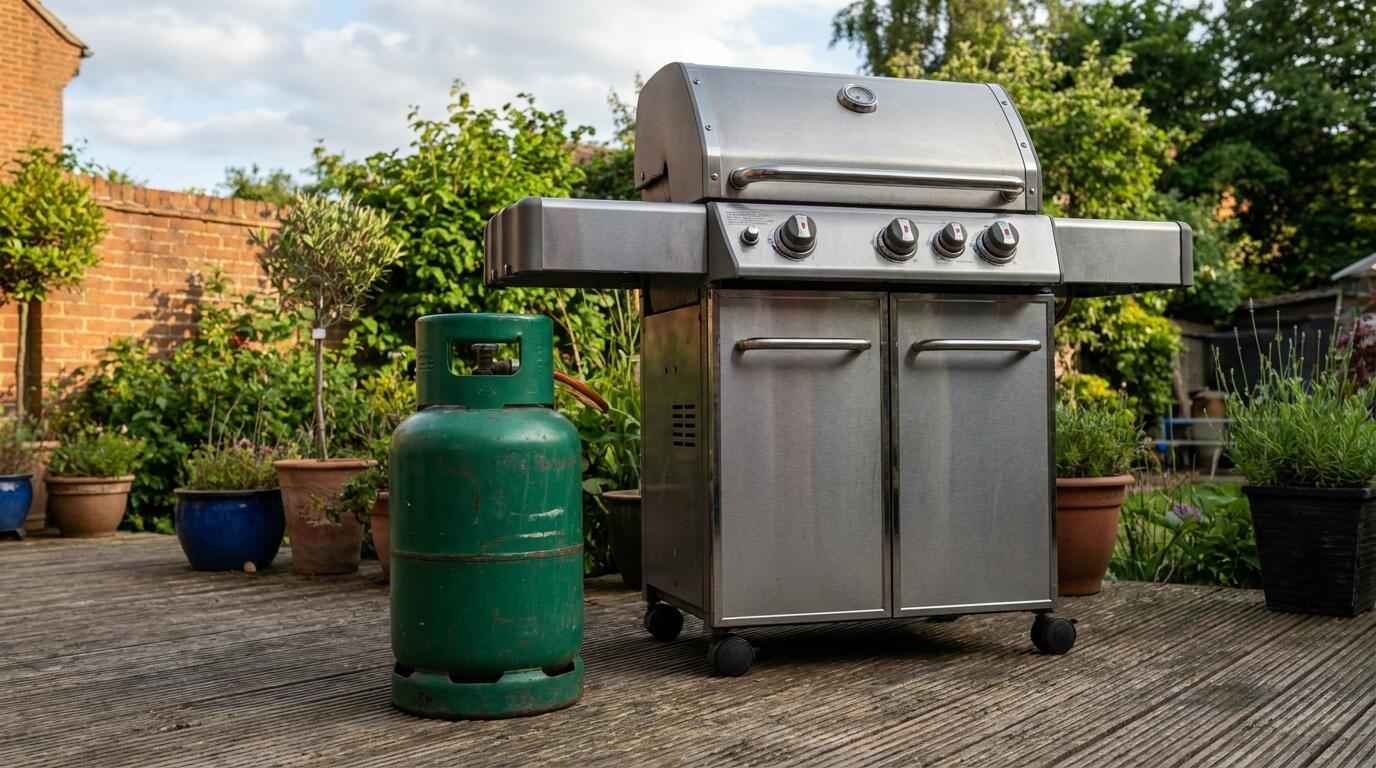
Patio Gas is propane in a green cylinder with a 27mm clip-on valve rather than the screw-on POL fitting on a red bottle. Most gas barbecues and patio heaters sold in the UK come with a clip-on regulator to match. The gas inside is identical to red propane; the difference is the connection and the squat shape of the 5kg bottle that sits in a barbecue cabinet.
If your appliance is already fitted with a regulator, the regulator tells you the gas. A screw-on brass fitting is propane, a 21mm push-on is butane, a 27mm push-on is Patio Gas. Bring the regulator or a photo of it and we will match the bottle.
Gas for site, trade and catering
Because we are a builders merchant first, a good share of the gas that leaves the yard goes to tradespeople. The pattern is predictable across the year and we stock accordingly.
Site heating. From October to March, propane space heaters keep plasterers plastering and screeds curing. A typical 19kg or 47kg propane cylinder will run a heater through a working day; a 13kg is handy for a single room or a van-based job. Heaters need a 37mbar propane regulator or, on larger units, an adjustable high-pressure regulator; check the heater’s data plate and we will fit the right one.
Roofing. Torch-on felt and bitumen work runs on propane through a gas torch with a high-pressure regulator. Roofers usually take 13kg or 19kg cylinders because they are a manageable weight on a ladder hoist and last a decent shift. We keep the torches, hoses and regulators in the roofing supplies store as well.
Plumbers, groundworkers and fabricators. Small propane cylinders feed blowlamps for soldering and lead work, drain-thawing torches and shrink-wrap guns. The 3.9kg and 6kg sizes fit in a van without taking over.
Catering and events. Mobile catering, burger vans and outdoor kitchens run on propane, usually 13kg or 19kg cylinders, sometimes 47kg for a fixed pitch. Propane is the correct gas for catering appliances rated for it, and the cylinder must live outside the unit in a ventilated, secured position. Ask about trade accounts if you are collecting gas every week; it is simpler for both sides than paying each visit.
Gas for home, caravan and garden
The other half of the gas trade is domestic and leisure, and the questions are just as practical.
Portable cabinet heaters. The heater on castors in the living room runs on butane, almost always a 15kg cylinder inside the cabinet with a 28mbar clip-on regulator. It is one of the few gas appliances designed for indoor use, and the rules are simple: keep a window or vent open, never use it in a bedroom or bathroom, and store spare cylinders outside. The butane page covers run times and ventilation in more depth.
Caravans and motorhomes. Most touring vans use a 6kg propane or 7kg butane cylinder because both fit a standard gas locker. Vans built from September 2004 have a 30mbar bulkhead regulator that runs on either gas with the right pigtail, so the choice comes down to when you tour: butane for summer, propane for anything with a frost in it. See caravan and motorhome gas for lockers, pigtails and changeover valves.
Barbecues, patio heaters and pizza ovens. These take Patio Gas. A 5kg bottle suits a two- or three-burner barbecue and slides into the cabinet; a 13kg is the choice for a big grill, a patio heater or a summer of regular cooking. Spring and bank-holiday weekends are the busiest times for exchanges, so it pays to swap early.
Off-grid homes and outbuildings. A property without mains gas will often run a cooker or a boiler on 47kg propane cylinders, usually in pairs with an automatic changeover valve so the supply does not stop mid-meal. We keep 47kg cylinders on the yard and can deliver them; ring to arrange it.
Regulators, hoses and fittings
A cylinder on its own does nothing. The regulator drops the cylinder pressure to what the appliance is designed for, and the hose carries it there. Using the wrong regulator is the most common mistake we see, so here is the short version.
| Cylinder | Valve | Regulator | Pressure |
|---|---|---|---|
| Red propane, all sizes | Screw-on POL (left-hand thread) | Propane regulator | 37mbar |
| Blue butane 7kg and 15kg | 21mm clip-on | Butane clip-on regulator | 28mbar |
| Blue butane 4.5kg | Screw-on butane thread | Butane screw-on regulator | 28mbar |
| Green Patio Gas 5kg and 13kg | 27mm clip-on | Patio Gas clip-on regulator | 37mbar |
| Caravans and motorhomes from September 2004 | Pigtail to suit cylinder | Fixed 30mbar bulkhead regulator | 30mbar |
Propane POL fittings tighten anticlockwise, which catches people out. Torches, some catering burners and larger site heaters run at higher pressure through an adjustable regulator rather than a fixed 37mbar one; check the appliance plate. Regulators and hoses have a working life. The date is stamped on the regulator body and printed on the hose, and if either is cracked, stiff or more than a few years old, replace it when you exchange the cylinder. It is a small cost against a gas leak.
We keep regulators, hose, clips and pigtails at the counter and will fit a regulator to a new cylinder for you so you can see how it goes on. Bring the old one if you are unsure; a match by eye is quicker than a description over the phone.
Carrying cylinders home and storing them
A gas cylinder travels safely in a car as long as a few rules are followed, and we will load it for you if you ask.
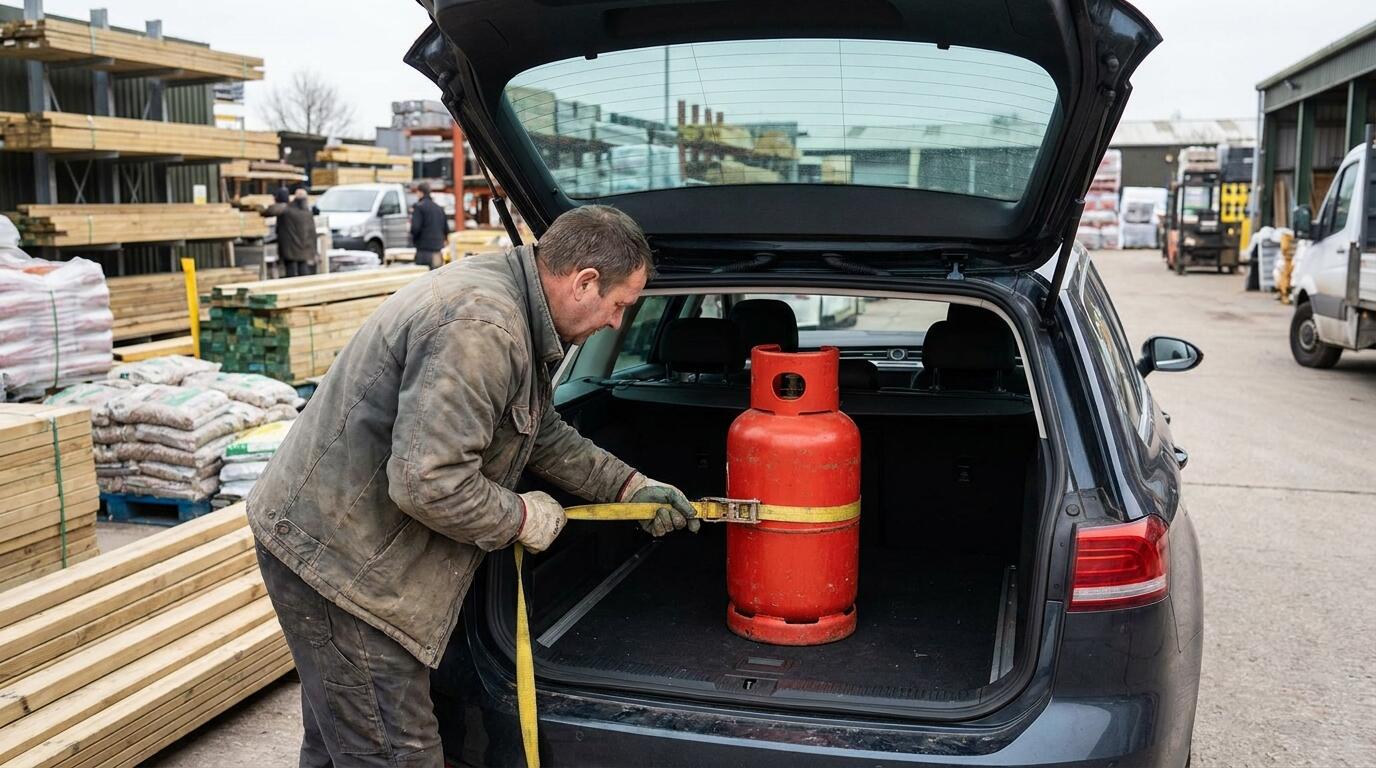
- Keep the cylinder upright, valve closed, with the plastic cap or plug in place. Wedge or strap it so it cannot roll.
- Open a window. Do not leave a cylinder in a hot, closed car longer than the journey, and take it out as soon as you are home.
- The heavier sizes are a two-person lift into a boot. A 47kg propane cylinder is the best part of 90kg when full; do not attempt it in a car, ask about delivery.
At home, the rules are the same for every cylinder. Store it upright and outdoors, on a firm level base, in the shade, away from drains, cellar openings and anything that could ignite it. LPG is heavier than air and will pool in a low spot if it leaks, which is why drains and basements matter. Keep the valve closed whenever the appliance is not in use, and keep cylinders where children cannot get at them. A butane cylinder connected to a cabinet heater is the exception that lives indoors, and even then spares should stay outside.
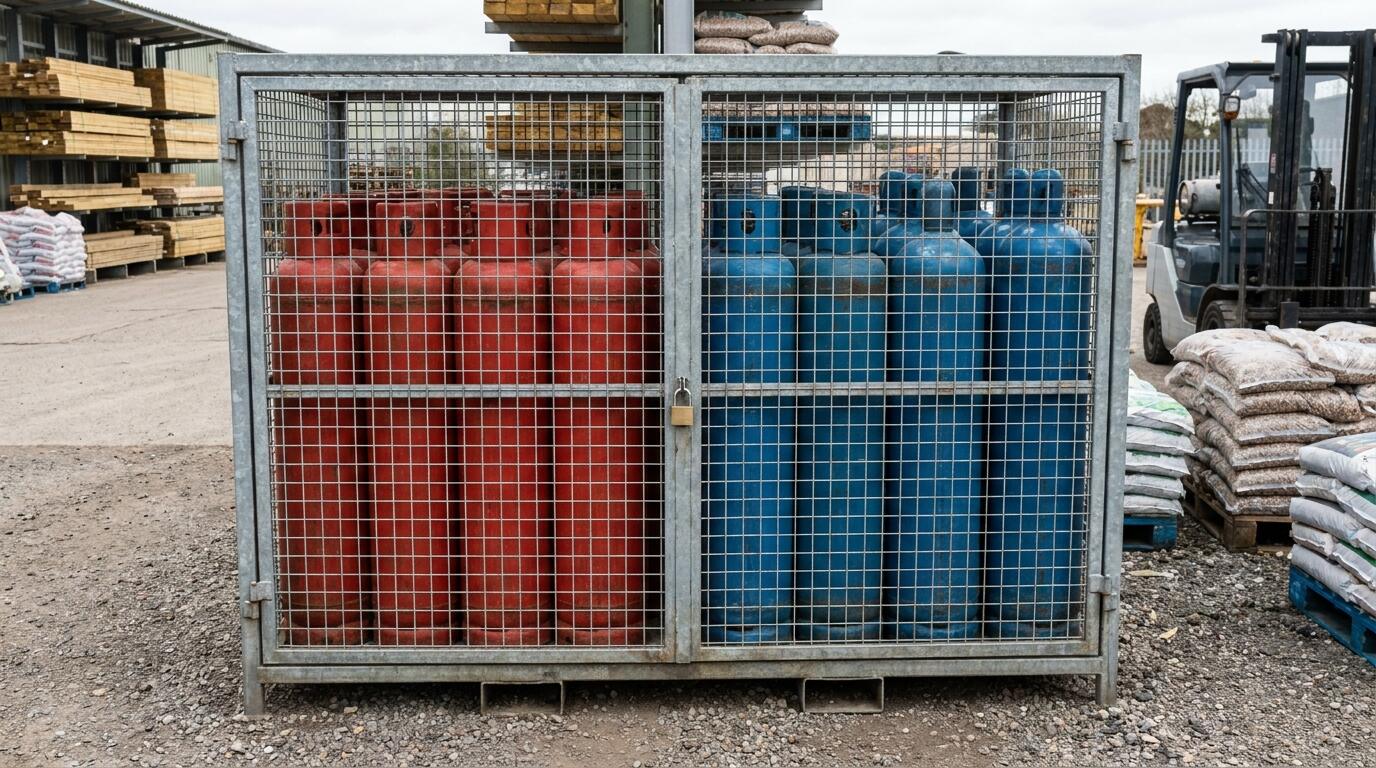
On site, cylinders should be in a locked cage or a secure ventilated compound away from the working area and from combustible materials, upright and with the valves closed at the end of the day. Empties should be stored the same way as full ones because they still hold a small amount of gas. Bring them back to us on the next run and swap them; they are worth nothing sitting in a compound.
Where we are and when we are open
The yard is at Whitemoor Lodge, 2 Nuthall Road, Bobbers Mill, Nottingham NG8 5AF. Nuthall Road is the A610, the road from the city centre out towards Nuthall, Kimberley and junction 26 of the M1. Coming from town, follow Alfreton Road through Radford and Hyson Green to the Bobbers Mill roundabout; the yard is just beyond it. From Bulwell, Basford, Aspley and Bilborough it is a few minutes along the ring road, and from the M1 it is straight in on the A610.
We open at 8:00am Monday to Friday and close at 5:00pm. On Saturday we open early, from 7:30am until 12:30pm, which is when a lot of barbecue and caravan exchanges happen. We are closed on Sunday, so if you are heading away for the weekend, swap your bottle on Saturday morning.
There is room to bring a car or van into the yard and stop next to the gas cage, and we will load the cylinder. If you need several cylinders, a 47kg, or gas delivered with a load of materials, ring ahead. We deliver across Nottingham and the surrounding area, and gas can go on the lorry with the blocks and timber for the same site. Because we are a full builders merchant, a site can get its heaters, its gas and its plasterboard from one phone call.
The homepage contact section has a map and the enquiry form. For stock, sizes and prices on the day, call 0115 929 2350.
Last updated 2026-08-29. Stock, sizes and availability change; call 0115 929 2350 to check before you set off.