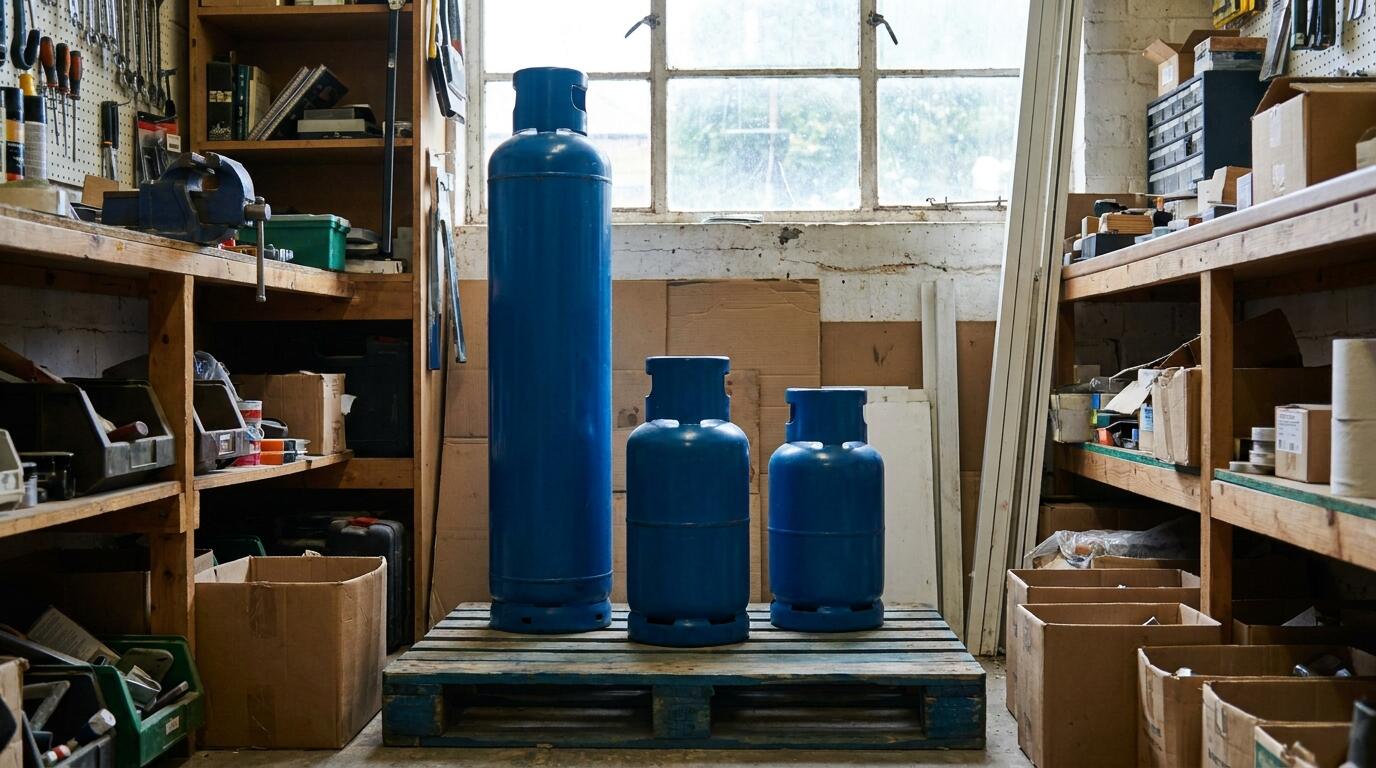
Butane is the gas most households meet first, usually inside a portable heater wheeled out when the boiler fails or a room will not warm up. It is also the gas in most camping stoves and the one caravanners buy for a summer tour. It burns cleanly at low pressure, the cylinders are a manageable size, and the 15kg bottle is designed to sit inside a cabinet heater. Its one weakness is cold, and knowing where that line falls saves you a wasted evening.
The facts below are standard across the industry. Whether we have a particular size on the shelf on a given day is not, so if you are driving over for a 15kg on the first cold night of the year, call 0115 929 2350 first.
On this page
- 1.Butane cylinder sizes
- 2.Butane for cabinet heaters
- 3.Butane for cookers, camping and portable appliances
- 4.Butane in caravans and motorhomes
- 5.Butane regulators: 28mbar clip-on and screw-on
- 6.Why butane stops working near freezing
- 7.Using butane indoors: ventilation and carbon monoxide
- 8.Getting butane from the yard
- 9.Frequently asked questions
Butane cylinder sizes
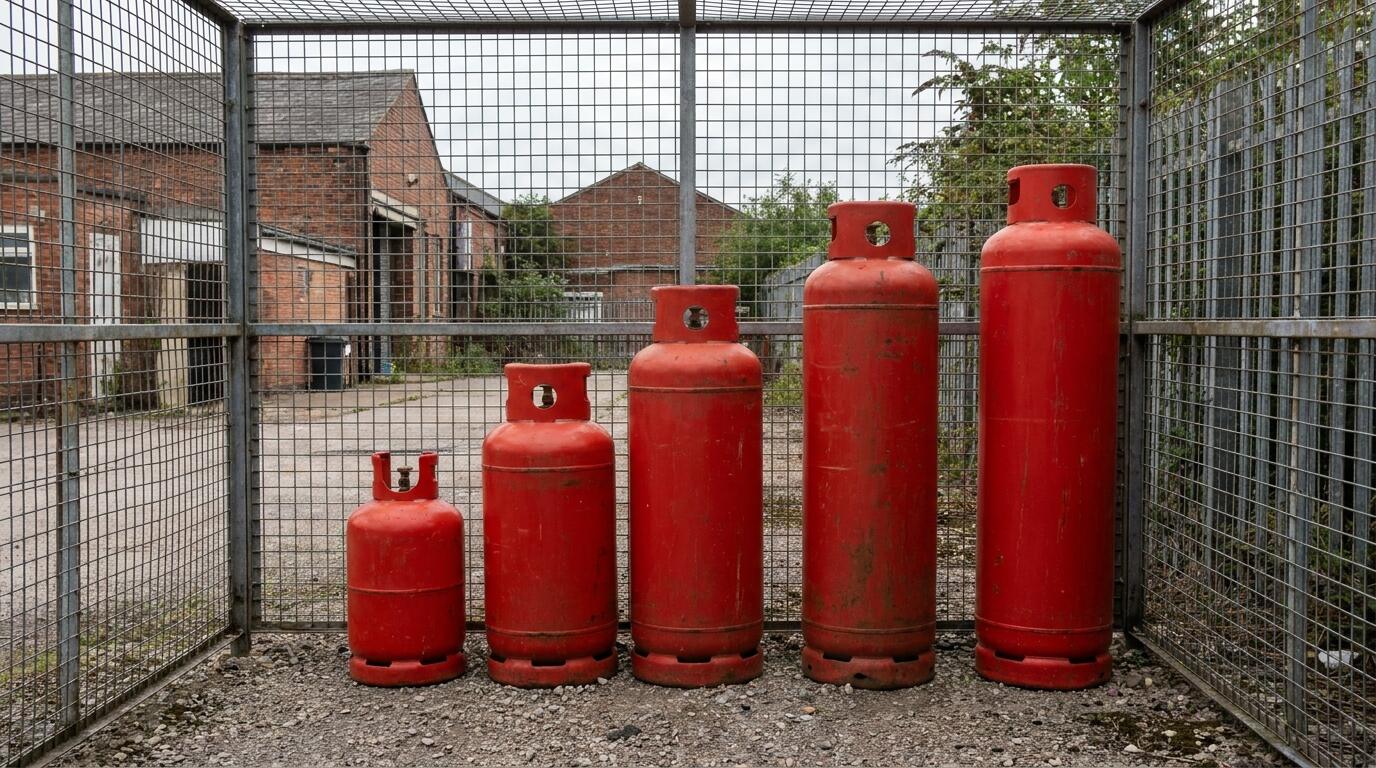
Calor make butane in three cylinder sizes. As with propane, the number is the weight of gas inside, not the weight you lift. The table gives approximate dimensions, the energy each holds at roughly 13.7kWh per kilo of butane, and the connection on the valve, which is where the sizes differ from each other.
| Size | Approx. height | Approx. diameter | Energy (approx.) | Connection |
|---|---|---|---|---|
| 4.5kg | 340mm | 240mm | 62kWh | Screw-on butane thread |
| 7kg | 495mm | 256mm | 96kWh | 21mm clip-on |
| 15kg | 580mm | 318mm | 205kWh | 21mm clip-on |
4.5kg is the camping and portable cooker size. It has a screw-threaded valve rather than a clip-on one, and takes a screw-on butane regulator, so a regulator from a 7kg will not fit it. It is light, fits in a car boot beside the tent and lasts a family a fortnight of camp cooking.
7kg is the caravan size. It shares its footprint with the 6kg propane cylinder, so both fit a standard front locker, and it uses a 21mm clip-on regulator or the butane pigtail on a post-2004 van. It also suits portable cookers and smaller heaters.
15kg is the cabinet heater cylinder. Nearly every portable gas heater sold for indoor use in the UK is built around a 15kg butane bottle with a 21mm clip-on regulator, and it is the size we exchange most in winter. It shares its footprint with the 13kg propane cylinder.
The full Calor range, including propane and Patio Gas, is on the Calor Gas stockist page and in the homepage Calor section.
Butane for cabinet heaters
The portable cabinet heater is the reason most people buy butane. It is a metal cabinet on castors with a radiant panel on the front, a 15kg cylinder inside and a clip-on regulator on top of the cylinder. It needs no flue, no electricity and no installation, which is why it is the emergency heat in so many homes and the only heat in some workshops and conservatories.
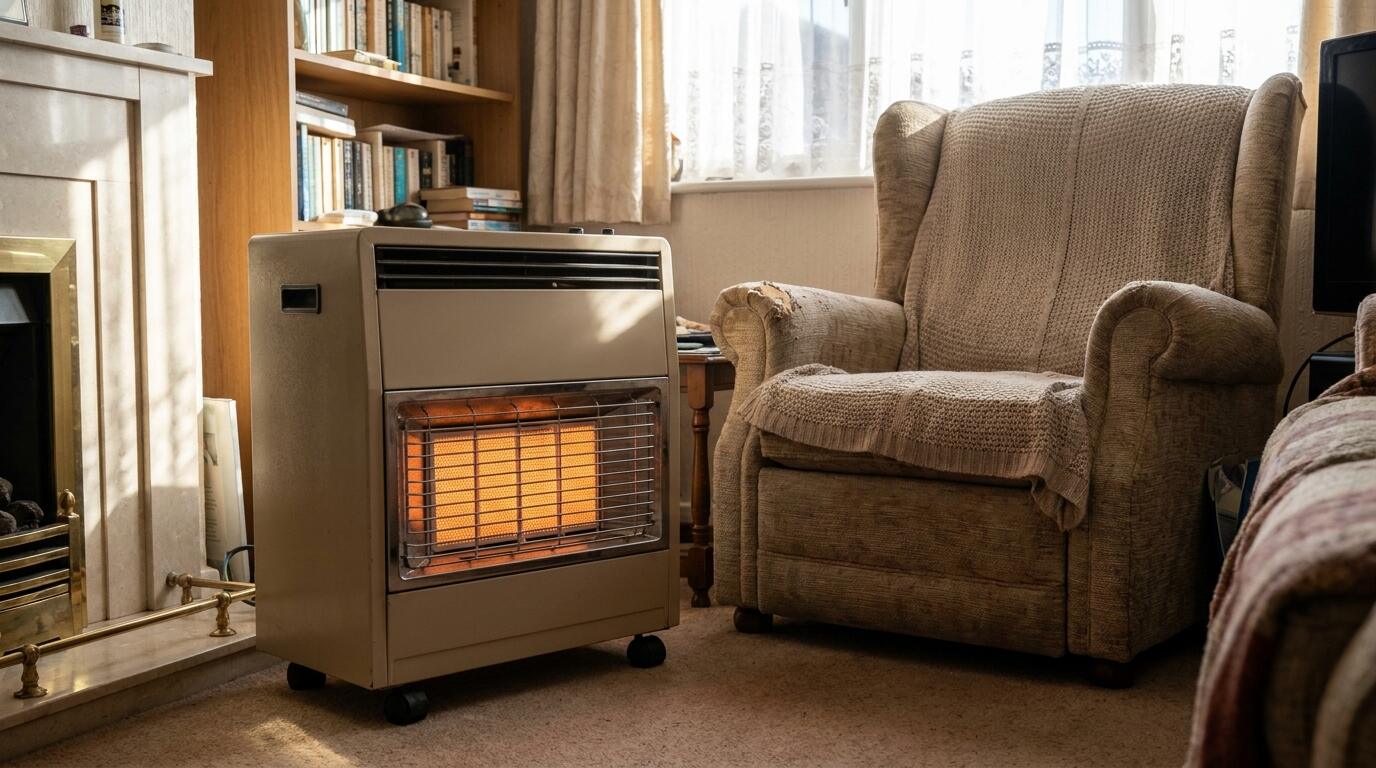
A typical heater has a maximum output of around 4.2kW, with three settings that roughly correspond to one, two or three panels lit, about 1.4kW, 2.8kW and 4.2kW. On a full 15kg cylinder holding roughly 205kWh, that gives in the region of 48 hours on the high setting, 70 hours on medium and over 140 hours on low. For most people that is several weeks of evenings on one bottle. If you are running it all day every day through a cold snap, budget for a swap roughly every ten days to a fortnight and keep a spare outside.
Fitting a cylinder: with the cylinder upright inside the cabinet, remove the plastic cap, check the black rubber seal in the valve is present and undamaged, push the clip-on regulator down firmly until it clicks, then turn the regulator switch on. Light the heater following its own instructions. To remove, switch the regulator off, lift the collar and pull it off the valve; a small puff of gas is normal.
The heater needs ventilation, which is covered below, and it should never be moved while lit. Spare cylinders live outside, not in the cupboard under the stairs. Once the 15kg is empty, bring it in and swap it; see the bottle exchange page for how that works and what to bring.
Butane for cookers, camping and portable appliances
Away from heaters, butane runs most of the small portable cooking kit sold in the UK: double-burner camping stoves, single-ring portable cookers, small gas grills and the two- or three-ring hobs in tents and beach huts. The 4.5kg and 7kg cylinders are the sizes that go with them.
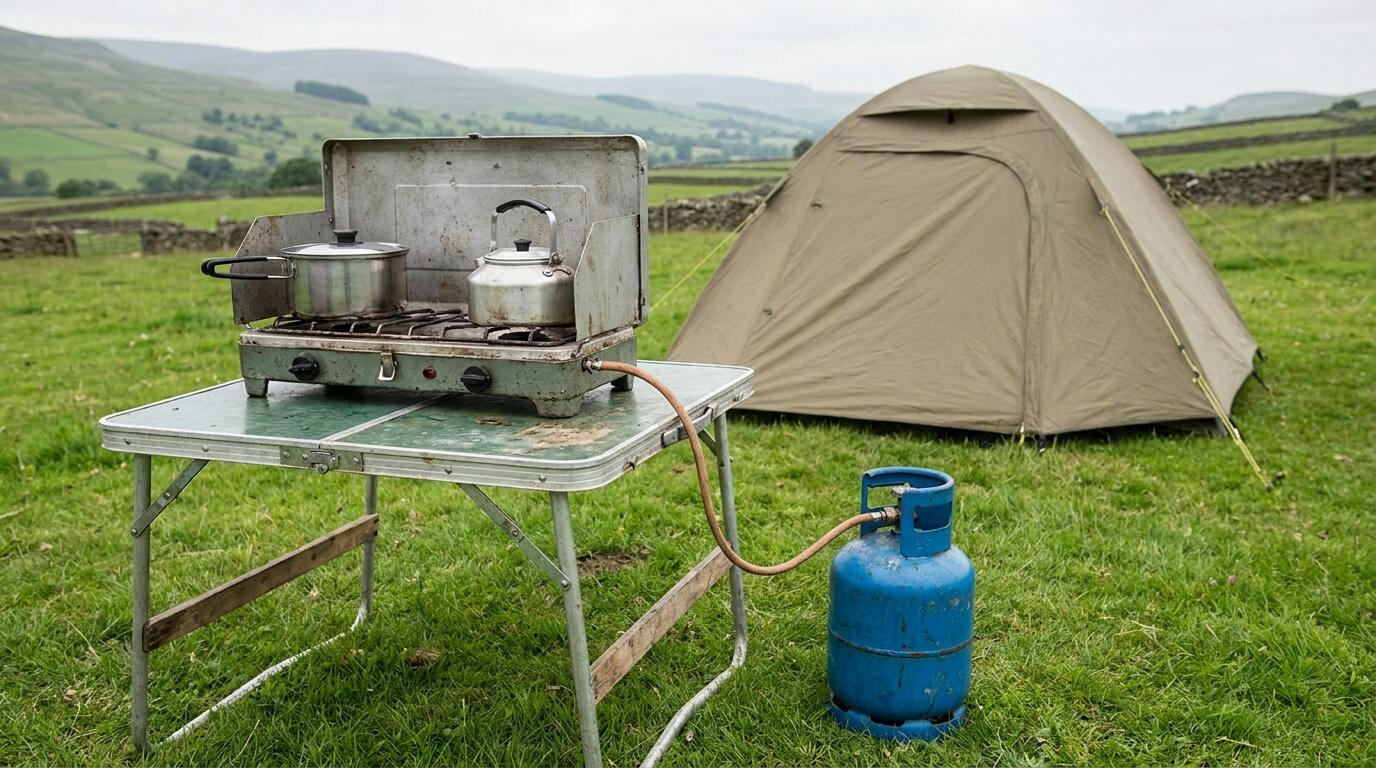
A two-burner camping stove is typically rated at around 3kW to 4kW total with both burners flat out. On a 4.5kg cylinder holding around 62kWh, that is 15 to 20 hours of full-blast cooking, and since most camp cooking is one burner on simmer, a 4.5kg comfortably covers a fortnight of breakfasts and dinners. A 7kg goes further and is the better buy for a long season or a larger family.
Two fittings to know about. The 4.5kg cylinder has a screw-on valve and needs a screw-on butane regulator, hand-tightened, with a washer in good condition. The 7kg has the same 21mm clip-on valve as the 15kg. Both regulators are 28mbar; the difference is purely the connection. Many camping stoves come with a hose tail and no regulator, so check what you have before you buy the cylinder.
Butane suits camping because summer temperatures are well above its boiling point and the cylinders are light. For early spring, autumn or anywhere with cold nights, the same stove will run on propane through a 37mbar propane regulator and a 3.9kg or 6kg cylinder, with no change to the stove. Check the stove’s plate: most are rated for both gases at their respective pressures. If yours is butane-only, stick with butane and pick your weekends.
Portable appliances should be used outdoors or in a well-ventilated space, and never inside a tent or awning, where carbon monoxide can build up in minutes.
Butane in caravans and motorhomes
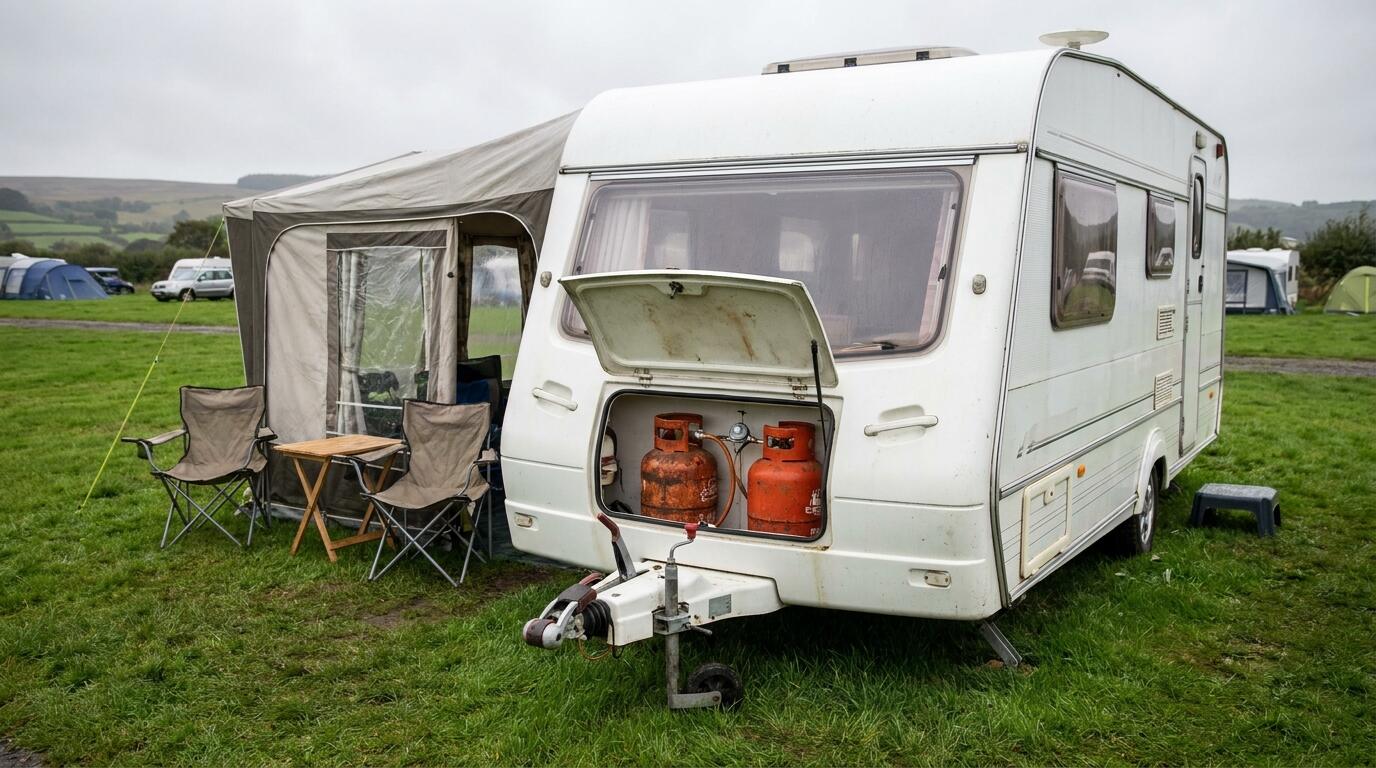
Caravanners have argued butane against propane for decades, and the honest answer is that both are right at different times of year. Butane holds slightly more energy per kilo and the 7kg cylinder is the traditional summer choice: a fortnight of cooking, hot water and the fridge on a single bottle for most couples, with a second on a changeover for longer trips.
The regulator arrangement depends on the age of the van. Caravans and motorhomes built from September 2004 have a fixed 30mbar bulkhead regulator inside the gas locker, and the cylinder connects to it through a pigtail hose. To run butane you fit a pigtail with a 21mm clip-on end; to run propane you fit one with a POL end. The appliances are designed to run either gas at 30mbar, so switching between them is a matter of the pigtail and the cylinder, nothing else.
Older vans have the regulator on the cylinder itself, and it must match the gas: a 28mbar clip-on regulator for butane, a 37mbar POL regulator for propane. The appliances in those vans were set up for one gas or the other, so stick with what the van was built for unless a gas engineer has converted it.
Where butane lets caravanners down is the first cold night. If you tour in April, October or over the New Year, the heating and hot water will struggle or stop on butane, and swapping to a 6kg propane cylinder, which fits the same locker, removes the problem. Gas locker rules, pigtail life, changeover valves and winter touring are covered on the caravan and motorhome gas page.
Butane regulators: 28mbar clip-on and screw-on
Butane appliances in the UK run at 28mbar, and every butane regulator sold here delivers that pressure. The only choice you need to make is the connection, and that is decided by the cylinder.
| Cylinder | Valve | Regulator | Pressure |
|---|---|---|---|
| Butane 7kg and 15kg | 21mm clip-on | 21mm clip-on butane regulator | 28mbar |
| Butane 4.5kg | Screw-on butane thread | Screw-on butane regulator | 28mbar |
| Any butane cylinder in a post-2004 caravan | Pigtail with 21mm clip-on or screw end | Fixed 30mbar bulkhead regulator | 30mbar |
Clip-on regulators are the easiest fitting in the gas world: check the rubber seal in the cylinder valve, push the regulator down until it clicks, turn the switch to on. To release, switch off, lift the collar, pull. There is no thread to cross and no spanner. The 21mm butane clip-on is a different size from the 27mm Patio Gas clip-on, so the two cannot be mixed up by accident.
The 4.5kg cylinder’s screw-on regulator tightens by hand, clockwise, onto the valve thread, with a washer between them. If the washer is missing or perished it will leak; replace it rather than overtightening.
Regulators have a stamped date and a working life of around ten years. Hoses are printed with a year and should be replaced every few years or as soon as they crack or stiffen. A 28mbar butane regulator must not be used on propane, and a 37mbar propane regulator must not be used on butane; the pressures are different and the appliance was designed for one. If you change gas, change the regulator. We keep all of these at the counter and will fit one to show you how it goes on.
Why butane stops working near freezing
A gas cylinder does not contain gas in the way a balloon does. It contains liquid under pressure, and the gas you burn is the vapour boiling off the top of that liquid. How readily it boils depends on the temperature. Butane boils at about minus 0.5 degrees Celsius at atmospheric pressure, so as the outside temperature falls towards freezing the pressure inside the cylinder falls with it, and at a few degrees above zero there is often not enough to run a heater or a hob properly. The flame shrinks, the heater output drops, and on a frosty night it goes out with liquid still in the bottle.
Propane boils at minus 42 degrees, which is why it carries on regardless. The two gases are otherwise so alike that the choice between them is really a question of the coldest temperature the cylinder will see.
This has practical consequences. A cabinet heater in a heated house is fine, because the cylinder is inside the cabinet in a warm room. The same heater in an unheated garage or conservatory in January may fade, and the answer is to warm the room with something else first or accept that butane is the wrong gas for that space. A camping stove on a May morning works; the same stove at a bonfire-night party may not. A caravan on butane in October will lose its heating on the first clear night.
What not to do: never warm a cylinder with a flame, a fan heater, hot water or by standing it on a radiator. Never lay it on its side to get the last of the liquid out; the regulator is designed for vapour and liquid butane reaching it is dangerous. If cold is the problem, the answer is a propane cylinder with the right regulator.
Using butane indoors: ventilation and carbon monoxide
Butane is the one bottled gas with an appliance designed to be used inside a home, and the rules for doing that safely are not optional. A cabinet heater burns gas in the room and puts the products of combustion into the room. In a well-ventilated space that is water vapour and carbon dioxide; in a sealed space, or with a dirty burner, it is carbon monoxide, which is colourless, odourless and kills.
- Ventilate. Keep a window open or a permanent air vent clear in any room the heater is running in. Manufacturers specify a minimum room size; do not use a heater in a room smaller than that.
- Never in bedrooms, bathrooms or anywhere you sleep. Do not leave the heater running overnight.
- Fit a carbon monoxide alarm in the room. They cost little and they work.
- Watch the flame. It should be blue. Yellow or orange flames, soot marks, headaches or drowsiness mean the heater needs servicing and the room needs air now.
- Keep it clear. A metre from furniture, curtains and anything that could catch, on a level floor, never moved while lit.
- One cylinder indoors, and only the one in the heater. Spares are stored outside, upright, valve closed, away from drains.
Portable cookers and camping stoves are for outdoor use or a well-ventilated space, and never inside a tent, awning, caravan awning or a closed van. Caravans are designed for gas appliances and have drop-out vents in the floor and a sealed locker; a tent has none of that.
Check the cylinder’s valve seal before every fit, test with soapy water if you suspect a leak, and if you smell gas, shut the regulator off, open windows and doors, do not operate switches, and leave the room until it clears. If a heater is more than a few years old and has never been looked at, have it checked.
Getting butane from the yard
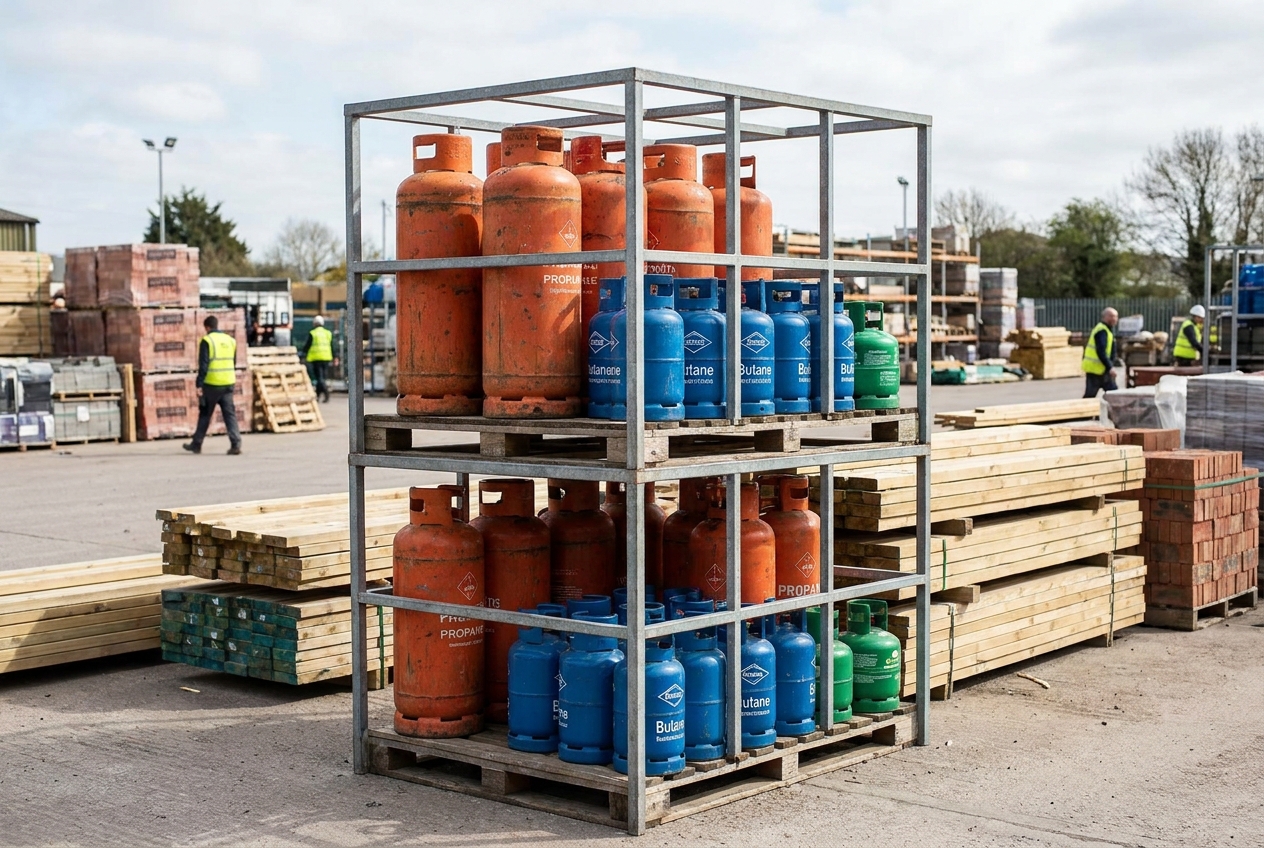
We exchange all three Calor butane sizes at Whitemoor Lodge, 2 Nuthall Road, Bobbers Mill, Nottingham NG8 5AF, on the A610 between the city centre and the M1. Hours are Monday to Friday 8:00am to 5:00pm and Saturday 7:30am to 12:30pm; closed Sunday.
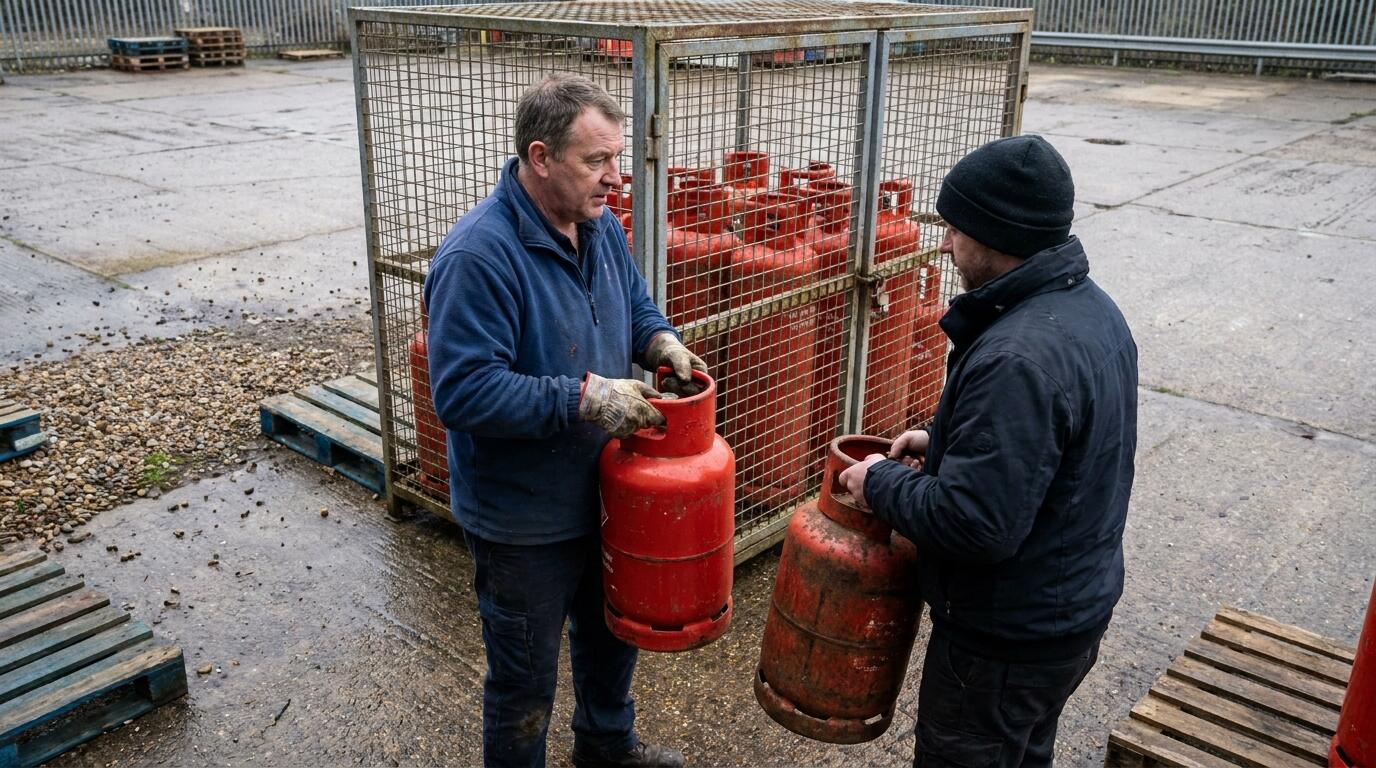
If you already have a Calor butane cylinder, bring the empty and swap it for a full one of the same size, paying only for the gas. If you are starting from nothing, perhaps with a new heater and no bottle, the counter will set you up with a cylinder agreement in a few minutes: a one-off cylinder charge for the first bottle, then just the gas on every exchange after. The charge varies by size and we quote it at the counter.
We keep 21mm clip-on and screw-on butane regulators, hose, clips and caravan pigtails alongside the cylinders, and will fit a regulator to show you how it works. Butane demand spikes on the first cold week of autumn, when every cabinet heater in Nottingham comes out of the garage at once, and again before bank holidays when caravans set off. If you rely on a heater, swap the empty in September rather than in the first frost.
The yard has space to pull in, and we will load a 15kg into the car for you: upright, strapped, valve closed and cap on, with a window open on the way home. If you would rather it came to the door, we deliver across Nottingham and the surrounding area; send an enquiry or call 0115 929 2350. And because we are a builders merchant, the plasterboard, insulation or fencing you were going to fetch anyway can come out on the same trip.
Last updated 2026-08-29. Stock, sizes and availability change; call 0115 929 2350 to check before you set off.