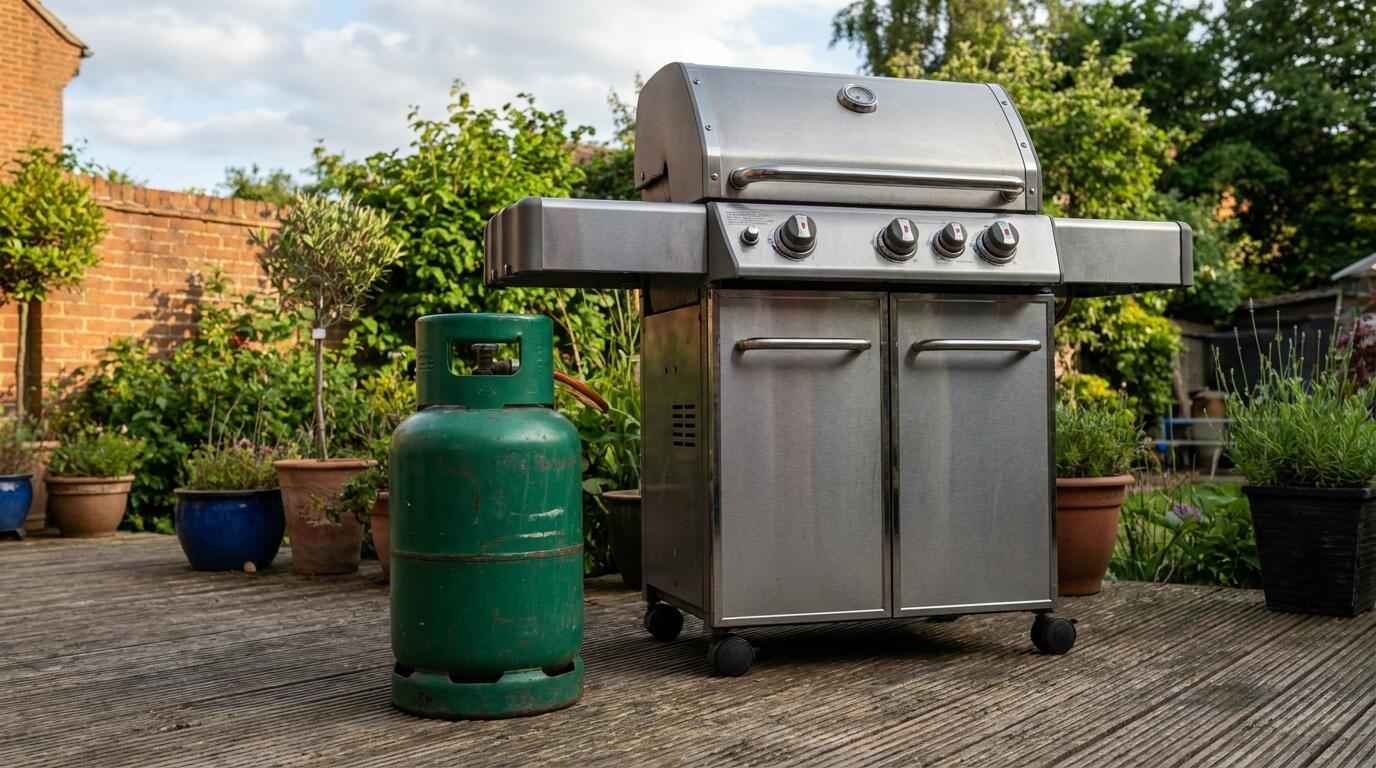
Every spring the same thing happens at the counter: someone has bought a gas barbecue, it came with a clip-on regulator, and they want to know which bottle fits it. The answer is nearly always Patio Gas. It is the cylinder built around the way people actually use a barbecue, which is a few hours at a time, a few times a month, over a summer, with the bottle tucked underneath. This page explains what is in it, what size to get, how to work out how long it will last and when to swap it so it does not run out halfway through a bank holiday.
The cylinder sizes, connections and safety rules are standard industry facts. Whether we have a 5kg on the shelf on a hot Saturday morning is not, so call 0115 929 2350 to check before you set off.
On this page
- 1.What Patio Gas is
- 2.Patio Gas sizes: 5kg and 13kg
- 3.The 27mm clip-on regulator
- 4.How long does a Patio Gas bottle last
- 5.Patio Gas for patio heaters
- 6.Pizza ovens, fire pits and other outdoor appliances
- 7.Summer stock advice: when to swap
- 8.Storing and using Patio Gas safely
- 9.Frequently asked questions
What Patio Gas is
Patio Gas is propane. The gas inside a green cylinder is the same gas as in a red one, with the same minus 42 degree boiling point, the same 37mbar working pressure and the same energy per kilo. What is different is the cylinder and its valve.
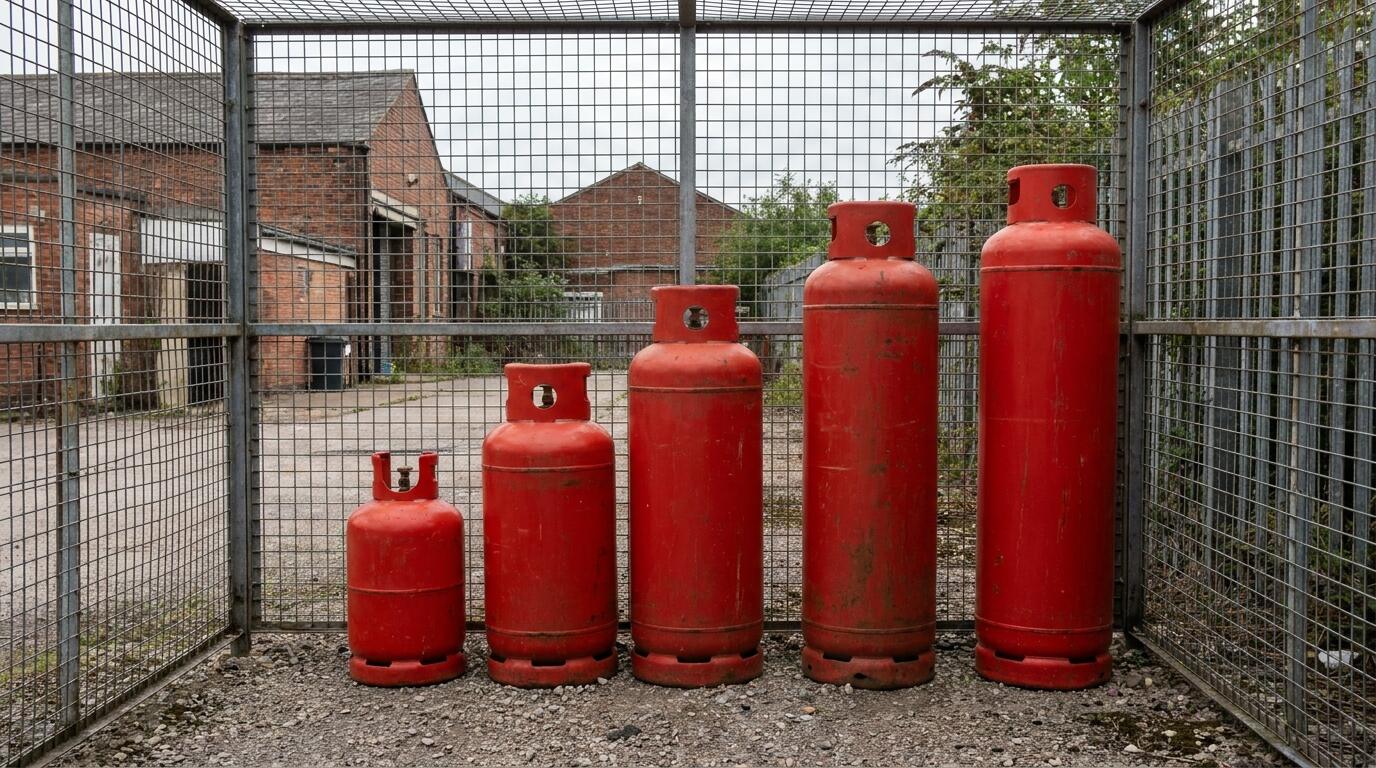
A red propane cylinder has a screw-on POL valve with a left-hand thread and needs a spanner and a screw-on regulator. That is fine on a building site and awkward on a patio. Patio Gas cylinders have a 27mm clip-on valve instead, so the regulator pushes on and clicks, and can be released with a lift of the collar. The 5kg bottle is also shorter and wider than the equivalent red cylinder, so it fits in the cabinet of a barbecue rather than standing beside it. Those two things are the whole point: an easy connection and a shape that goes where the appliance wants it.
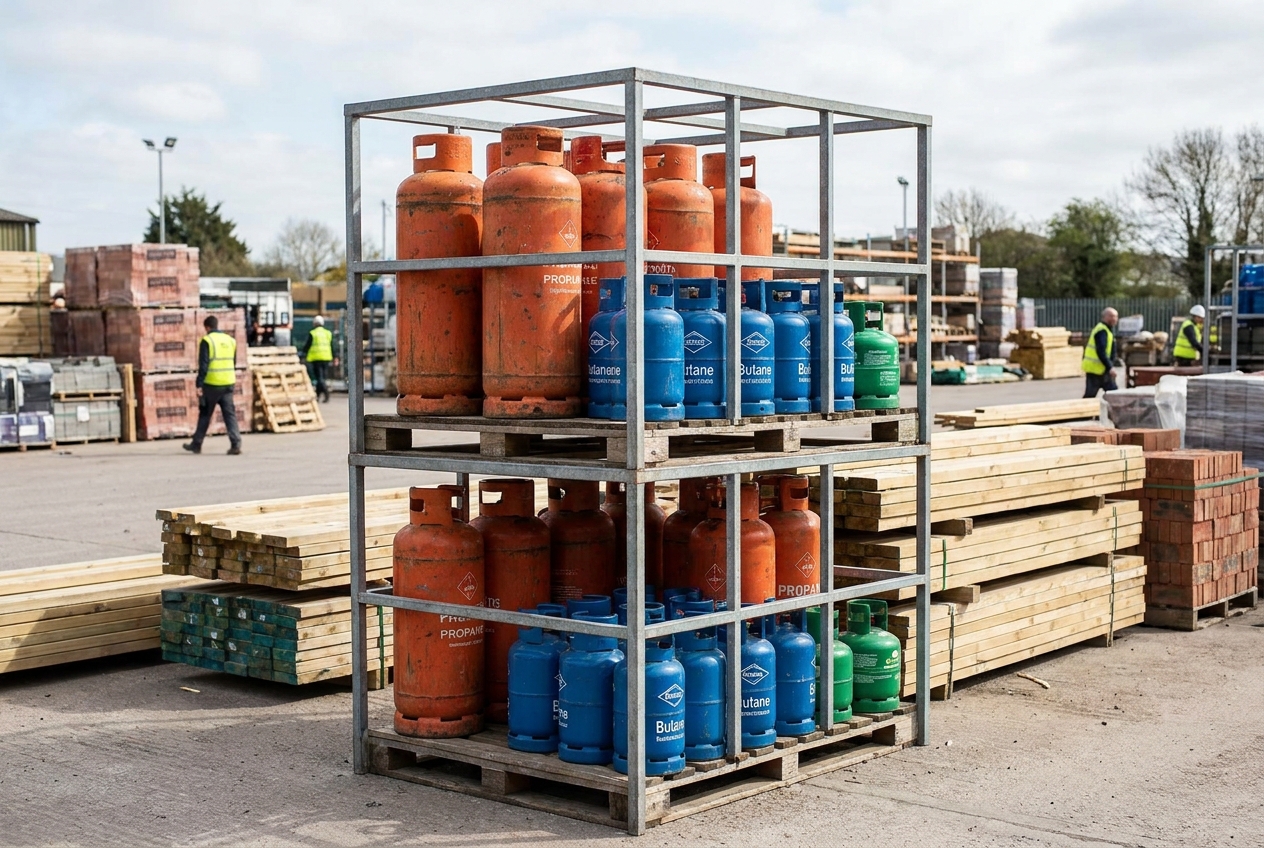
The green colour tells you at a glance what you are holding. Red is propane with a POL valve, blue is butane, green is propane with a clip-on valve. The three are described side by side on the Calor Gas stockist page.
Because it is propane, Patio Gas works in any weather. A patio heater in December runs exactly as well as a barbecue in July, which is not true of butane. It is also, like all propane, an outdoor-only gas: the cylinder never comes into the house, and the appliances it feeds are outdoor appliances. If you already own a red 13kg propane cylinder and a POL regulator, you can run a barbecue from it perfectly well by changing the barbecue’s regulator; the section on regulators below explains that.
Patio Gas sizes: 5kg and 13kg
Calor make Patio Gas in two sizes. Both hold propane and both have the same 27mm clip-on valve, so the same regulator fits either.
| Size | Shape | Energy (approx.) | Best for |
|---|---|---|---|
| 5kg | Squat, about 380mm tall | 68kWh | Two- and three-burner barbecues, fits most cabinets, pizza ovens, small heaters |
| 13kg | Standard tall cylinder, about 580mm | 177kWh | Large four- to six-burner barbecues, patio heaters, catering-style grills, a whole summer of cooking |
5kg is the barbecue bottle. It is light enough to carry in one hand, sits inside the cabinet of most trolley barbecues and gives a typical family a summer of weekend cooking. Its only drawback is that a big barbecue with all burners on will empty it in a long afternoon, and a patio heater will get through it in an evening.
13kg is the choice for anything with a large gas appetite: patio heaters, big multi-burner grills, outdoor kitchens and anyone who cooks on gas most evenings through the summer. It does not fit inside most barbecue cabinets and stands beside the appliance instead, connected by a longer hose. It is also the size to choose for a patio heater, which will otherwise send you to the yard every other week.
Both share the same regulator, so moving between them is a question of space and how often you want to swap. Many households run a 5kg in the barbecue and a 13kg on the heater. Whether either is in stock on the day changes with the weather, so check before you drive over.
The 27mm clip-on regulator
Patio Gas cylinders take a 27mm clip-on regulator that delivers 37mbar to the appliance. Most barbecues, patio heaters and pizza ovens sold in the UK come with one in the box, and the regulator is what tells you the appliance was made for Patio Gas.
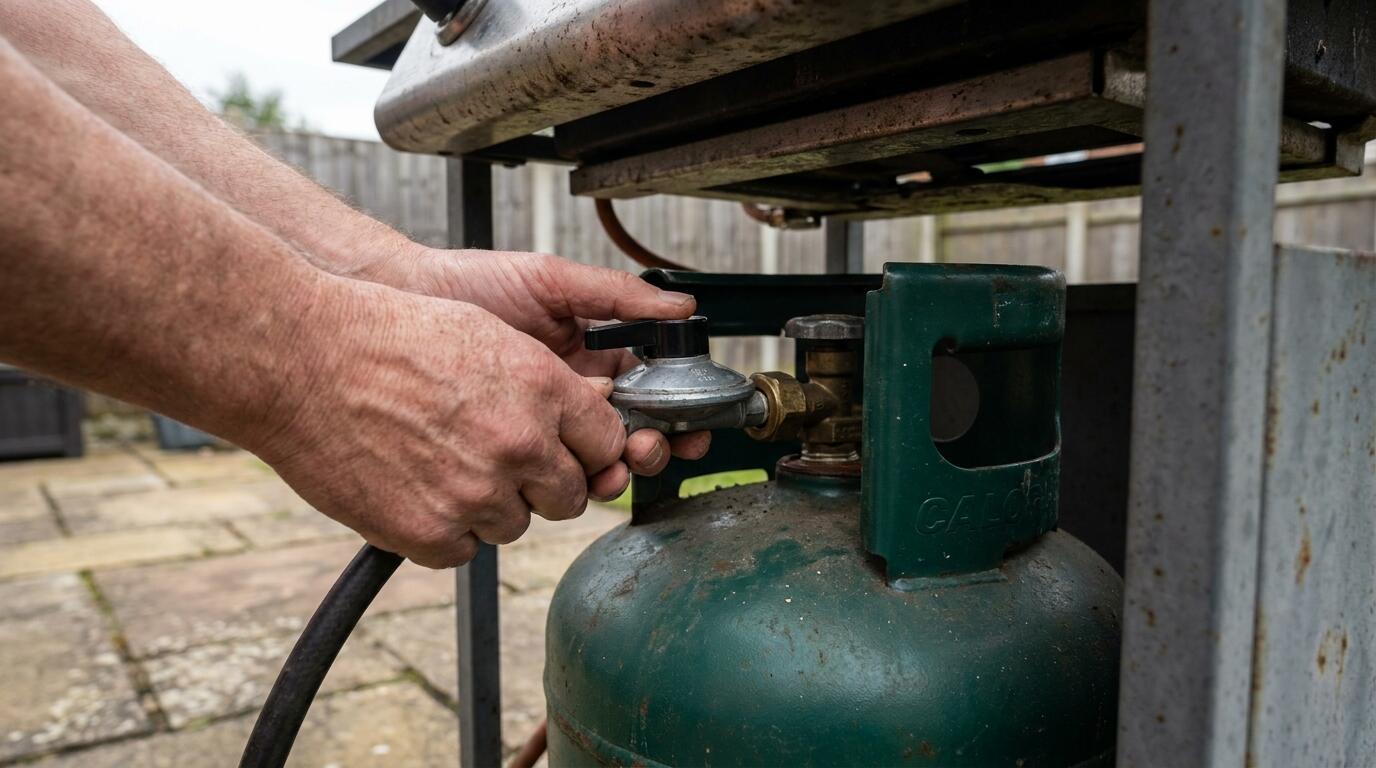
Fitting it takes seconds. Stand the cylinder upright, remove the plastic cap from the valve and check the black rubber seal inside is present and not cracked. With the regulator switch in the off position, push the regulator squarely down onto the valve until it clicks. Turn the switch to on, then light the appliance following its instructions. To remove, switch off, lift the collar on the regulator and pull it straight up. A brief hiss as it comes off is normal.
Three regulators exist for the three Calor cylinder types, and they are not interchangeable:
- 27mm clip-on, 37mbar: green Patio Gas cylinders.
- 21mm clip-on, 28mbar: blue butane cylinders (7kg and 15kg). It will not fit a Patio Gas valve.
- Screw-on POL, 37mbar: red propane cylinders.
If your appliance came with a POL regulator, or you already own a red propane cylinder, a barbecue will run on it happily. Propane appliances do not care which colour the cylinder is; they care about 37mbar. Swap the regulator for a POL type, or keep both and use whichever cylinder you have. What you cannot do is run a propane appliance from a butane cylinder or the reverse; the pressures differ and the appliance was built for one.
Check the date on the regulator and the year printed on the hose. Regulators are generally good for around ten years, hoses considerably less. If either is cracked, stiff or old, replace it when you exchange the cylinder. We keep 27mm clip-on regulators, hose and clips at the counter and will fit one to a bottle so you can see how it goes together.
How long does a Patio Gas bottle last
This is the question behind most Patio Gas exchanges, and it has an answer you can work out on the back of an envelope. Propane holds roughly 13.6kWh of energy per kilo. Divide the energy in the cylinder by the power the appliance uses and you have the burn time at full output.
A gas barbecue’s burners are typically rated at 3kW to 4kW each. A three-burner barbecue at around 3.5kW a burner draws about 10.5kW with everything on full. Nobody cooks like that for long; a realistic average, with burners turned down and one off for indirect cooking, is nearer 6kW.
| Appliance | Typical draw | 5kg (68kWh) | 13kg (177kWh) |
|---|---|---|---|
| Three-burner barbecue, all on full | 10.5kW | About 6.5 hours | About 17 hours |
| Three-burner barbecue, normal use | 6kW | About 11 hours | About 30 hours |
| Two-burner barbecue, normal use | 4kW | About 17 hours | About 44 hours |
| Gas pizza oven | 7kW | About 10 hours | About 25 hours |
| Mushroom patio heater | 13kW | About 5 hours | About 13.5 hours |
In practice a 5kg bottle on a family barbecue is 10 to 15 cooks of around an hour, so a summer of weekends. The same 5kg on a patio heater is one long evening, which is why heaters want a 13kg. Bigger six-burner grills with side burners sit between the two.
The working is approximate. Burner ratings vary, wind and cold cost gas, and a lid-down barbecue uses less than an open one. Weighing the cylinder is the only accurate gauge: subtract the empty weight stamped on the collar from the weight on your bathroom scales and what is left is gas. If it is under a kilo, swap it before the weekend rather than during it. Our bottle exchange page explains the swap.
Patio Gas for patio heaters
A gas patio heater is a big consumer of gas, and it pays to know that before buying the cylinder. A standard mushroom-style heater is rated around 13kW at full output, three to four times a barbecue, which is why the 5kg bottle that lasts a summer of cooking is gone in one evening under a heater.
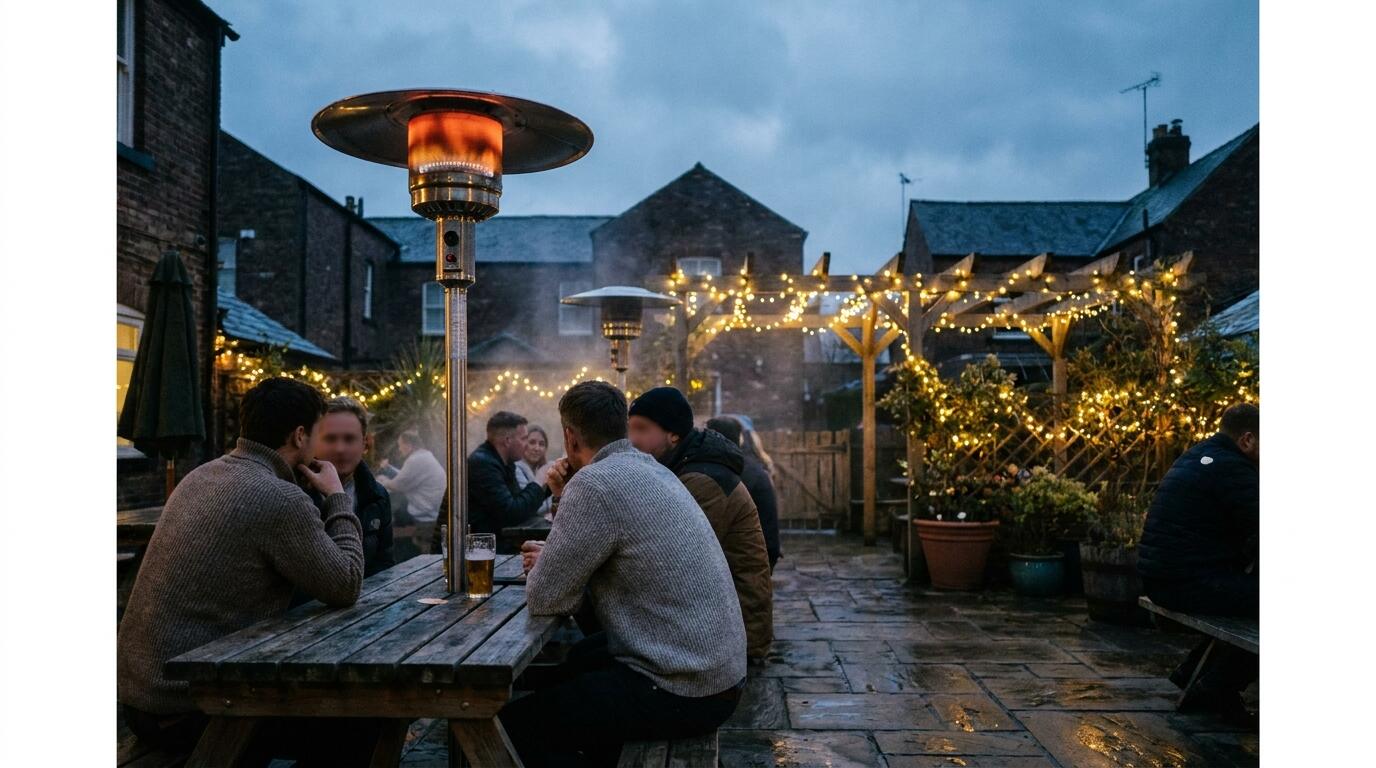
The 13kg Patio Gas cylinder is the sensible size. At full output it gives around 13 hours of warmth; turned down, which is how most heaters are run once the evening has settled, considerably more. Many heaters have the cylinder housed in the base, and a 13kg fits most of them, though a few compact models are built for the 5kg. Check the housing before you buy.
Heaters are also where propane’s cold-weather performance matters. People run patio heaters in the evening, in autumn and at Christmas, exactly when butane would fail. Because Patio Gas is propane, a heater will light on a frosty night and keep going. Very cold weather and a nearly empty cylinder can still limit the rate gas boils off inside the bottle; a fresh cylinder and a spot out of the wind cure it.
Safety rules for heaters are the same as for any outdoor propane appliance, with a couple of extras. Use them outdoors or under a high, open canopy, never in a marquee, garage or conservatory. Keep the head well clear of parasols, awnings and overhanging plants. Stand the heater on a firm level surface where it cannot be knocked over, and fit the base weight or water ballast the maker provides. Turn the cylinder off at the regulator when you go in, not just at the heater control.
Pubs, cafés and event caterers running several heaters through a season may find it easier to take gas on a trade account and have it delivered with other supplies; ask at the counter.
Pizza ovens, fire pits and other outdoor appliances
Gas has spread well beyond the barbecue. Most of the appliances below are designed for Patio Gas, and they all follow the same rule: check the regulator that came in the box, and buy the cylinder to match.
Pizza ovens. Gas-fired pizza ovens have become one of the most common uses for a 5kg cylinder. They run hot, typically 5kW to 8kW, so a 5kg gives around ten hours of cooking, which is a lot of pizzas. Most come with a 27mm clip-on regulator and are happiest on Patio Gas; some are supplied with a POL regulator for red propane, so look before you buy.
Gas fire pits and fire tables. These are usually rated between 10kW and 15kW and, like patio heaters, empty a 5kg in an evening. A 13kg is the practical choice, and the cylinder usually stands beside the unit on a longer hose.
Plancha grills and outdoor kitchen units. Built-in or trolley-mounted, mostly 27mm clip-on, mostly 13kg if they are used often.
Camping and caravan appliances. Some larger camping stoves and awning heaters take Patio Gas, and caravans built from September 2004 can run Patio Gas through a 27mm pigtail into the 30mbar bulkhead regulator, though most caravanners use the 6kg propane or 7kg butane cylinders that fit the locker. See caravan and motorhome gas.
Portable heaters with a clip-on fitting. Small outdoor space heaters and some patio table heaters are sold with a 27mm regulator and run on the 5kg.
All of these are outdoor appliances. None should be used in a garage, conservatory, marquee or tent, and the cylinder stays outside whatever the appliance. For anything rated at more than about 8kW, start with a 13kg; for anything under, a 5kg will do and is easier to handle.
Summer stock advice: when to swap
Patio Gas demand follows the weather to the day. The first warm weekend in April, every bank holiday and any week with a forecast above twenty degrees brings a run on 5kg cylinders across every stockist in the country, and Calor’s deliveries to yards like ours do not always keep pace with a heatwave. A few habits avoid the problem.
- Swap early. Weigh the cylinder in March. If it is under half, exchange it before the season starts rather than on Good Friday morning.
- Keep a spare. A second 5kg on a cylinder agreement costs a one-off charge and then only the gas. It lives outside, valve closed, and means a barbecue never stops at the wrong moment.
- Swap on a weekday. We are open until 5:00pm Monday to Friday and the yard is quieter than on a Saturday morning.
- Ring first in a heatwave. If the 5kg has sold out, a 13kg will usually be there and runs the same regulator; the difference is where it stands.
- Check the regulator and hose at the same time. If they are more than a few years old, replace them when you swap the bottle rather than discovering a leak on the first cook.
At the end of the season, leave the cylinder connected with the regulator switched off or disconnect it and refit the cap. Store it upright outdoors, out of direct sun, on a level base away from drains. A cylinder holds its gas indefinitely, so a half-full bottle in September is still half-full in April; there is no need to run it down.
Saturday mornings from 7:30am are our busiest time for exchanges, and a good share of them are Patio Gas. Coming early, or on a weekday, gets you in and out in a couple of minutes. The homepage Calor section lists the range, and stock on the day is a phone call away.
Storing and using Patio Gas safely
Patio Gas is propane, so the storage rules are propane rules: outdoors, upright, valve closed when not in use, on a level base, away from drains and cellar openings, away from heat and ignition sources, out of reach of children. The cylinder is never brought into the house, a flat, a garage attached to a house or a shed people work in.
A few points specific to barbecues and outdoor appliances:
- Leak-test after every cylinder change. With the cylinder on and the appliance off, brush soapy water over the regulator connection and the hose ends. Bubbles mean a leak: turn off, reseat or replace, test again. Never look for a leak with a flame.
- Keep the cylinder away from the hot side. Inside a barbecue cabinet is fine when the cabinet is designed for it and ventilated. Standing a cylinder directly under an open grease tray or beside a pizza oven flue is not.
- Light with the lid open. Gas that has pooled under a closed lid ignites all at once.
- Turn the gas off at the regulator after cooking, not only at the burner knobs, and before disconnecting anything.
- Hose length. Keep it as short as practical, clipped at both ends, not kinked or run across a walkway.
- Transport. Upright in the car, secured, valve closed, cap on, windows open, out of the car as soon as you are home. The cylinder does not stay in the boot until the weekend.
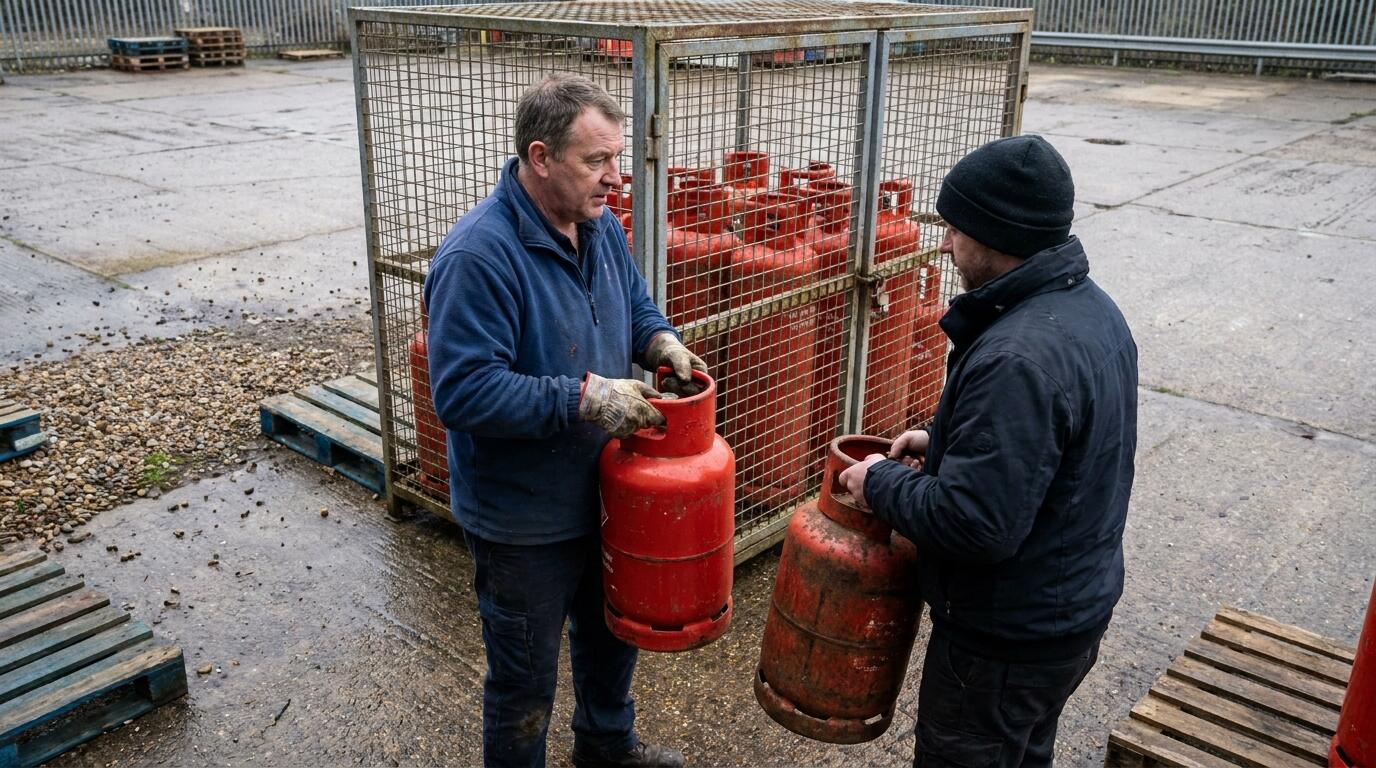
Cylinders are not refilled by anyone but Calor. When yours is empty, bring it to the yard at Whitemoor Lodge, 2 Nuthall Road, Bobbers Mill, Nottingham NG8 5AF and swap it, paying for the gas only. If you do not have a Calor cylinder yet, we set up the agreement at the counter. We are a builders merchant as well, so the paving slabs, sleepers and decking for the patio itself are in the same yard; the paving and landscaping guide covers those.
Last updated 2026-08-29. Stock, sizes and availability change; call 0115 929 2350 to check before you set off.