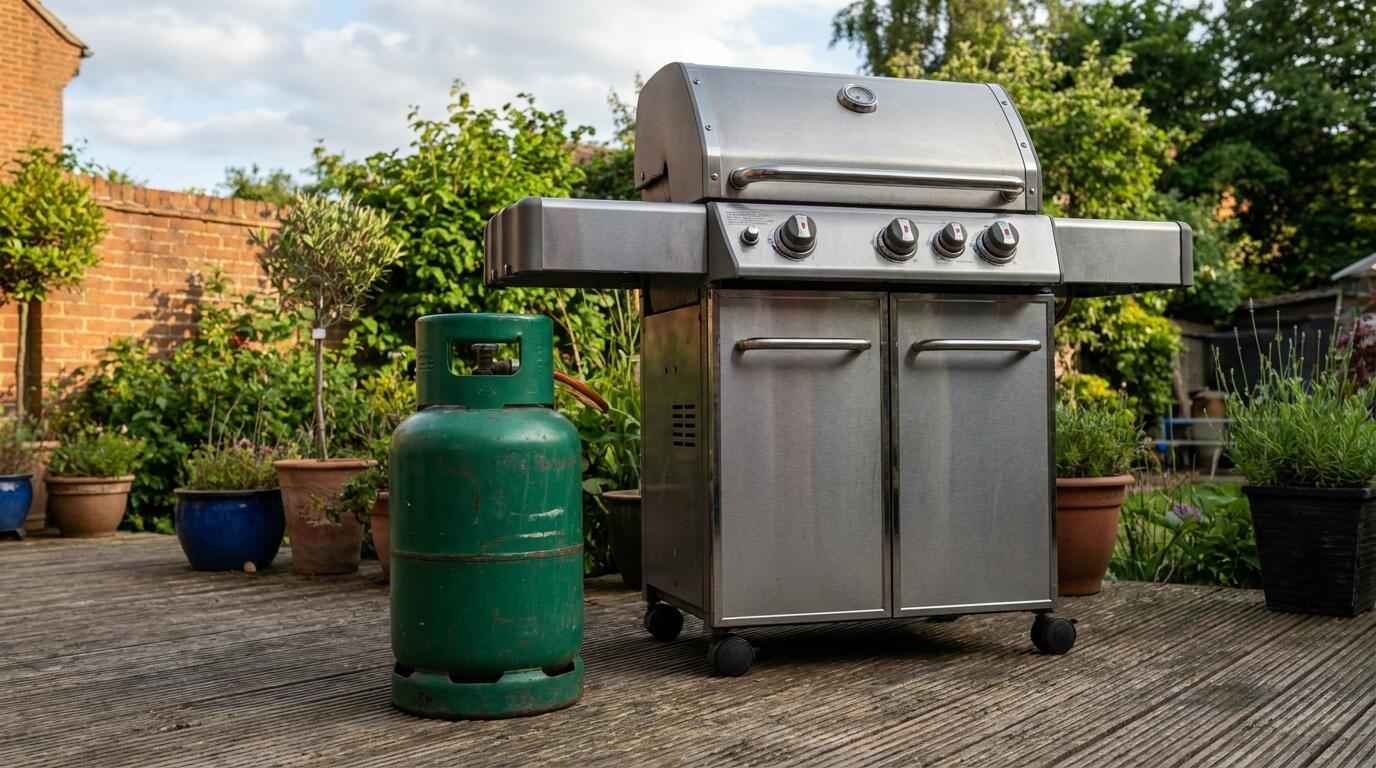
If you have a gas appliance that lives outdoors, or that has to work in January, you want propane. That covers most of the trade: the space heater drying out a plastered room, the torch on a flat roof, the burners in a catering trailer and the cylinders behind a house with no mains gas. It also covers caravans and motorhomes used out of season, and any barbecue or patio heater that runs on the green Patio Gas cylinder, which is propane under another name.
The cylinder sizes, regulators and safety rules below are standard across the industry. What changes from yard to yard is whether the size you want is on the shelf, so if it matters, call 0115 929 2350 before you set off.
On this page
- 1.Propane cylinder sizes
- 2.Which size propane bottle for which job
- 3.Propane regulators: 37mbar POL, clip-on and high pressure
- 4.Propane in cold weather
- 5.Propane vs butane: which to buy
- 6.Propane on site and in the trade
- 7.Storing and handling propane safely
- 8.Getting propane from the yard
- 9.Frequently asked questions
Propane cylinder sizes
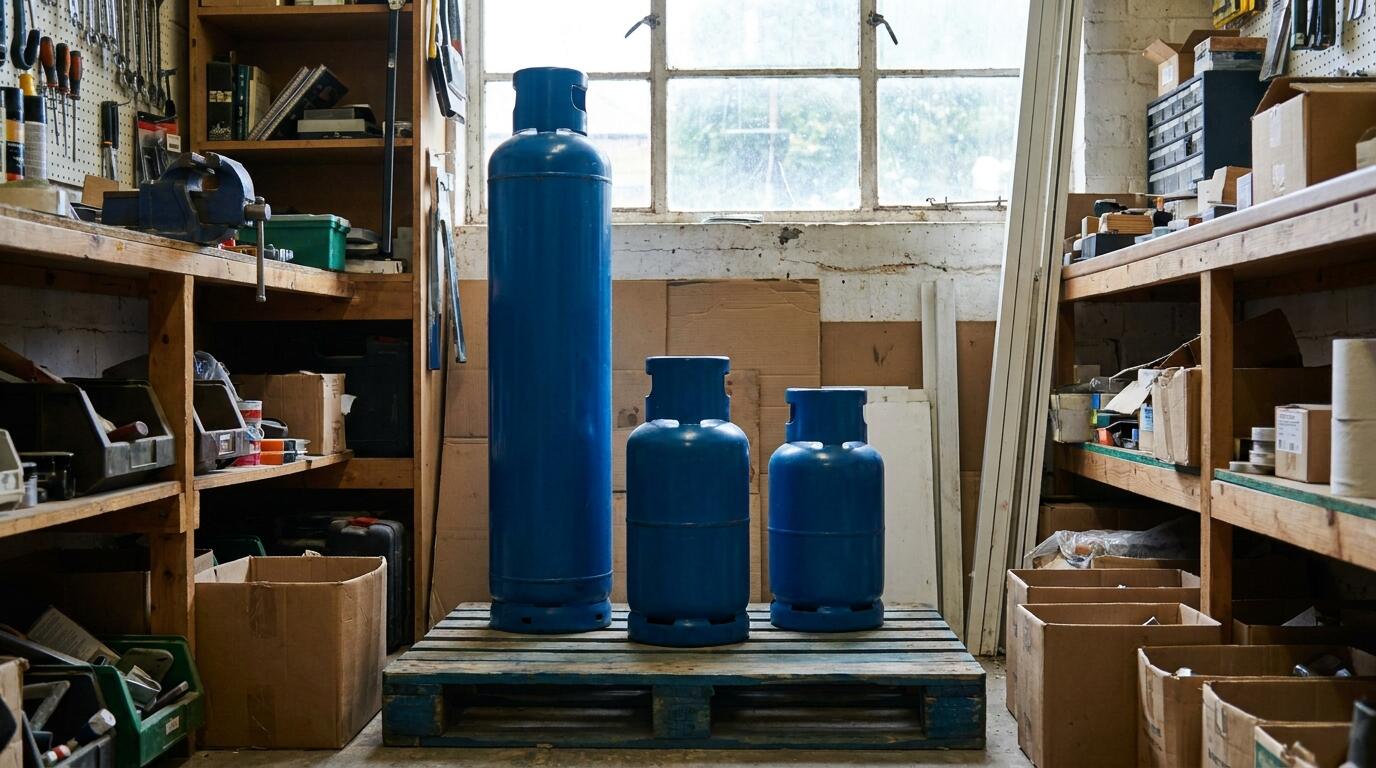
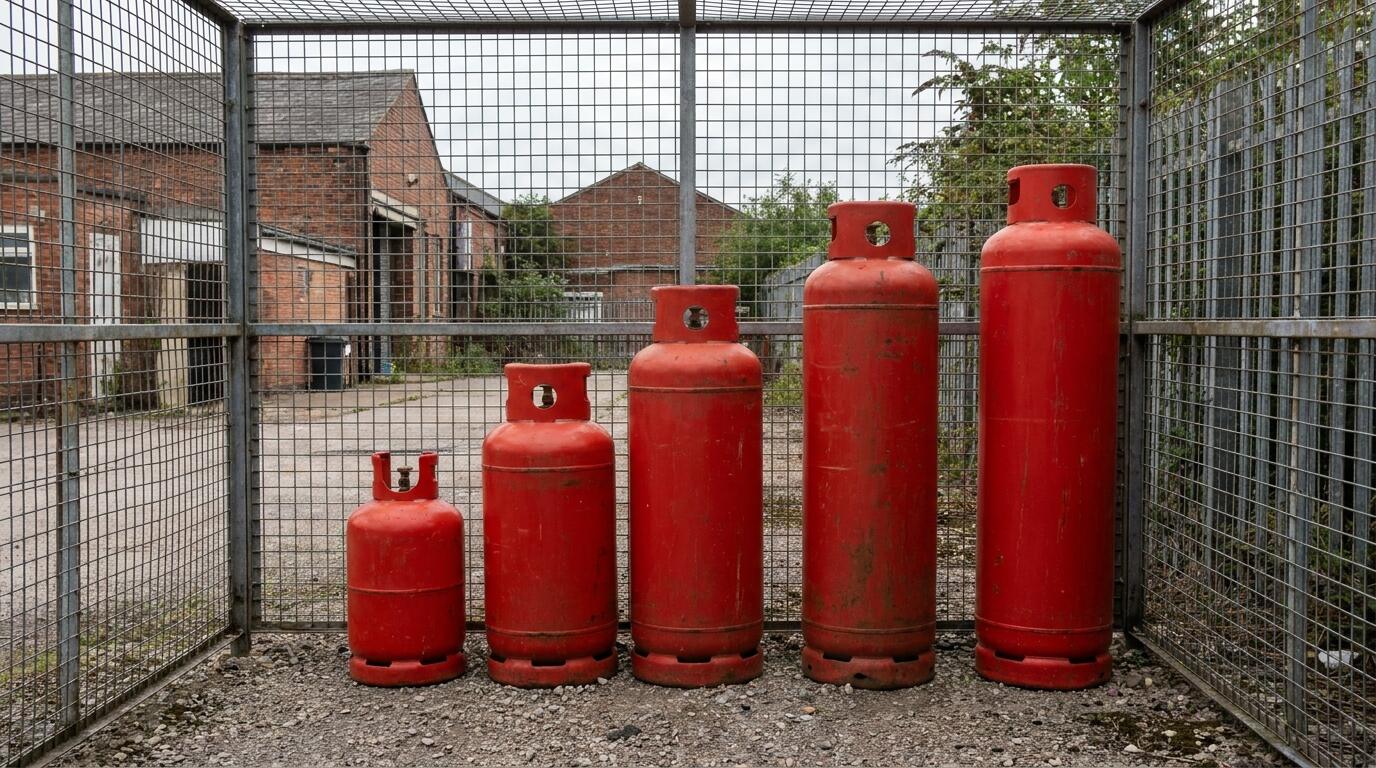
Calor make propane in five cylinder sizes. The figure in the name is the weight of gas inside a full cylinder, not the total weight, so a 13kg propane cylinder weighs a good deal more than 13kg when you lift it. The table gives approximate dimensions and the energy each size holds, working on 1kg of propane being roughly 13.6kWh.
| Size | Approx. height | Approx. diameter | Energy (approx.) | Connection |
|---|---|---|---|---|
| 3.9kg | 340mm | 245mm | 53kWh | Screw-on POL |
| 6kg | 495mm | 256mm | 82kWh | Screw-on POL |
| 13kg | 580mm | 315mm | 177kWh | Screw-on POL |
| 19kg | 800mm | 315mm | 258kWh | Screw-on POL |
| 47kg | 1290mm | 375mm | 639kWh | Screw-on POL |
Dimensions vary slightly between cylinder batches, so if a cylinder has to fit a locker or a cabinet, measure the space and allow for the regulator and hose on top. The 6kg propane cylinder shares its footprint with the 7kg butane bottle, which is why both are the standard caravan sizes, and the 13kg propane shares its footprint with the 15kg butane.
Weight matters more than people expect. A full 13kg cylinder is a comfortable one-person lift for most; a 19kg is heavy; a 47kg is the best part of 90kg full and needs a trolley, two people or a delivery. If a 47kg is going to a house, we can bring it on the lorry and put it where the changeover valve is. For the whole Calor range at a glance, including butane and Patio Gas, see the Calor Gas stockist page or the Calor section of the homepage.
Which size propane bottle for which job
There is no wrong size, only a size that runs out at the wrong moment or one you cannot lift. The pattern of who buys what at the counter is a reasonable guide.
3.9kg. Blowlamps, plumbers’ soldering torches, small camping stoves with a propane regulator, and as a compact back-up in a caravan locker. It goes in a van without a second thought and lasts a plumber weeks of soldering.
6kg. The caravan and motorhome cylinder. It fits a standard front locker, and two of them on a changeover valve will see most people through a fortnight in summer or a long weekend in winter. Also used for small patio heaters and paella burners with a POL regulator.
13kg. The general-purpose propane cylinder. Roofers take it up for torch-on work, decorators run a small heater off it, catering vans use it for a griddle, and it is the size most people can lift into a car. On a 10kW site heater it lasts around 17 hours on full; on a 5kW catering burner nearer 35.
19kg. Site heaters, larger catering set-ups and anywhere a 13kg is running out too often but a 47kg is too heavy to move. Roughly 26 hours on a 10kW heater. Heavier to lift, so most people trolley it.
47kg. Fixed installations: cookers and boilers in homes without mains gas, static caravans, workshops with a permanent heater, and busy catering pitches. Usually installed in pairs with an automatic changeover so the second cylinder takes over when the first empties. A 47kg on a 10kW heater is around 64 hours of burning. Delivered rather than collected in nearly every case.
If you are unsure, start with a 13kg. It is the size we exchange most, it fits most regulators and hoses you will already own, and moving up or down a size later is a matter of changing the cylinder agreement at the counter.
Propane regulators: 37mbar POL, clip-on and high pressure
Red propane cylinders all have the same valve: a screw-on POL fitting with a left-hand thread, so the nut tightens anticlockwise. Onto that goes one of three kinds of regulator depending on the appliance.
37mbar fixed regulator. The standard for domestic and most trade propane appliances: cabinet-style propane heaters, catering appliances rated for propane, patio heaters with a POL connection, boat and pre-2004 caravan installations set up for propane. It screws onto the POL valve with a spanner (hand-tight on the newer hand-wheel types) and feeds low-pressure orange hose to the appliance.
Adjustable high-pressure regulator. Roofing torches, weed burners, large space heaters, tar boilers and shrink-wrap guns need more pressure than 37mbar. These use an adjustable regulator, often 0 to 2 bar or 0 to 4 bar, with a high-pressure hose. Check the appliance plate for the pressure it wants and never run a high-pressure appliance off a 37mbar regulator or the other way round.
27mm clip-on regulator. This is for the green Patio Gas cylinder, not the red one. A red propane cylinder will not take a clip-on regulator, and a green one will not take a POL regulator. If your barbecue came with a clip-on regulator you want Patio Gas; if you would rather use a red 13kg cylinder on your barbecue you need to swap the regulator for a 37mbar POL type, which is a legitimate and common change.
Caravans and motorhomes built from September 2004 do not use a cylinder-mounted regulator at all. They have a fixed 30mbar bulkhead regulator in the locker, and the cylinder connects to it through a pigtail with a POL end. The caravan and motorhome gas page explains that arrangement.
Whatever type you use, check the date stamped on the regulator. Manufacturers give regulators a working life, commonly ten years, and hoses less than that. If yours is older, cracked or stiff, replace it when you swap the cylinder.
Propane in cold weather
The reason propane is the outdoor gas comes down to one number. Propane boils at minus 42 degrees Celsius, so at any temperature Nottingham will see the liquid in the cylinder is turning to vapour and pushing gas out of the valve. Butane, by contrast, boils at about minus 0.5 degrees, so on a frosty morning it sits in the bottle as a liquid and the appliance starves. If an appliance has to work in winter, it runs on propane.
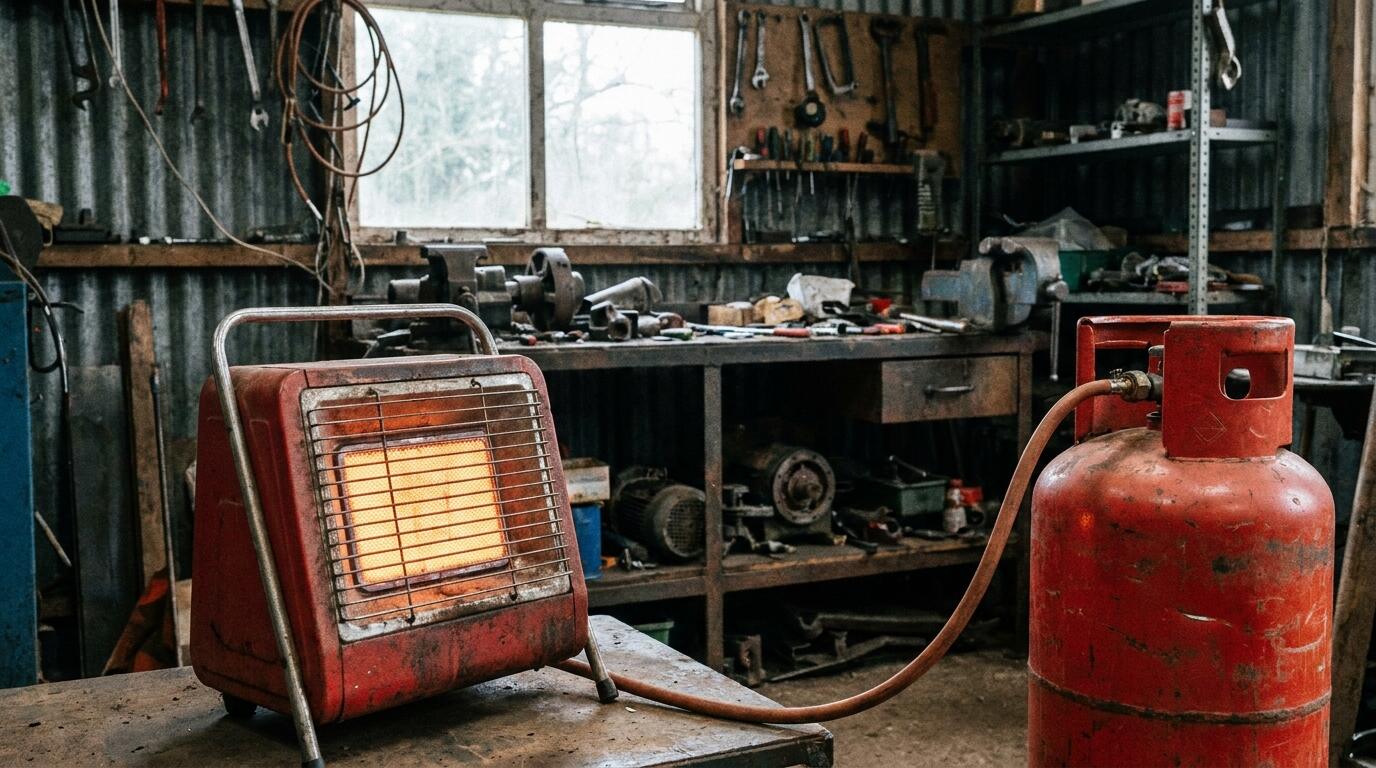
That does not mean cold has no effect. The rate at which liquid propane vaporises depends on the temperature and the surface area of liquid in the cylinder. A small, nearly empty cylinder on a freezing day, feeding a heater flat out, can struggle to boil off gas fast enough. You will see frost forming on the outside of the cylinder as it chills itself, and the heater output drops. The fixes are simple: use a larger cylinder for high-output appliances in winter, keep two cylinders on a changeover so the draw is shared, and do not let a cylinder run to the last kilo before swapping it on a job that cannot stop.
Never warm a cylinder with a flame, a heater or hot water to get more out of it. Stand it in the least exposed spot you can, out of the wind, and let it do its job. If the appliance still cannot keep up, the cylinder is too small for that heater in that weather and a 19kg or 47kg is the answer.
Winter is also when propane stock moves fastest. Site heaters start going out in October, and the run on 19kg and 47kg cylinders through a cold snap is predictable. If you rely on propane for a job or a house, keep a spare and swap the empty before the cold arrives rather than during it.
Propane vs butane: which to buy
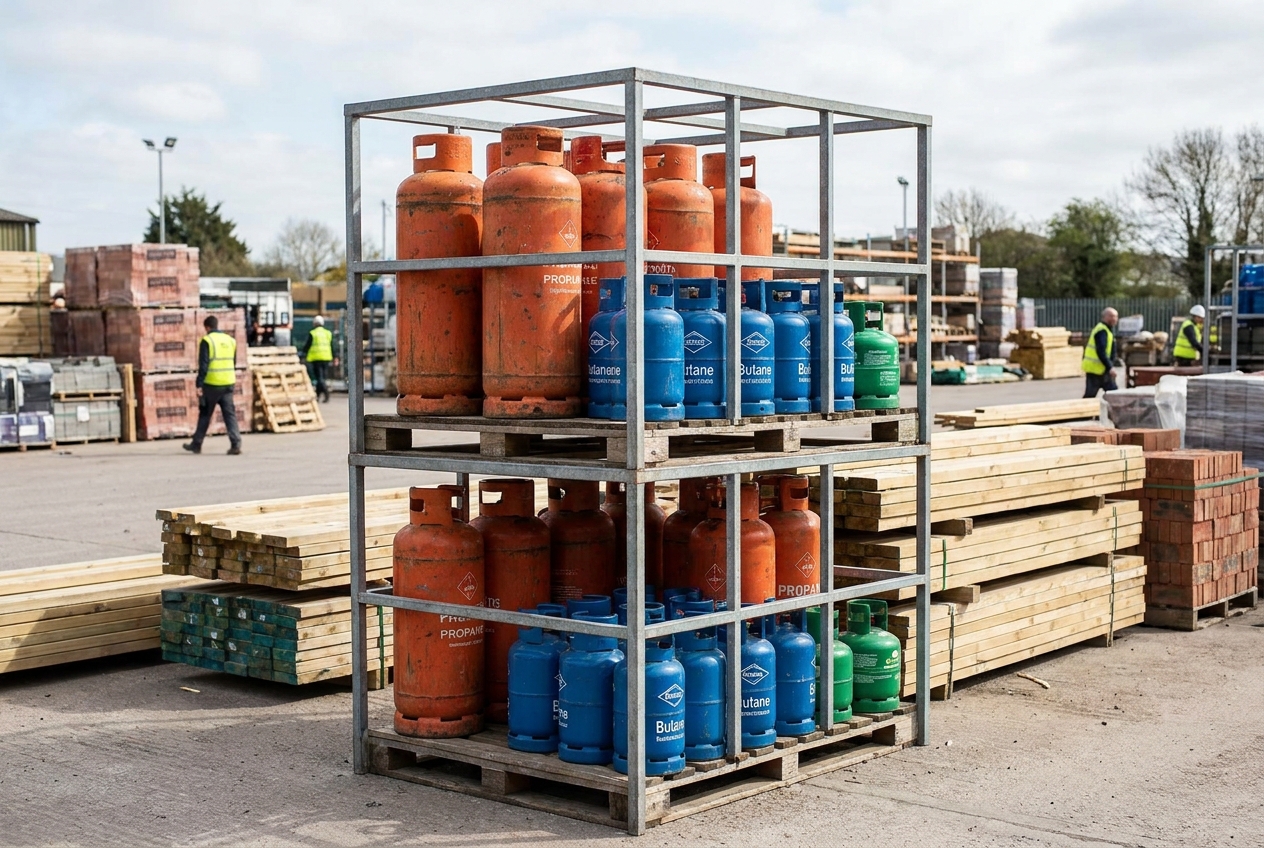
Both are liquefied petroleum gas, both come from Calor in exchangeable cylinders, and both burn cleanly in an appliance designed for them. The differences that matter are temperature, pressure and where the cylinder can live.
| Propane (red) | Butane (blue) | |
|---|---|---|
| Boiling point | Minus 42°C | About minus 0.5°C |
| Works in winter | Yes | Fades below a few degrees, stops near freezing |
| Regulator pressure | 37mbar (30mbar in post-2004 caravans) | 28mbar (30mbar in post-2004 caravans) |
| Connection | Screw-on POL | 21mm clip-on (4.5kg is screw-on) |
| Cylinder storage | Outdoors only | Outdoors; one cylinder may be inside a portable heater in use |
| Typical uses | Site heaters, torches, catering, caravans in winter, off-grid homes, barbecues (as Patio Gas) | Cabinet heaters, portable cookers, caravans in summer, camping |
Choose propane if the appliance is outdoors, on a site, in a catering unit, in a caravan used outside summer, or anywhere a cold snap would be a problem. Choose butane for a portable cabinet heater indoors, a camping stove in summer or a caravan that only goes out between May and September. Do not choose by which is cheaper per kilo; the appliance and the weather choose for you.
There is one place the choice is genuinely open: a caravan or motorhome built from September 2004 with a 30mbar bulkhead regulator. Those run on either gas with the right pigtail, and most owners settle on propane so they never have to think about the forecast. The butane bottles page has the other side of this comparison.
Propane on site and in the trade
Being a builders merchant, most of the propane we exchange goes out on vans. These are the jobs it is doing.
- Space heaters and drying. Propane heaters bring a cold shell up to a temperature where plaster and screed will cure and paint will dry. A 13kg runs a small heater for a day; a 19kg or 47kg is the choice for a whole-house dry-out. Ventilate the room: these heaters put out water vapour and need fresh air.
- Torch-on roofing. Felt and bitumen systems are applied with a propane torch on a high-pressure regulator. Roofers usually run 13kg cylinders because they can be hauled up and last a shift; the roofing supplies page covers the torches and the felt.
- Plumbing and lead work. Small propane cylinders on blowlamps for soldering, lead dressing and freeing seized fittings.
- Groundworks and landscaping. Weed burners, tar boilers, thawing frozen ground and drains, and heaters in site cabins.
- Catering. Burger vans, hog roasts, paella burners and event kitchens. Propane cylinders sit outside the unit in a ventilated, secured position, with the hose run through a sealed bulkhead.
- Workshops and units. Permanently installed propane heaters on 47kg cylinders where there is no mains gas.
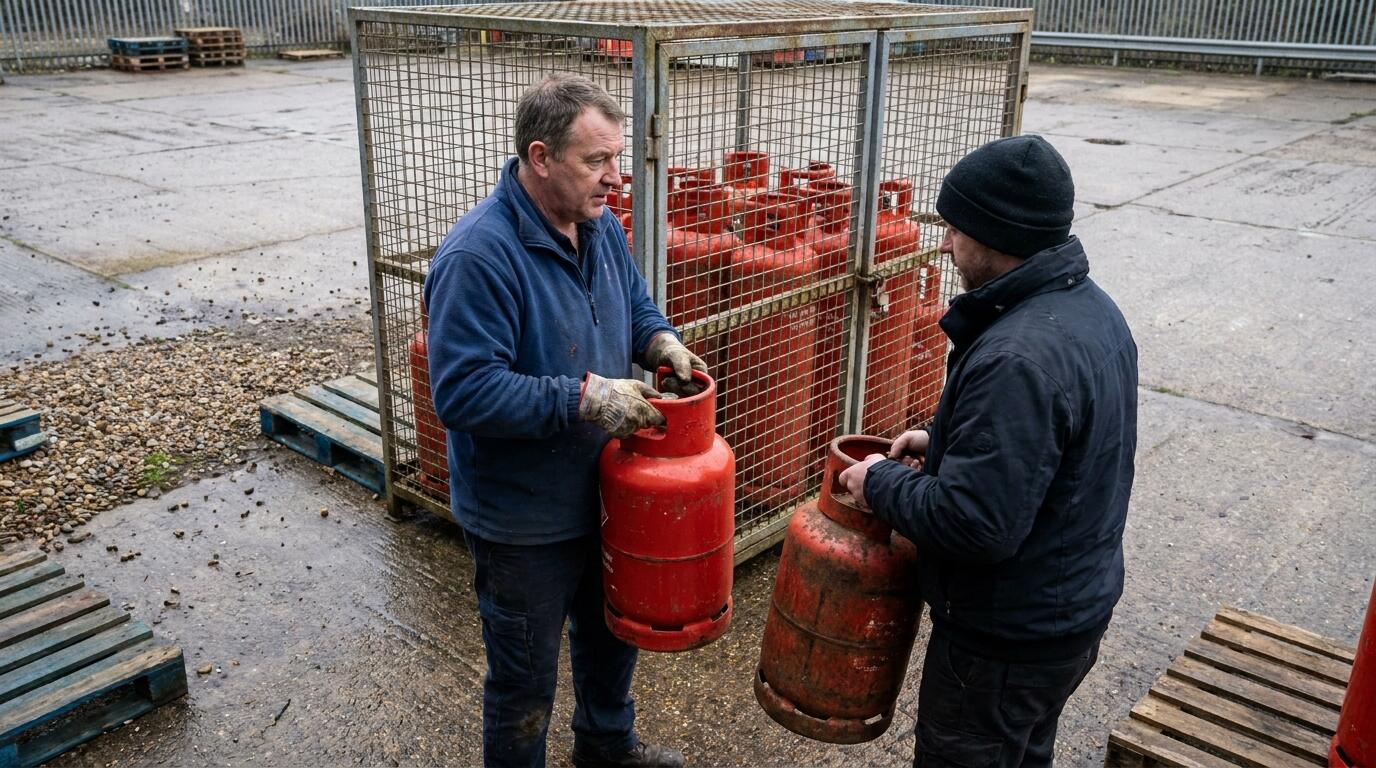
Sites hold cylinders in a locked cage away from the work and from combustibles, upright, valves closed at the end of the day, full and empty separated. Empties still contain some gas and are treated the same as full ones. If you are collecting gas for a site every week, a trade account with us covers the gas and the materials in one monthly settlement; ask at the counter or send an enquiry. Gas can also go out with a delivery of blocks or plasterboard to the same address.
Storing and handling propane safely
Propane is safe in a cylinder that is looked after. The rules are short and worth following to the letter.
- Outdoors only. Propane cylinders are stored and used outside. They do not go in a house, a flat, a cellar or a garage attached to a house. The appliance can be indoors with the gas piped through a wall; the cylinder stays out.
- Upright, always. The valve draws vapour from the top of the cylinder. Lay one on its side and liquid can reach the regulator, which is dangerous.
- Valve closed when not in use. Turn the cylinder valve off at the end of every day and before disconnecting anything.
- Away from drains, cellars and low points. LPG is heavier than air. A leak pools at ground level and runs into a drain or basement, where it can reach an ignition source.
- Away from heat and ignition. No smoking, no naked flames, no electrical equipment that could spark, and not against a south-facing wall in full sun if you can help it.
- On a firm, level base where it cannot be knocked over, and out of reach of children.
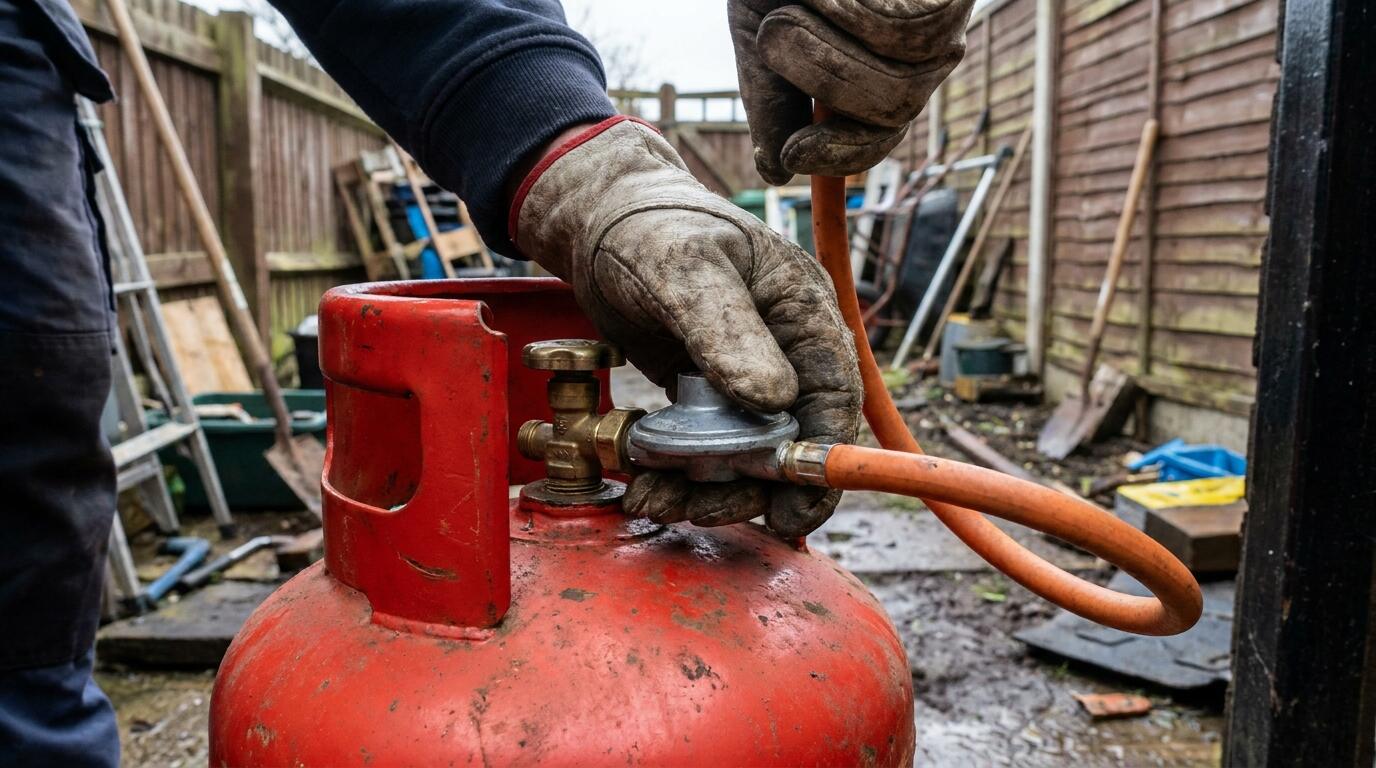
Fitting a regulator: with the cylinder valve closed, screw the POL nut on anticlockwise until tight, connect the hose with proper hose clips, then open the cylinder valve slowly. Test every joint with soapy water or leak-detection spray and look for bubbles before lighting anything. If you smell gas, close the cylinder valve, get everyone away, do not switch anything electrical on or off, and let it disperse before investigating.
Transporting: upright, secured, valve closed, cap on, windows open, and out of the car as soon as you arrive. Cylinders are never refilled by anyone but Calor; when yours is empty, swap it. Our bottle exchange page explains what to bring.
Getting propane from the yard
We exchange the full Calor propane range at Whitemoor Lodge, 2 Nuthall Road, Bobbers Mill, Nottingham NG8 5AF, on the A610 between the city and the M1. Hours are Monday to Friday 8:00am to 5:00pm and Saturday 7:30am to 12:30pm; closed Sunday.
If you already have a Calor propane cylinder, bring the empty and swap it for a full one of the same size, paying for the gas only. If you do not, the counter will set you up with a cylinder agreement for the size you want. You pay a one-off cylinder charge for the first bottle and then just the gas on each exchange after that. The charge depends on the size; we will tell you at the counter rather than quote it here because it changes.
We also keep the regulators, high-pressure regulators, hose, clips and spanners you will need, and we will fit a regulator to a cylinder so you can see how it goes together. For heavy sizes, pull into the yard and we will load the car or van. For 47kg cylinders, and for gas going to a site with other materials, ring and we will arrange delivery across Nottingham and the surrounding area.
Because we are a builders merchant as well as a Calor stockist, a site can pick up its heater gas, its plasterboard and its fixings in one visit. Stock levels of individual sizes change through the week, especially in winter, so call 0115 929 2350 to check before a long drive.
Last updated 2026-08-29. Stock, sizes and availability change; call 0115 929 2350 to check before you set off.