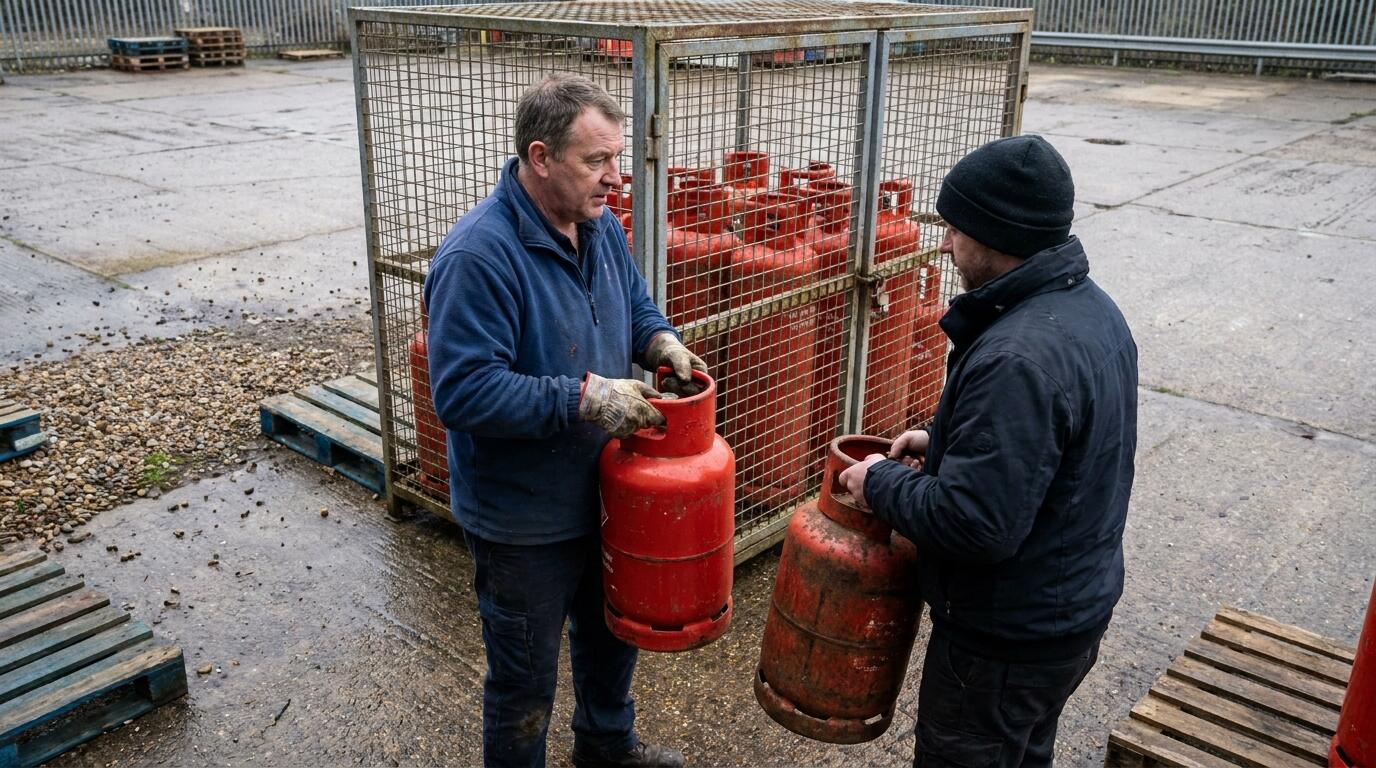
People search for "gas bottle refill" and arrive at a stockist expecting to have their cylinder topped up. That is not how bottled gas works in the UK, and it is worth understanding why, because the exchange system is what keeps cylinders safe. Every Calor cylinder belongs to Calor, is filled at a Calor plant under controlled conditions, and is inspected and tested on a schedule as it passes through. What you buy is the gas inside; the steel is on loan.
The practical upshot for you is simple. An exchange takes a couple of minutes, the cylinder you take away has been through a proper check, and you never own a cylinder that is out of date. The details are below, and if anything here does not cover your situation, call 0115 929 2350 and ask.
On this page
- 1.Exchange, not refill: what the words mean
- 2.The Calor cylinder refill agreement
- 3.What to bring for an exchange
- 4.What happens at the counter
- 5.What if your cylinder is a different brand
- 6.Damaged, rusty or out-of-date cylinders
- 7.What happens to your empty cylinder
- 8.Why cylinders are never refilled on site
- 9.Frequently asked questions
Exchange, not refill: what the words mean
In everyday speech "refill" and "exchange" get used for the same thing, and when a customer asks for a refill at the counter we know what they mean and hand over a full bottle. But the distinction matters when you are trying to work out what to expect.
An exchange is what every Calor stockist does. You return an empty Calor cylinder and receive a full Calor cylinder of the same size. The full one is not the bottle you brought in; it is one that has been filled at a Calor plant, checked, sealed and delivered to the yard. You pay for the gas.
A refill would mean putting gas into your cylinder while you wait. Nobody in the Calor network does that. Cylinders are filled by weight on calibrated equipment, checked for leaks, valve condition and test date, and sealed, in a plant designed for it. A stockist has none of that, and Calor’s cylinders are not permitted to be filled by anyone else.
So when this page, or anyone at the counter, talks about "refills", read it as exchanges. The result is the same: you leave with a full bottle. The empty you leave behind goes on the next Calor collection to be refilled by Calor, and it will turn up at some other stockist as a full bottle in due course.
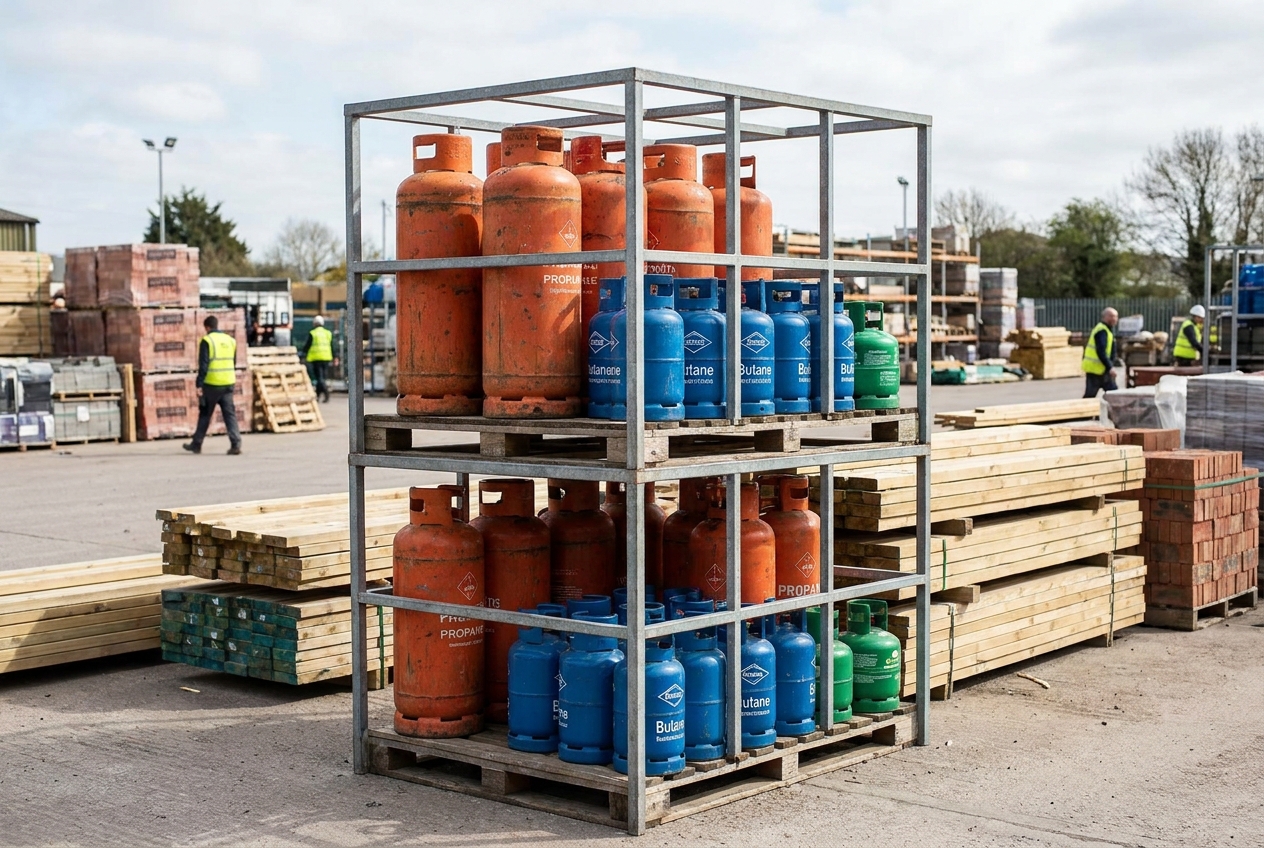
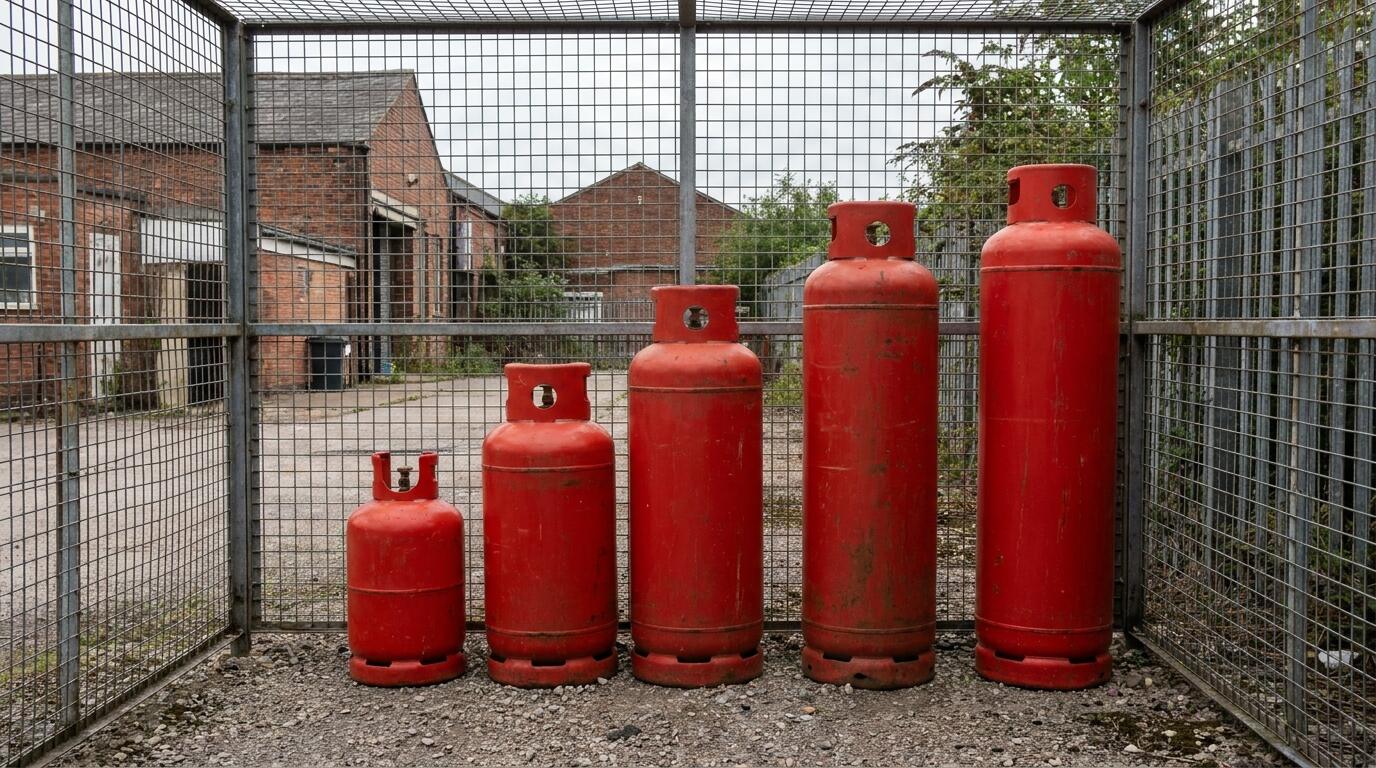
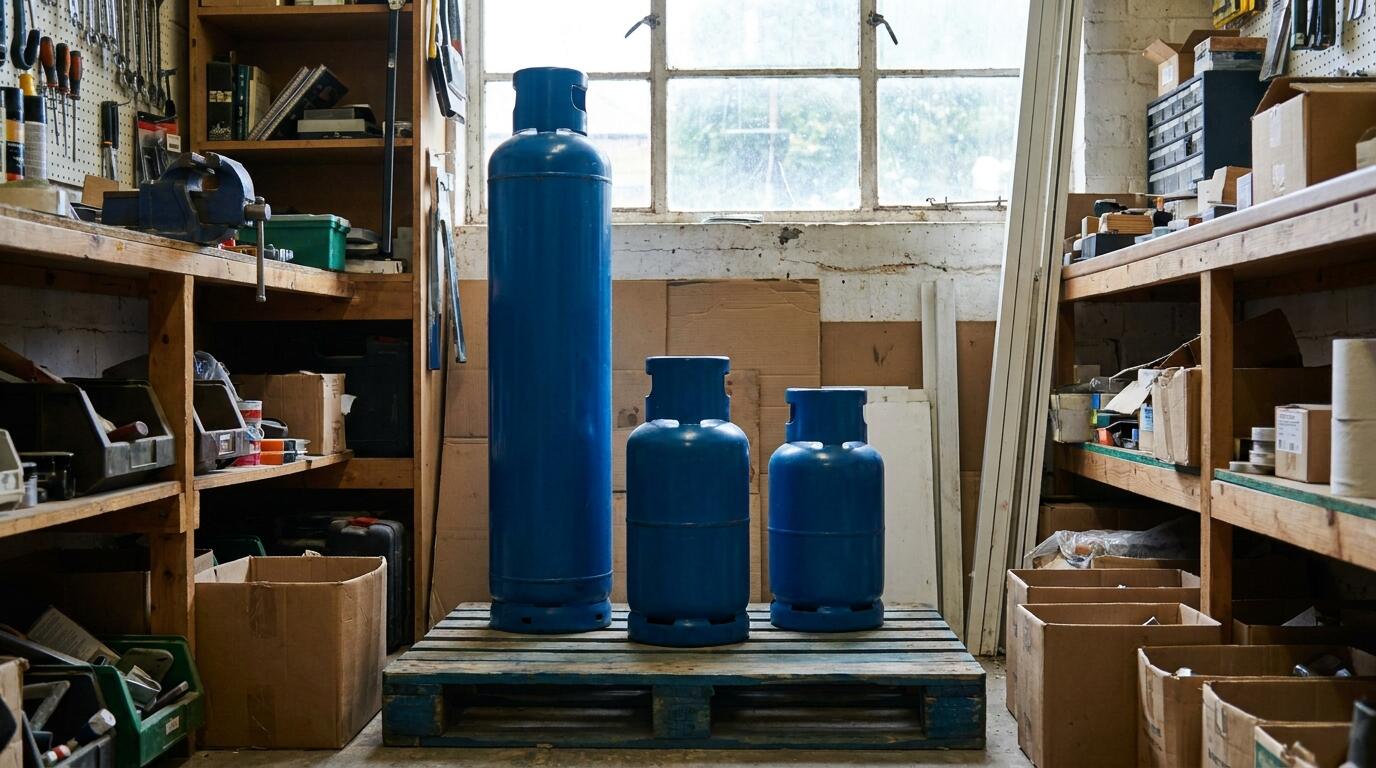
The same applies whichever gas you use. Propane, butane and Patio Gas cylinders all work on exchange, and the process at the counter is identical for a 3.9kg propane and a 47kg. The full range is on the Calor Gas stockist page.
The Calor cylinder refill agreement
Because you never own the cylinder, the first time you take one away you enter into Calor’s cylinder refill agreement for that size of bottle. It is a short form completed at the counter with your name and address, and it does two things: it records that you hold a Calor cylinder of that size, and it gives you the right to exchange it for a full one at any Calor stockist in the country.
With the agreement you pay a one-off cylinder charge. It is not a price for the steel, which remains Calor’s; it covers the cost of putting a cylinder into circulation for you. The charge depends on the cylinder size and is set by Calor rather than by us, so we do not quote it here; ask at the counter and we will tell you the current figure for the size you want.
After that, every exchange costs the gas only. Bring the empty, take the full, pay for the gas. That is the arrangement most of our customers are on, and it is why an exchange is cheaper and quicker than a first bottle.
Some points that come up:
- One agreement per cylinder. If you want two 6kg propane cylinders for a caravan changeover valve, that is two agreements. Each additional cylinder carries its own charge.
- Changing size. If you move from a 5kg Patio Gas to a 13kg, the agreement is changed at the counter. There may be a difference in cylinder charge between the sizes; we will tell you before you commit.
- Changing gas. Moving from butane to propane is a change of agreement in the same way, plus a change of regulator.
- Any stockist. Your agreement is with Calor, not with us, so a cylinder taken out here can be exchanged at a stockist in Cornwall and one taken out in Cornwall can be exchanged here.
- No longer needed. If you are giving up gas altogether, bring the cylinder back to a stockist rather than leaving it in a garage; ask at the counter about the terms of your agreement.
What to bring for an exchange
For a straightforward exchange you need one thing: the empty Calor cylinder. Everything else is convenience.
- The empty cylinder, valve closed, with the plastic cap or plug refitted if you still have it. Leave the regulator at home; it stays with your appliance, not the bottle.
- Transport it upright and secured so it cannot roll, with a window open. An empty still holds some gas.
- Know the size and the gas. It is stamped on the collar and printed on the cylinder. If you are not sure, bring it to the counter and we will read it.
- Payment. Card or cash. Trade account customers can put gas on the account.
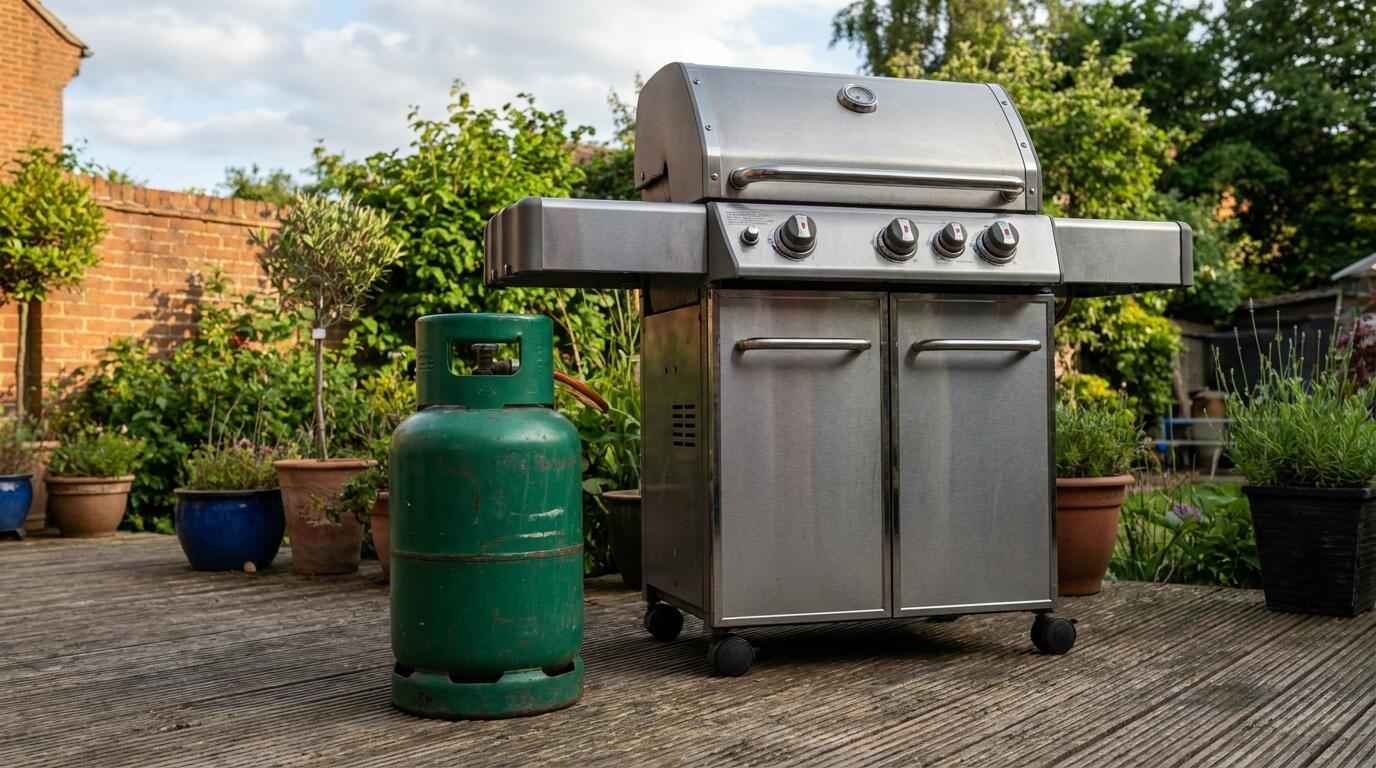
For a first cylinder, when there is no empty to hand over, you will also need your name and address for the cylinder agreement. It helps to know what regulator your appliance has, or to bring the regulator or a photo of it, so we can put you on the right gas. A clip-on regulator with a 27mm collar wants Patio Gas; a 21mm clip-on wants butane; a screw-on POL fitting wants red propane. The propane and butane pages go through the fittings in detail.
If you are exchanging several cylinders, or a 47kg, or you want the gas to go out with a delivery of materials, ring ahead and we will have them ready by the gate or on the lorry. There is space to pull a car or van into the yard beside the gas cage, and we will do the lifting for the heavier sizes.
One thing not to do is decant gas from one cylinder to another at home to save a trip. It is dangerous, it is prohibited under the agreement, and it leaves you with cylinders whose weight and contents nobody can vouch for. Bring the empty in.
What happens at the counter
An exchange takes a couple of minutes and follows the same steps every time.
- Hand over the empty. Bring it to the counter or tell us it is in the car. We check it is a Calor cylinder and note the size and gas.
- We look it over. The valve should be closed and undamaged, the cylinder should have no serious dents, gouges or heavy rust, and the collar should be intact. Ordinary scuffs and faded paint are normal and do not matter.
- We fetch a full one of the same size from the cage. Every full cylinder arrives from Calor with a tamper-evident seal over the valve and we check it is still in place before it goes out.
- Regulator and hose, if you need them. We will fit a regulator to the new cylinder to show how it goes on, and check the seal in a clip-on valve.
- Pay for the gas by card, cash or account. First cylinders also carry the one-off cylinder charge.
- Load up. Upright, secured, valve closed, cap on. We will lift the heavy sizes into a boot or onto a van.
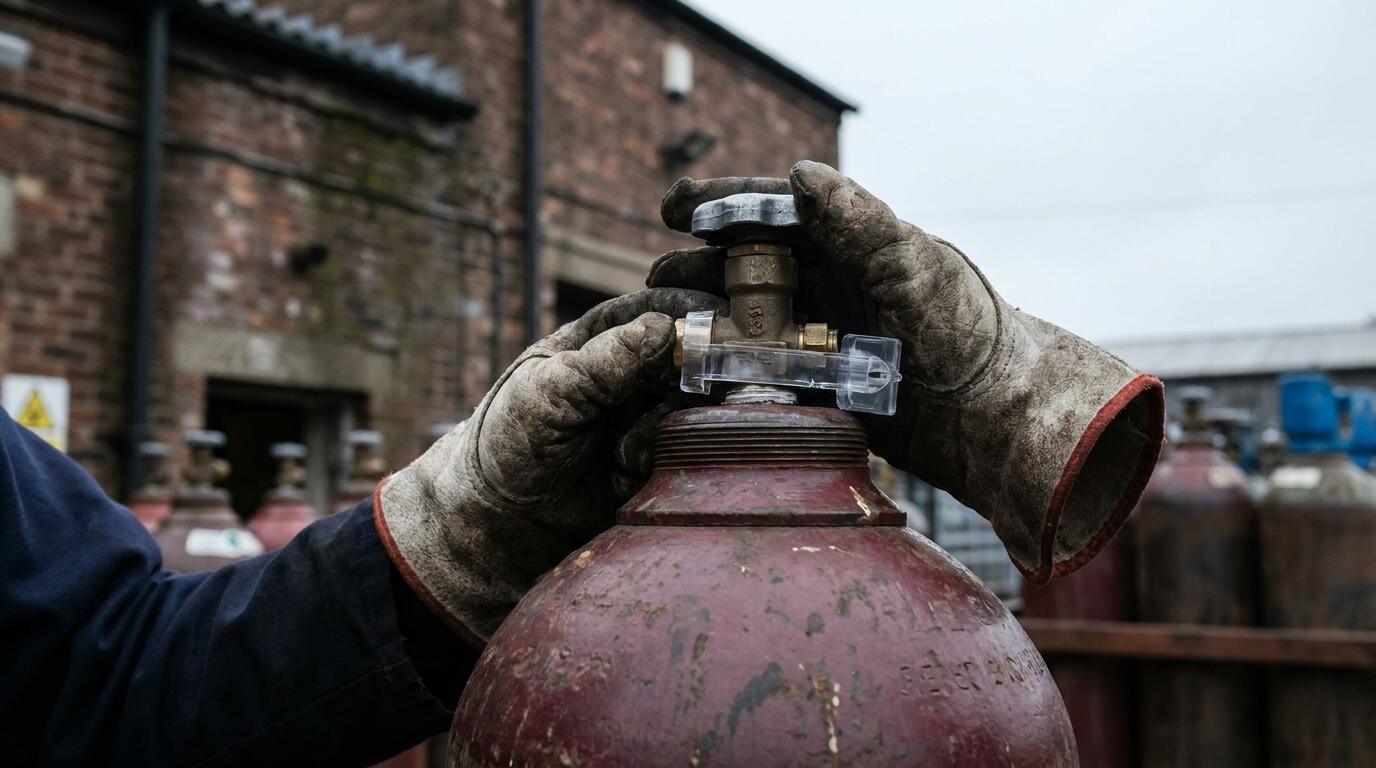
Before you drive away, a quick habit worth keeping: with the cylinder upright and the cap off, put your ear near the valve. You should hear nothing. A hiss means a valve that is not fully closed or a damaged seal, and it is easier to sort at the yard than at home.
The counter is open Monday to Friday 8:00am to 5:00pm and Saturday 7:30am to 12:30pm, and the same staff serve gas, timber and bricks, so if you are collecting materials for a job the gas comes out at the same time. For a full picture of the yard, see the builders merchant page.
What if your cylinder is a different brand
Calor is not the only bottled gas supplier in the UK, and cylinders from other companies turn up at the counter regularly: inherited with a caravan, left behind by a previous owner of a house, or bought on holiday somewhere else. The position is straightforward, if not always what people hope.
We are a Calor stockist and can only exchange Calor cylinders. Another supplier’s cylinder belongs to that supplier, in the same way a Calor cylinder belongs to Calor, and their exchange scheme is run through their own stockists. We cannot take another brand’s cylinder in part-exchange for a Calor one, and we cannot fill it. The right thing to do with it is return it to one of that supplier’s stockists, who will normally take it back under their own scheme.
If you want to switch to Calor, the process is the same as for any new customer: take out a cylinder agreement for the size you need, pay the one-off charge, and from then on exchange at any Calor stockist. In most cases your existing regulator and hose will work, because the fittings on UK cylinders are standardised: a 27mm clip-on, a 21mm clip-on and a POL screw fitting are the same whichever company’s cylinder they are on. Check the regulator’s pressure and date all the same.
A few cylinder types do not fit the pattern. Some small camping and leisure cylinders, and some cylinders from overseas, use different valves and cannot be connected to UK regulators at all. Bring it in, or send us a photo through the contact form, and we will tell you what it is and what to do with it. If it is empty, unloved and nobody wants it back, do not put it in the household bin; ask at the counter and we will point you to the right disposal route.
Damaged, rusty or out-of-date cylinders
Calor cylinders are steel pressure vessels and they are built to last decades, but they do get knocked about. Two questions come up: is my cylinder safe to use, and will you still exchange it.
Will we exchange it? Almost always, yes. A cylinder that is scuffed, faded, lightly rusted on the base ring or dented on the foot is a normal cylinder and goes back to Calor on the next collection like any other. A cylinder with heavy corrosion, a deep gouge, a bent or damaged valve, or fire damage should still come back to us; it is not your problem to dispose of and Calor take damaged cylinders out of service. Tell us what happened so it can be labelled and kept apart. What we cannot do is send a damaged cylinder back out to another customer, and we will not.
Test dates. Every cylinder carries a stamped test date, and Calor re-test cylinders on a rolling schedule as they pass through the filling plant. You do not need to track this. If your cylinder is past its date, exchange it as normal; the full one you receive has been checked before it left Calor. This is one of the advantages of the exchange system over owning a cylinder.
Is it safe to keep using? Before connecting any cylinder, look at the valve. If the black rubber seal in a clip-on valve is missing, split or perished, do not use it; bring it in and we will swap it. If the valve is bent, seized or leaking, close it if you can, keep the cylinder outdoors and away from ignition, and bring it back to us. A cylinder that has been in a fire, or run over, or dropped from height with visible damage, is one to return without connecting.
Regulators and hoses are a separate matter. They belong to you, they wear out, and they are the most common source of a gas leak. Check the dates when you exchange and replace anything cracked, stiff or old. We stock replacements at the counter.
What happens to your empty cylinder
The empty you leave at the counter goes into a separate part of the cage, valve closed, and waits for the next Calor collection. Calor’s lorry brings our order of full cylinders and takes the empties away on the same run, so a cylinder rarely sits here for long.
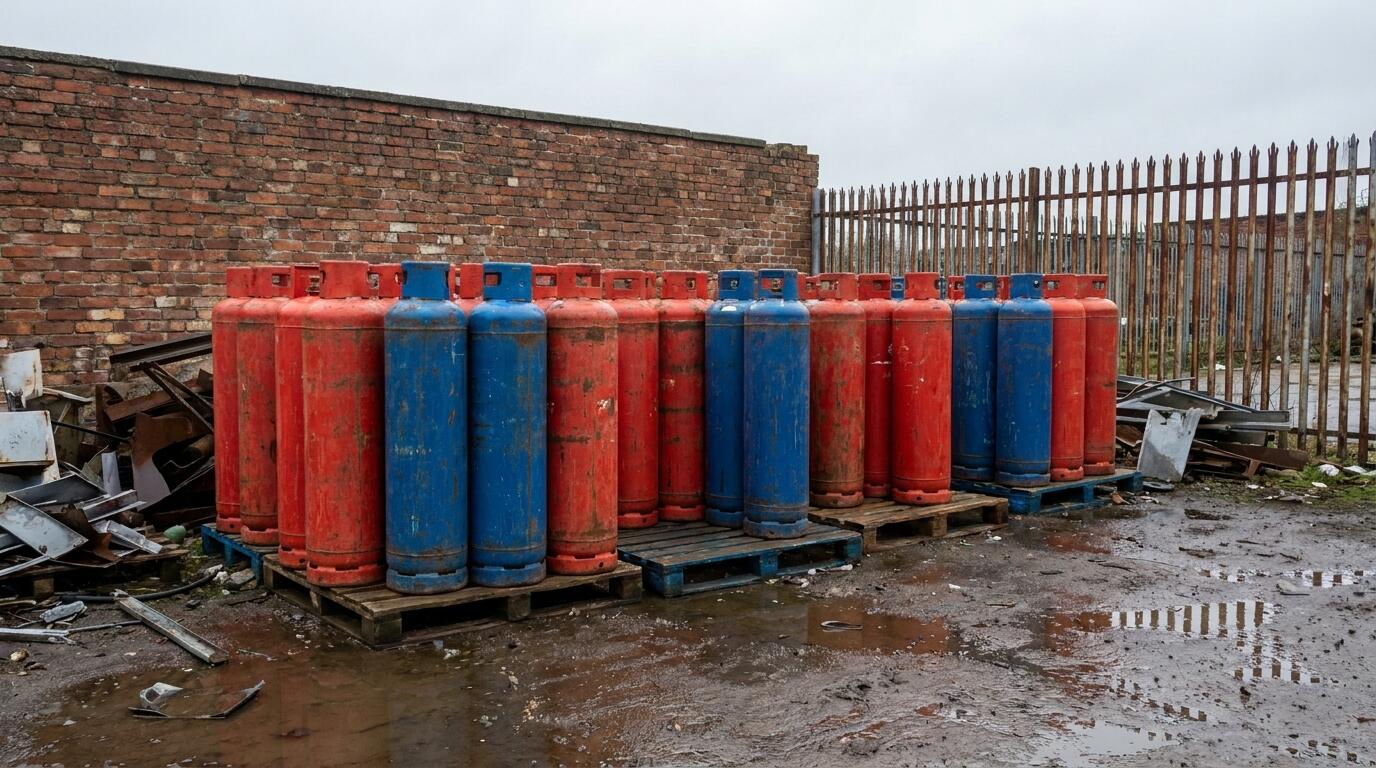
Back at the filling plant, the cylinder is checked before it goes anywhere near a filling head. Valves are inspected, the body is looked over for damage and corrosion, and the test date is read. Cylinders that are due are pressure-tested and re-stamped; cylinders that fail are scrapped. Those that pass are filled by weight on calibrated equipment, leak-tested, fitted with a new seal over the valve and sent back into the stockist network. The bottle you bring us today will be back on a shelf somewhere in a few weeks, filled and checked, with no connection to the bottle we hand you.
That loop is why we insist on returning cylinders rather than leaving them. An empty cylinder in a garden is a cylinder out of the system: it cannot be checked, it cannot be filled, and it still contains enough gas to matter if it is knocked over or heated. Bring it back, even if you have no immediate use for another. If you have a collection of old cylinders from a house clearance or a site, ring us; we will tell you which are Calor and how to deal with the rest.
Because the empties go back to Calor, the cylinder you take is always one of Calor’s. We do not fill, we do not top up, and we do not mix supplies. The only gas that goes into a Calor cylinder is put there by Calor.
Why cylinders are never refilled on site
Every so often someone asks whether we could just fill their cylinder from a bigger one, or whether an adaptor bought online will let them do it at home from a 47kg. The answer is no, and the reasons are worth spelling out because the adaptors are sold as if it were routine.
A cylinder is filled by weight, not by pressure. LPG expands as it warms, and a cylinder needs a gap above the liquid, called ullage, for that expansion. Overfill it, and on a warm day the liquid expands until the cylinder is hydraulically full and the pressure relief valve vents gas, or the cylinder fails. Filling plants weigh every cylinder on calibrated scales against its stamped tare weight. A bathroom scale and an adaptor do not achieve that.
Decanting from one cylinder to another also means transferring liquid propane through a hose by inverting the donor cylinder. Liquid LPG on skin causes cold burns; a leak during transfer releases a large volume of gas at ground level in seconds, and any ignition source nearby, including a fridge motor or a light switch, will set it off. Filling plants do this in purpose-built bays with trained staff. A driveway is not that.
There is the legal side too. Calor cylinders remain Calor’s property under the cylinder agreement, which does not permit refilling by anyone else. Refilling voids the agreement and, more to the point, means the cylinder’s inspection and test record no longer describes what is inside it.
The exchange system exists so that none of this ever lands on you. Bring the empty, take the full, and everything in between is done by people equipped to do it. It is quick, it costs the gas, and the cylinder you walk away with has been checked. If you need gas outside our hours or in a hurry, the Calor section of the homepage and the stockist page have the details, and we are on 0115 929 2350 six days a week.
Last updated 2026-08-29. Stock, sizes and availability change; call 0115 929 2350 to check before you set off.