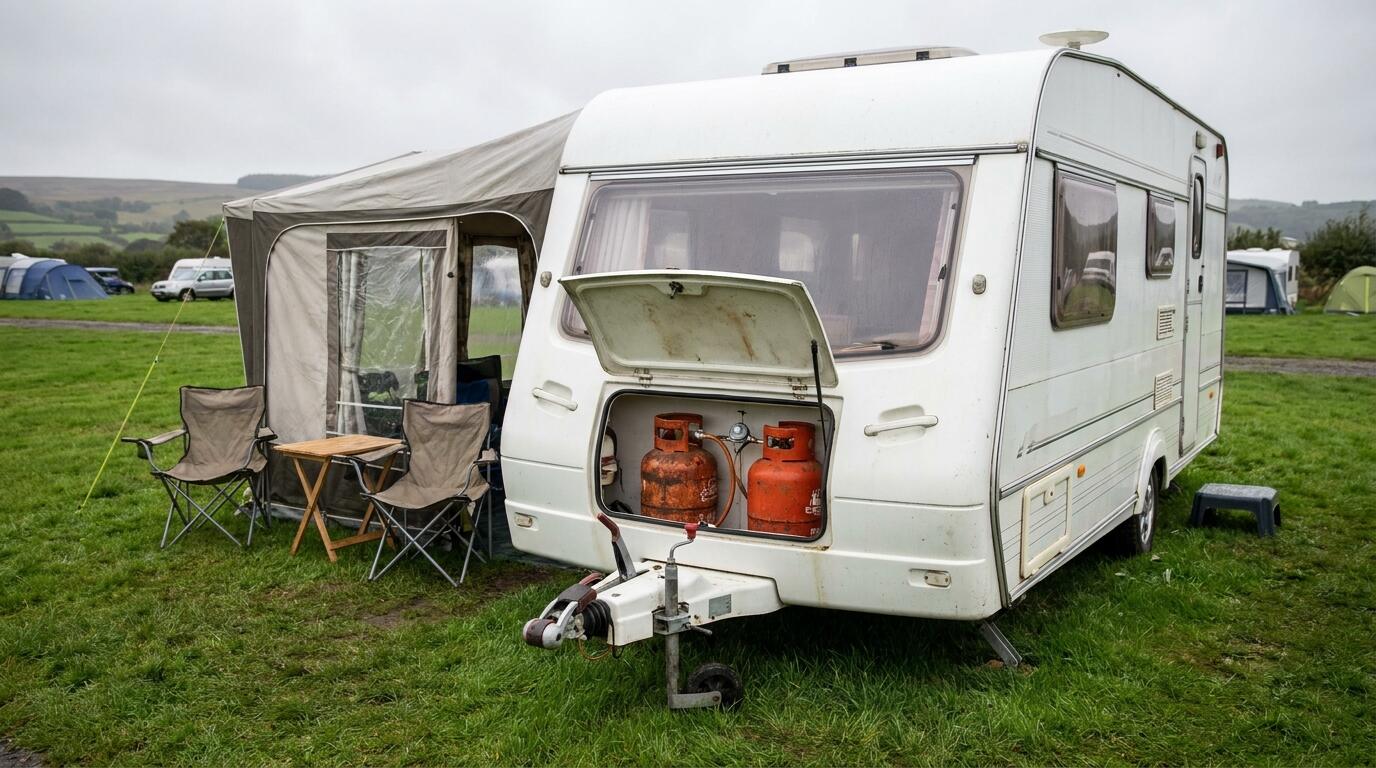
Gas runs the parts of a caravan that make it comfortable: the hob, the oven, the water heater, the space heater and, on most vans, the fridge when there is no hook-up. A cylinder that fits the locker, the right regulator and pigtail, and a swap before the bottle runs dry on a Sunday are the whole of it. The arguments about butane and propane have gone on for as long as there have been caravans, and the answer is less controversial than the arguments suggest.
Everything below about cylinder sizes, regulators and locker rules is standard across the industry. What we can add is a yard on the A610 with the cylinders in stock, open early on Saturdays when most people are setting off. If you need a particular size before a trip, call 0115 929 2350 to check it is on the shelf.
On this page
Butane or propane for touring
Both gases will run every appliance in a modern caravan. The difference that matters is temperature. Butane boils at about minus 0.5 degrees Celsius, so on a cold night the liquid in the cylinder stops turning to vapour and the heating fades or goes out with gas still in the bottle. Propane boils at minus 42 degrees, so it works whatever the weather.
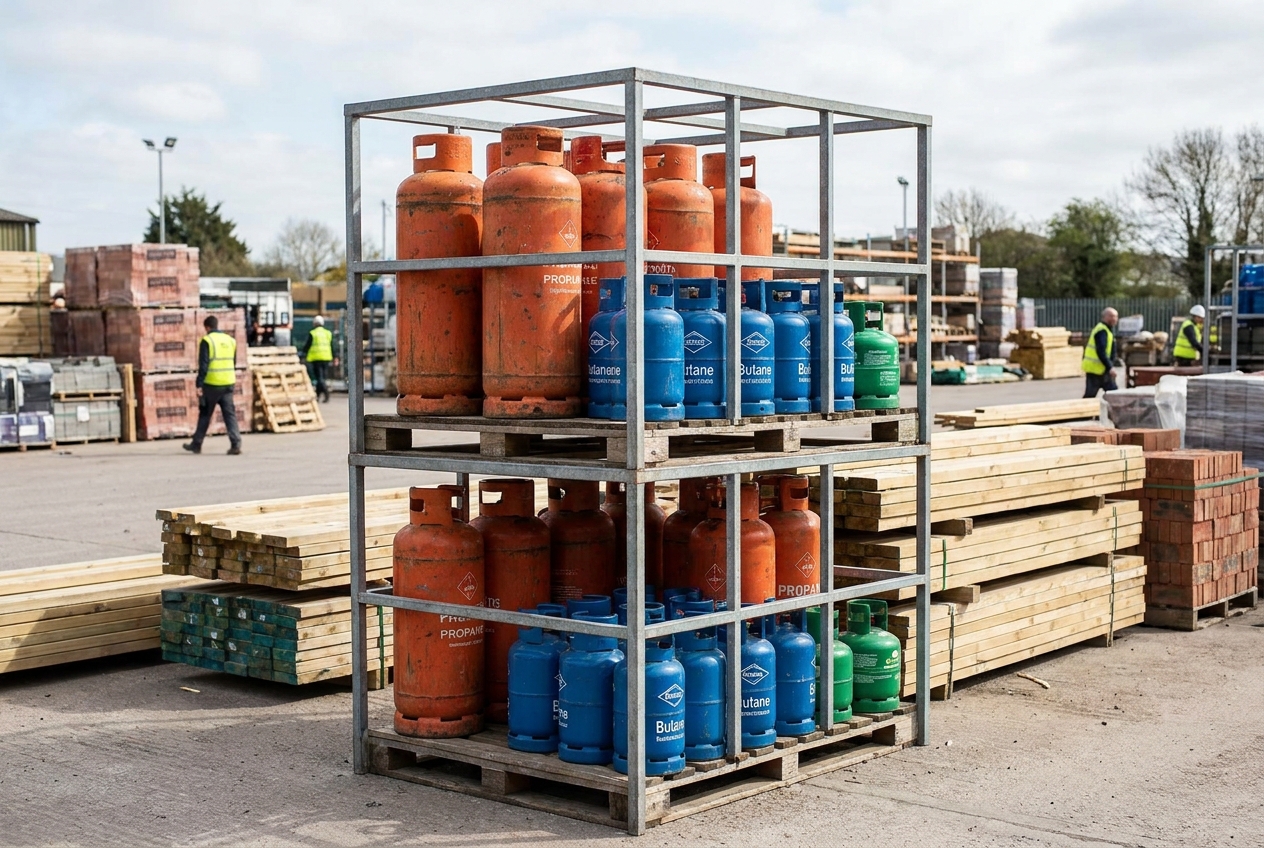
That gives a simple rule. If you only tour between May and September, butane is fine, and the 7kg blue cylinder holds slightly more energy than the 6kg red one that fits the same locker. If you tour in spring, autumn or winter, or you would rather not think about the forecast, use propane. Most people who tour outside summer settle on propane year-round and never look back, because there is no practical downside to running propane in warm weather.
The other consideration is what your van was built for. Caravans and motorhomes built from September 2004 have a fixed 30mbar bulkhead regulator and appliances designed to run on either gas at that pressure; switching between butane and propane is a matter of changing the pigtail. Older vans have a cylinder-mounted regulator that must match the gas, 28mbar for butane or 37mbar for propane, and their appliances were set up for one or the other. On an older van, stick with what it was built for unless a gas engineer has converted it.
A few caravanners run butane in summer and propane in winter, swapping pigtails with the season. That works, but it means two cylinder agreements and two bottles to store. One propane cylinder, or two on a changeover valve, is simpler. The propane and butane pages compare the two gases in more detail.
Cylinder sizes that fit a gas locker
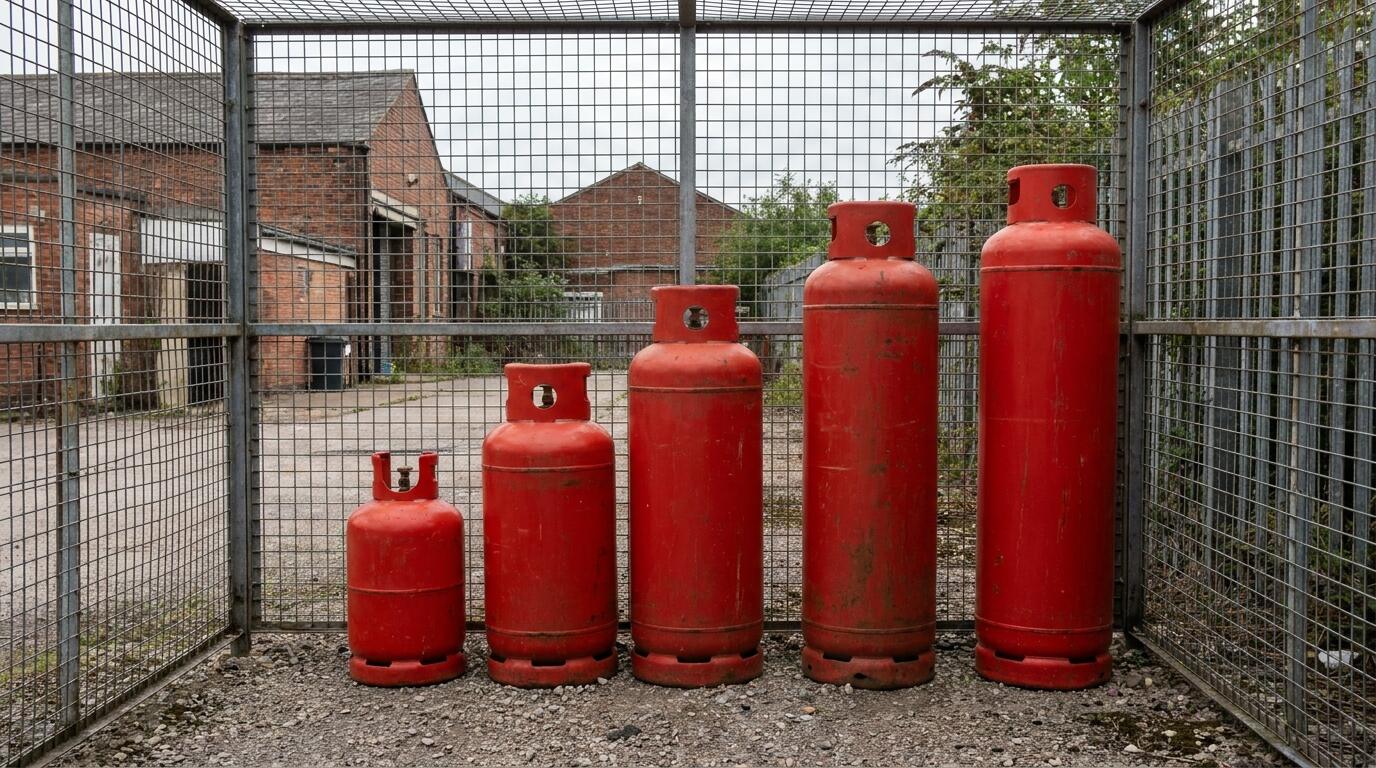
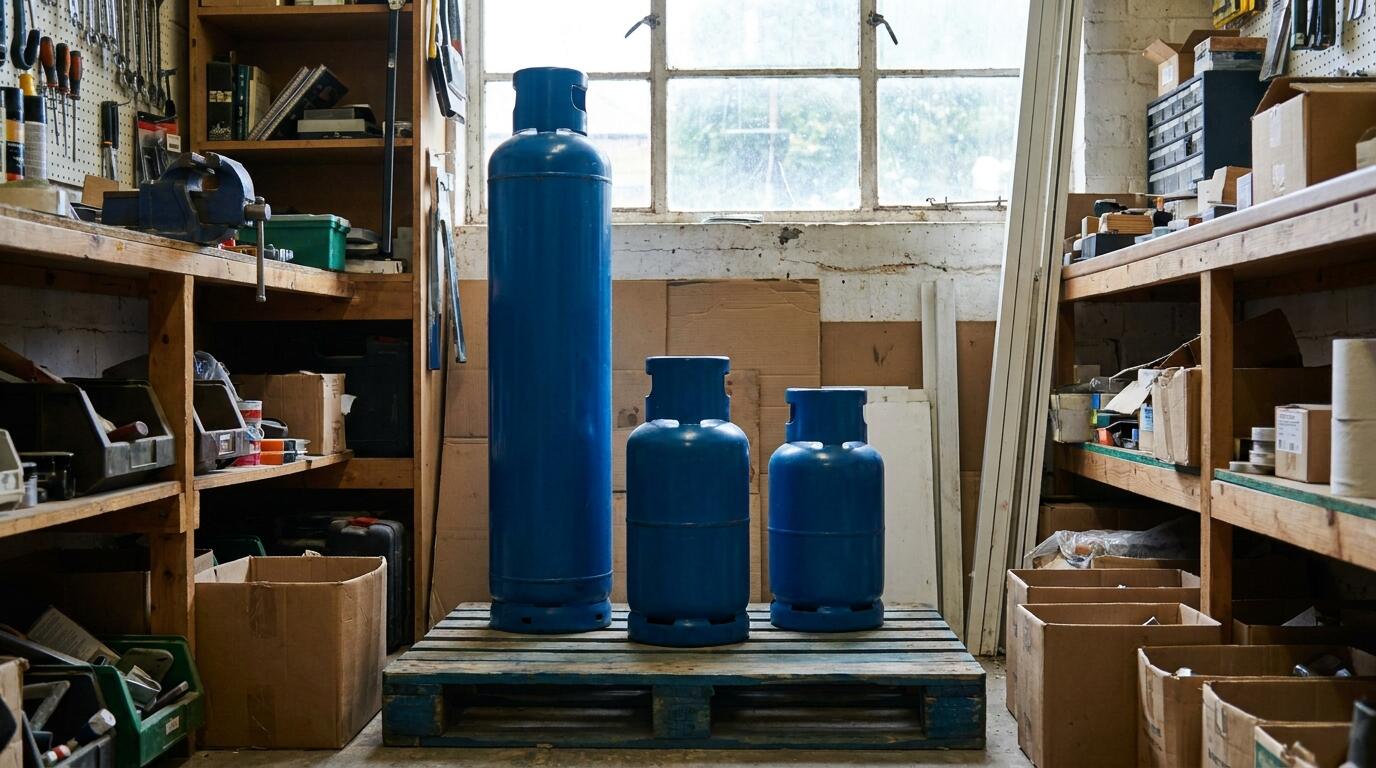
Gas lockers are built around a handful of cylinder sizes, and the Calor range is designed so that a propane and a butane cylinder of matching footprint can go in the same space. The table shows the pairs and the approximate dimensions; measure your locker, and allow height for the pigtail on top of the valve.
| Cylinder | Colour | Approx. height | Approx. diameter | Energy (approx.) | Connection |
|---|---|---|---|---|---|
| 3.9kg propane | Red | 340mm | 245mm | 53kWh | Screw-on POL |
| 4.5kg butane | Blue | 340mm | 240mm | 62kWh | Screw-on butane |
| 6kg propane | Red | 495mm | 256mm | 82kWh | Screw-on POL |
| 7kg butane | Blue | 495mm | 256mm | 96kWh | 21mm clip-on |
| 13kg propane | Red | 580mm | 315mm | 177kWh | Screw-on POL |
| 15kg butane | Blue | 580mm | 318mm | 205kWh | 21mm clip-on |
6kg propane and 7kg butane are the standard touring sizes. They share a footprint, most lockers take two of them side by side, and they are a one-hand lift. This is what nearly every caravan on a Nottingham site is running.
3.9kg propane and 4.5kg butane are the small pair, useful for a compact locker in a small van or campervan, or as a back-up.
13kg propane and 15kg butane fit the larger lockers on some motorhomes and twin-axle caravans. They last far longer between swaps but are heavier and the locker has to be built for them. Check the locker’s stated maximum cylinder size and weight, which is usually on a plate inside the door.
How long a cylinder lasts depends entirely on heating. In summer with a hook-up for the fridge, a 6kg or 7kg will do a couple most of a fortnight of cooking and hot water. In winter with the heater running all day, the same cylinder can go in a long weekend. Two cylinders on a changeover valve is the answer to that.
Regulators: 30mbar bulkhead on post-2004 vans
The regulator drops the cylinder pressure to what the appliances expect. Where it lives and what pressure it delivers depends on when the van was built.
Vans built from September 2004. Caravans and motorhomes built to the European standard from that date have a fixed regulator mounted on the wall of the gas locker, called a bulkhead regulator, delivering 30mbar. The appliances are designed to run on butane or propane at 30mbar, so one regulator serves both gases. The cylinder connects to the regulator through a short flexible hose called a pigtail, and the pigtail is what changes with the gas: a POL end for red propane, a 21mm clip-on end for blue butane, a 27mm clip-on for Patio Gas. The regulator itself never comes off the wall.
Vans built before September 2004. The regulator screws or clips onto the cylinder valve and delivers gas-specific pressure: 28mbar from a butane regulator, 37mbar from a propane regulator. The regulator has to match the gas, and the appliances in the van were set up for one or the other. To change gas on one of these vans, you change the regulator and you check with the appliance manufacturer or a gas engineer that the appliances are rated for it. Many older vans have been converted to a 30mbar bulkhead system since; look in the locker.
| Van built | Regulator | Pressure | Gas | To change gas |
|---|---|---|---|---|
| September 2004 onwards | Fixed bulkhead in locker | 30mbar | Either | Change the pigtail |
| Before September 2004 | On the cylinder valve | 28mbar butane / 37mbar propane | As built | Change the regulator; check appliances |
Bulkhead regulators have a working life, commonly quoted at ten years, and a date on the body. They should be mounted above the level of the cylinder valve, with the pigtail rising to them, so that any oily residue from the gas drains back rather than into the regulator; a regulator that starts to give low pressure or cut out often has that residue in it. Replacement is a job for a gas engineer or a competent person, not a car-park fix.
Pigtails and hoses
The pigtail is the flexible hose between the cylinder and the bulkhead regulator, usually around 450mm long, with a fitting to suit the cylinder at one end and a threaded connection to the regulator at the other. It is the part that gets changed when you change gas, and the part that most often needs replacing.
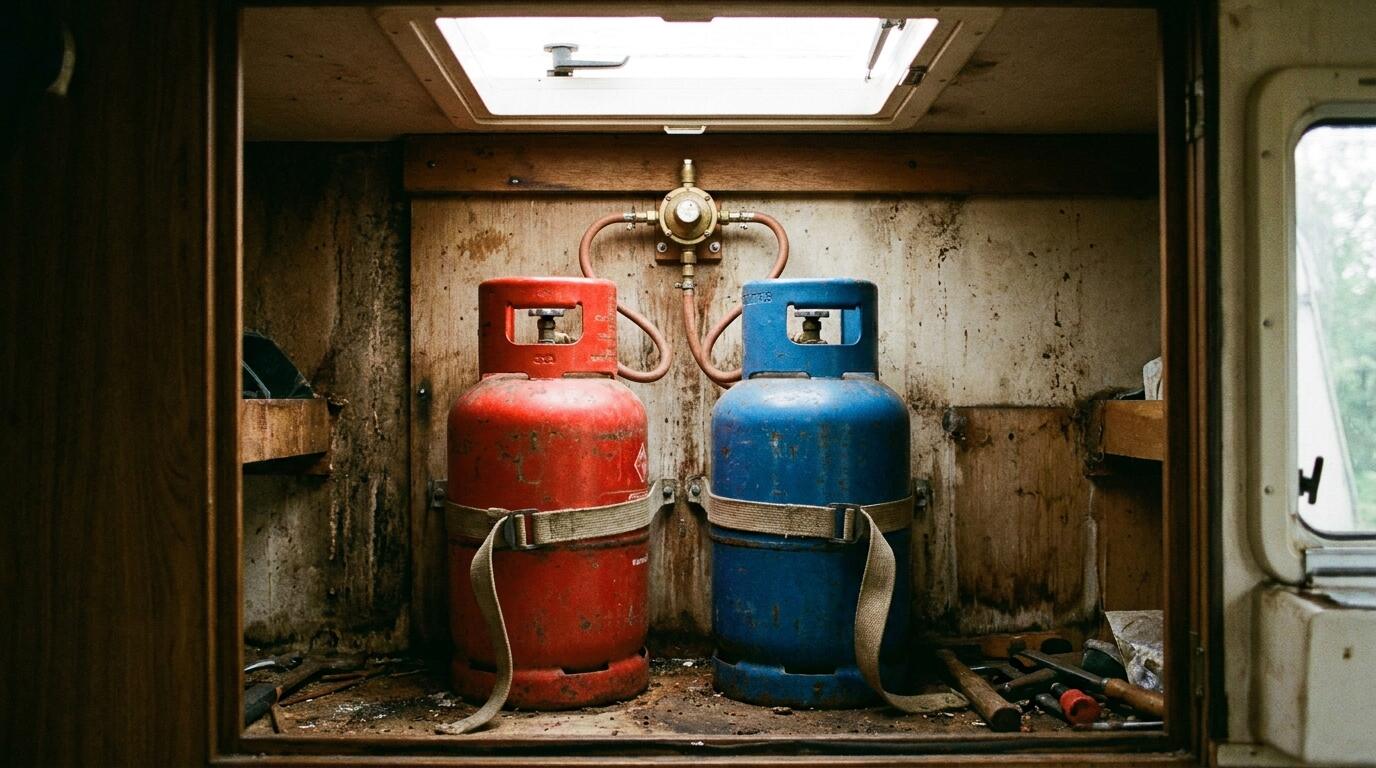
- POL pigtail for red propane cylinders. The POL nut has a left-hand thread and tightens anticlockwise with a spanner; newer hand-wheel types tighten by hand.
- 21mm clip-on pigtail for blue butane 7kg and 15kg cylinders. Push on until it clicks; lift the collar to release.
- 27mm clip-on pigtail for green Patio Gas cylinders, which some caravanners use for the easy connection.
- Screw-on butane pigtail for the 4.5kg butane cylinder.
Pigtails have a manufacture date printed or moulded on them. Most manufacturers and caravan bodies advise replacing them within five years, sooner if they show cracking, stiffness, swelling or damage. They are cheap and they carry gas at cylinder pressure, which on propane in summer is well over 6 bar, so there is no argument for running an old one. If you cannot read a date, replace it.
Fitting a pigtail: with the cylinder valve closed, connect the pigtail to the cylinder first, then check the regulator end is tight. Route the hose so it rises gently to the regulator without kinks or tight bends, and so nothing in the locker can chafe it. Open the cylinder valve slowly and check every joint with leak-detection spray or soapy water before lighting anything inside. Bubbles mean tighten, reseat or replace, then test again.
Two cylinders on a changeover valve use two pigtails, one per cylinder, both feeding the changeover. We stock pigtails, clip-on and POL, at the counter, and will check the one you have if you bring it in. For vans with an older cylinder-mounted regulator, the same advice applies to the low-pressure hose from the regulator into the van: date it, inspect it, replace it on schedule.
Gas locker rules
The gas locker on a caravan or motorhome is designed to hold cylinders safely and to vent any leak to the outside rather than into the living space. The design only works if the locker is used the way it was intended.
- Cylinders upright and secured. Every locker has straps, a clamp or a bracket. Use them. A cylinder that falls over on a roundabout can shear a pigtail or, if it is on its side, put liquid gas into the regulator.
- Drop-out vents clear. LPG is heavier than air, so the locker has vents in the floor to let any leak fall out onto the road. Do not block them with a mat, a bag or a spare wheel, and check nothing has nested in them over winter.
- Sealed from the living area. The locker is separated from the habitation space. Any gap where pipes or cables pass through must be sealed, and the door must close properly.
- Nothing else stored in it. No petrol cans, no barbecue, no charcoal, no rags, no tools, no electrical equipment. The locker is for gas cylinders and their connections.
- No ignition sources. No lights, sockets or switches inside the locker beyond what the manufacturer fitted, and no smoking near it.
- Valves closed when travelling unless your van is specifically fitted with a crash-protected regulator and approved to run the fridge on gas while moving, and always closed on ferries and at fuel stations.
- Only the sizes the locker is rated for. The plate inside the door gives the maximum cylinder size and total weight. Do not exceed it; it counts towards your noseweight and payload.
Keep the locker clean and dry, because rust on the floor is what eventually blocks a vent. Once a season, empty it, sweep it out, check the vents from underneath, and look at the straps and the regulator mounting. A gas locker looked after this way is a safe piece of kit; a locker used as a boot is not.
Changeover valves and running two cylinders
Running two cylinders instead of one solves the problem that dominates every caravan gas conversation: the bottle running out at the wrong moment. With two cylinders connected to a changeover valve, when the first empties the second takes over and you swap the empty at your convenience.
Manual changeover valves have a lever or tap. Both cylinders are connected and turned on at the valve; you select which one feeds the van. When the heater goes out, you go to the locker, turn the lever to the other cylinder and carry on. Simple, cheap, and you know exactly which bottle is in use.
Automatic changeover valves switch to the reserve cylinder on their own when the pressure from the service cylinder drops, and most show an indicator that changes colour to tell you the changeover has happened. The heating never goes out in the night and the only job is to notice the indicator and swap the empty. On post-2004 vans the automatic changeover is often built into the bulkhead regulator unit itself; on others it sits between the pigtails and the regulator.
Points worth knowing:
- Two cylinders means two cylinder agreements and two pigtails. Both cylinders should be the same gas.
- With an automatic valve, check the indicator before every trip. It is easy to set off with both cylinders low because the changeover happened quietly weeks ago.
- In winter, two cylinders on an automatic changeover also share the draw when the heater is working hard, which helps propane vaporise in the cold.
- Keep the reserve cylinder’s valve open if the valve is automatic, closed if it is manual and you are not expecting to switch on a journey.
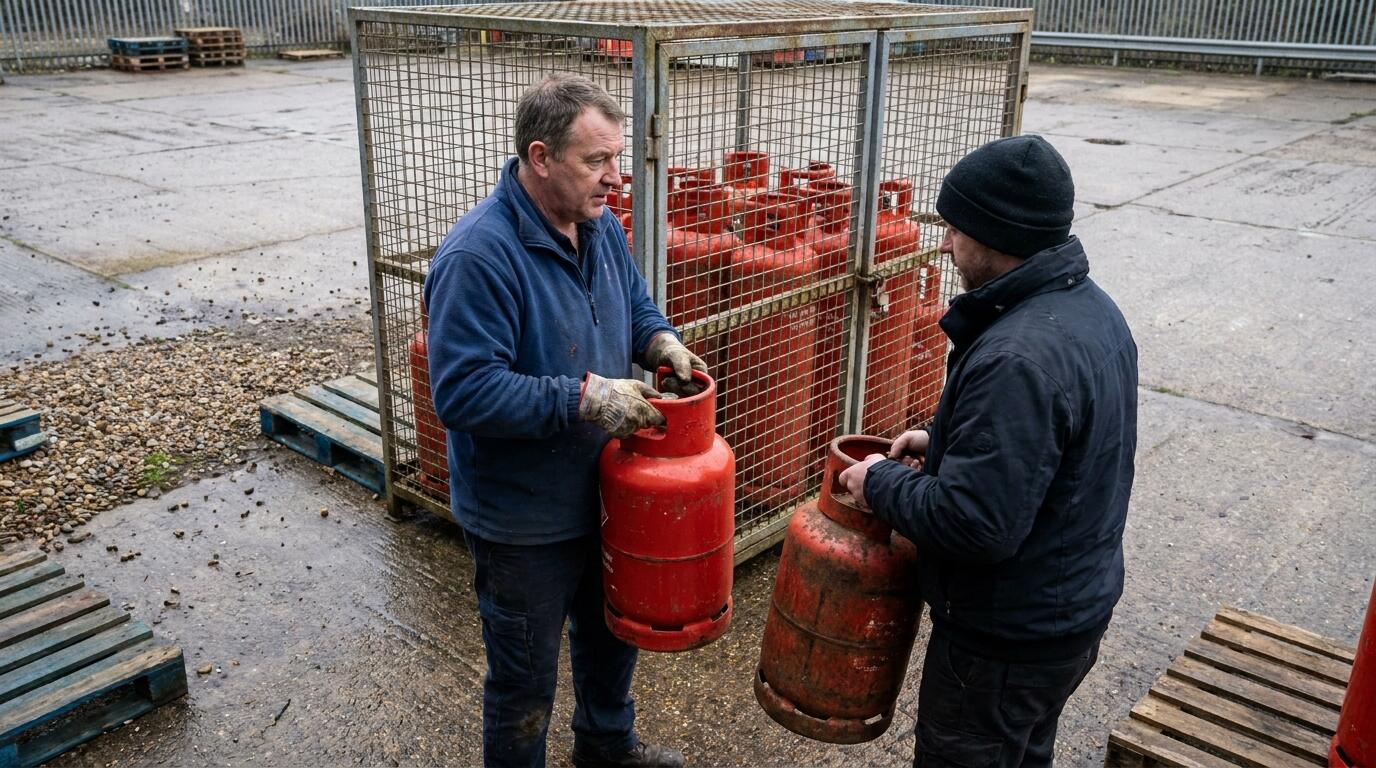
Two 6kg propane cylinders on an automatic changeover is the arrangement most experienced tourers end up with. It fits a standard locker, it runs through the winter, and it means an exchange run to the yard is never urgent. Both cylinders exchange the same way as one; see the bottle exchange page.
Winter touring
Touring in winter is when gas stops being a background detail. The heater runs most of the day, the water heater runs more often, and if there is no hook-up the fridge is on gas too. Butane is out of the question on a frosty pitch, so the first rule of winter touring is propane in the locker.
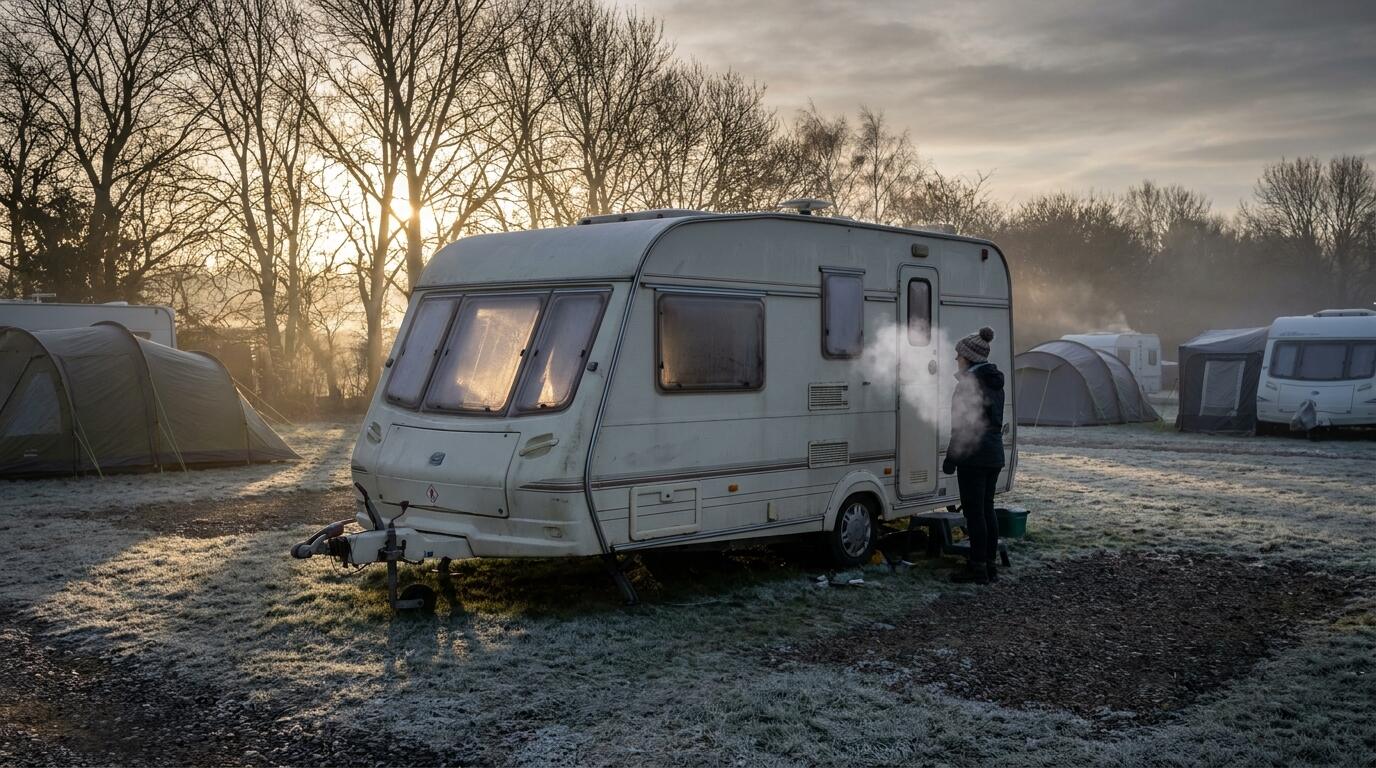
Even propane has its limits, and they come from physics rather than the gas being wrong. The rate at which liquid propane boils into vapour depends on the temperature and on how much liquid is in the cylinder. A 6kg cylinder that is nearly empty, on a night well below freezing, feeding a 4kW heater flat out, can struggle to keep up; the heater cycles, the pressure drops, and you will see frost forming on the outside of the cylinder as it cools itself. It is not a fault. The cylinder is doing all it can.
Ways to help it:
- Two cylinders on an automatic changeover share the draw and double the reserve.
- Swap early. Do not set off for a cold weekend with a cylinder that is under a third full. Weigh it against the tare stamped on the collar.
- Keep the locker door closed and out of the wind. Do not put anything warm in the locker; the answer is a fuller cylinder, not a heat source.
- Use a hook-up where you can and run the fridge and some heating on electric to reduce the gas draw.
- Consider the larger pair if your locker takes a 13kg; more liquid means more surface area and a faster boil-off.
Plan the gas as you would plan the water. A heater running from morning to bedtime on a cold pitch can get through most of a 6kg cylinder over a long weekend, and a fortnight over Christmas is a second cylinder at least. Stockists near winter sites are not always open on a Sunday, and neither are we, so exchange before you leave Nottingham. Saturday mornings from 7:30am are made for that; the Calor section of the homepage has the hours.
Pre-season gas checks
A caravan that has sat since October deserves twenty minutes on the gas before the first trip. None of this replaces an annual service by a qualified engineer, which is what checks the appliances, the pipework and the flues properly, but it catches the things that go wrong in storage.
- Empty the locker and look at it. Sweep it out, check the floor vents from underneath, look for rust and for anything that has moved in over winter.
- Read the dates. Pigtails within five years; regulator within ten. If either is over, or shows cracks, stiffness or swelling, replace before the season.
- Check the cylinder seals. On a clip-on valve, the black rubber seal should be present and undamaged. On a POL, the sealing face should be clean.
- Reconnect and leak-test. Cylinder valve open slowly, appliances off, leak-detection spray or soapy water on every joint from the cylinder to the regulator. Bubbles mean stop and fix.
- Light each appliance in turn and watch the flame: blue and steady. Yellow, lazy or sooty flames mean a burner that needs cleaning or a service.
- Test the alarms. A carbon monoxide alarm inside the van is essential; a gas alarm at low level is a good idea. Replace batteries.
- Weigh the cylinders. Empty weight on the collar, full weight on the scales; the difference is gas. Anything under a third is an exchange before the trip, not on it.
- Check the changeover indicator if you have an automatic valve, and reset it to the fuller cylinder.
If you find a regulator that will not hold pressure, a pipe joint you cannot make gas-tight or a flame that will not burn cleanly, stop there and book an engineer. Gas work inside the van is not a DIY job.
For the cylinders and the fittings, we are at Whitemoor Lodge, 2 Nuthall Road, Bobbers Mill, Nottingham NG8 5AF, on the A610 with room to bring the van into the yard if you want to fit the cylinders straight into the locker. We keep 6kg and 7kg and the other locker sizes, pigtails, clip-on and POL fittings, and can set up new cylinder agreements at the counter. Hours are Monday to Friday 8:00am to 5:00pm and Saturday 7:30am to 12:30pm; ring 0115 929 2350 or send an enquiry to check stock before the first trip of the year. The rest of the yard is a builders merchant, so the timber for the drive and the paving for the hardstanding are in the same place.
Last updated 2026-08-29. Stock, sizes and availability change; call 0115 929 2350 to check before you set off.